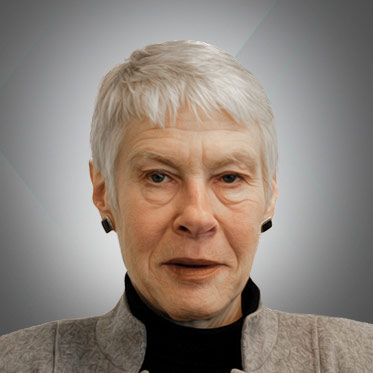
Laurie Mylroie
Author
How Serious is the Terrorist Threat from Da’esh?
After the horrific terrorist attacks in Paris, French Prime Minister Manuel Valls offered a glimpse of just how truly devastating terrorism might be, warning against the possible use of chemical or biological weapons by terrorists.

After the horrific terrorist attacks in Paris, French Prime Minister Manuel Valls offered a glimpse of just how truly devastating terrorism might be, warning against the possible use of chemical or biological weapons by terrorists. Subsequently, the European Parliament expanded on Valls’ warning, issuing a report entitled “ISIL/Da’esh and ‘non-conventional’ weapons of terror.”
The report explains why Westerners should be seriously concerned about Da’esh using such agents. For starters, the report cites Da’esh’s recent use of chemical weapons against the Peshmerga. Those attacks began last summer with three assaults on Kurdish forces, using rudimentary chemical agents made from toxic industrial or agricultural chemicals. In early August, Da’esh escalated its attacks, using mustard gas against Peshmerga in Makhmur, southwest of Erbil. The Peshmerga commander there explained that dozens of mortar rounds were fired at their positions, causing unusual burn wounds. U.S. officials later confirmed the commander’s assessment, identifying the chemical agent as mustard gas. A second mustard attack occurred in late August, aimed at anti-Assad forces in northern Syria.
As the EU Parliament report elaborates, in 2014 Da’esh had access “to bunkers from the past Iraqi chemical weapons programs, including mustard agents. Nerve agent rockets may also still be available in Iraq.” It is also thought that some sarin gas munitions may still exist in Syria, to which Da’esh might be able to gain access. The same problem exists in Libya, where Da’esh has an ever-growing presence.
Daesh’s radical, apocalyptic ideology and its use of shock tactics to gain notoriety and recruits are also reasons for concern. Already, last summer some in the U.S. intelligence community began to warn that Da’esh “may be working to build the capability to carry out mass casualty attacks.”
Chemical weapons, if expertly deployed, could kill significantly more people than those who died in Paris. But those numbers would be limited. The most lethal scenario would involve people concentrated in an enclosed space, like a subway. In 1995, Aum Shinrikiyo, a Japanese cult, tried to disperse sarin gas on the Tokyo subway. It attacked five trains, but only killed 12 people. Da’esh’s expertise in using chemical agents would be much greater than Aum Shinrikyo’s, because members of Saddam’s military and intelligence agencies constitute a significant cadre within Da’esh.
The real danger, however, is biological agents: an expertly conducted biological weapons attack could kill many more people than died on 9/11. The Chief Medical Officer to the U.S. Department of Homeland Security gave one dramatic estimate. In 2008, he testified to a House committee that “a successful single-city attack [using aerosolized anthrax] on an unprepared population could kill hundreds of thousands of citizens.” Producing anthrax of the right size to be lethal is not easy, but it can be done by knowledgeable individuals with specialized equipment. Even a biological attack that killed many less than“hundreds of thousands” would still be devastating.
The Hudson Institute recently convened a bi-partisan study group on defense against biological terrorism, chaired by former Senator Joseph Lieberman and former head of the Department of Homeland Security, Thomas Ridge. It noted that “caches of incompletely destroyed or buried biological weapons materials from old state programs can now be accessed again,” referring to an old Soviet stockpile, buried in 1988. But it might well apply to Iraq, Syria, and Libya, where repressive regimes developed a variety of proscribed weapons, and where Da’esh is active. As former Representative Mike Rogers advised, “The longer [Da’esh has] freedom of operation in any space that contains those kinds of elements, I think that’s dangerous to the United States and our European allies.”
Americans are in a deep state of denial regarding this threat. Most of the major north-south arteries in Washington D.C.are marked “evacuation routes.” Washington is ground zero for a biological terrorist attack because so many important figures could fall victim. Washington streets cannot even handle rush hour traffic—if there is ever a need to evacuate the city, those streets will become parking lots. As the Hudson study concludes, with some understatement, “The Nation has not come to fully appreciate the severity of the biological threat and our leaders have not demonstrated the political will to fully address it.”
If Americans (and other Westerners) truly understood the potential threat from Da’esh, they would not be taking the current, relatively leisurely approach to defeating the terrorist organization. There would be no doubt about the urgency of destroying it, nor any hesitation about directly arming America’s local allies, above all the Kurdish Peshmerga—as the House Foreign Affairs Committee recently voted to do. Indeed, the American public would be demanding that U.S. troops return to Iraq and finish the job.
Laurie Ann Mylroie, Ph.D., taught at Harvard University and the U.S. Naval War College. Most recently, she served as a cultural advisor to the U.S. military in Afghanistan.
The views expressed in this article are those of the author and do not necessarily reflect the position of K24.