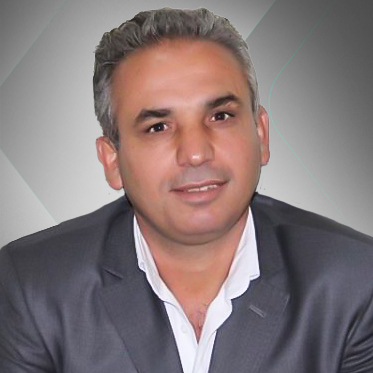
Idriss Nassan
writer
Who will fight terrorism?
If the international powers and regional countries do not stop their conflict of interests, the terrorists will continue to find a suitable environment to grow their support and activities.
It's clear that terrorism has moved to a new era with attacks on airports, European capitals and shooting down planes. But what's not clear is how terrorists are able to cross security measures without being stopped or uncovered. These unfortunate events raise questions on whether they are getting assistance from certain groups or states for carrying out attacks, or could it be that they are more intelligent and powerful than the global intelligence agencies? Whatever the cause, it seems that there is a lack of will to seriously fight terrorism.
These terrorists send their first message when they attacked the Charlie Hebdo magazine in Paris, and warned us that this will be a long war and we should be ready for it. But we did nothing, and after more painful terrorist attacks were carried out in Brussels, and the bombing of the Egyptian airliner—not much has changed.
Most recently, ISIS terrorists killed dozens of civilians in Istanbul’s Ataturk Airport and no one was able to stop this. What kind of undefeatable terrorism is this if these terrorists reach everywhere easily and are able to carryout their actions?
In my point of view, these attacks are not made by a group of terrorists; they are very well trained, planned and supported by people inside and experts on intelligence. They are not only attacks; they are politically motivated: It is a tool for gaining political privileges against other parties. This has been the case in Syria, Iraq, and Libya for many years.
In this respect, the international community is polarized between two main camps; the US-led coalition on one side, and Russia and Iran on the other side. They are simply competing for their interests. This has created a suitable environment for terrorist groups to thrive. As a result, the jihadist terrorists are able to easily manipulate Muslims and recruit them to fight against the international community.
From the beginning of the Syrian crisis, when people rushed to the streets and protested peacefully, some countries were watching very carefully. Assad’s allies, Iran and Russia, made sure that the popular movement in Syria would be defeated by the regime’s heavy weaponry. They labeled demonstrator as terrorists, and bombed women and children under the pretext of fighting terrorism.
On the other hand, regional countries like Turkey, Saudi Arabia and Qatar, were waiting for a historical chance like this to take revenge on Assad and regain power for their Sunni allies or prolong the war to weaken the Syrian regime as much as possible. Moreover, gulf countries wanted to keep out the Arabic spring from their doorsteps, and turned to Syria to confront it and to prevent the Iranian ‘revolution’ there.
In the meanwhile, the US-led coalition didn’t take much action and mainly condemned the massacres in Syria. The passive stance enabled the regime to use unlimited force to kill thousand of civilians.
Additionally, the Syrian regime, Turkey and Iran turned a blind eye for jihadist terrorists from around the world to cross into Syria and Iraq to join ISIS and the Al-Nusra Front.
Turkey used these terrorist groups to weaken the Syrian regime and the Kurdish movement in Syria by opening its borders and airports to terrorist groups. On January 10th, 2016, the Guardian reported that "documents seized by Kurdish forces dated December 2014 – March 2015 have ISIS department of immigration" and "department of transport" stamps. The documents shows that ISIS fighters freely moved back and forth through Turkish and Syria border areas.
But now the ISIS bombing of Istanbul’s Ataturk Airport shows that Turkey is paying the price for turning a blind eye on the jihadists entering Turkey, as they have been able to organize and to strike so easily inside Turkey.
If the international powers and regional countries do not stop their conflict of interests, the terrorists will continue to find a suitable environment to grow their support and activities. We should take in consideration that terrorism will not be able to survive if everyone stands against it. Therefore, these powers should stop their competition and unite against terrorism.
Idris Nassan is the former deputy head of the foreign affairs commission in the self-administration of Kobani, Syrian Kurdistan (Rojava)
The views expressed in this article are those of the author and do not necessarily reflect the position of Kurdistan24.
Editing by Delovan Barwari