
Bashdar Ismaeel
Author
Turkey’s migrant card coerces EU
The migrant deal agreed in March 2016 served as a landmark between the EU and Turkey.
The European Union (EU) and Turkey's relations have often been scaled down by the political, social and religious divide. Turkey has been seeking to join the bloc for decades with formal accession talks starting in 2006. However, the non-binding decision by the European Parliament (EP) to suspend accession talks last week was a symbolic blow to relations and also threatened irreparable damage to the vital migrant deal.
The migrant deal agreed in March 2016 served as a landmark between the EU and Turkey. Not only did it stem the flow of thousands of Syrian refugees that led to a massive crisis across the EU, but it set the foundation for a restoration of ties.
As part of the agreement, Turkey would move to seal its border and receive financial aid in return. Crucially, Turkey would also get visa-free access to the Schengen area and an acceleration of accession talks if Turkey fulfills certain conditions, including amendment of its harsh anti-terror laws.
Even following the deal, there was a level of unease between both sides and an increasing negative rhetoric.
However, after the failed coup in July, the Turkish landscape transformed on many fronts. Turkish President Recep Tayyip Erdogan took drastic action at the coup-plotters and this lead to a broad crackdown of opposition circles and the media which shocked the EU.
It resulted in an increase in the language of threats on both sides. Ankara was disappointed with a lack of a strong EU response to the failed coup and has seemingly ignored most of the criticism from EU over its crackdown and in turn looked to build new bridges with Russian and its eastern frontier as a warning to NATO and the EU.
Erdogan even threatened to extend the state of emergency, asserting this is a decision for Turkey while telling the EP, "What's it to you... Know your place!”
With Turkey even threatening to reintroduce the death penalty, Turkey clearly, lacks the conviction of joining the EU at any price.
Turkish Prime Minister Binali Yildirim downplayed the decision by the EP as having “no significance as far as we are concerned.” While Erdogan warned the EU that they could reinforce their relations to the East and join the Shanghai Cooperation Organization (SCO), “The EU has been delaying us for 53 years. Why shouldn’t Turkey be in the Shanghai Five?”
Turkey’s vital strategic position as a major power straddling Europe and Asia and serving as a gateway to the Middle East means that it is always going to have enormous importance to the EU. But having a predominantly Islamic based Turkey as a full member of what many perceive as a ‘Christian club’ is seemingly a bridge too far.
More importantly, Turkey needed to drastically narrow the gap of EU requirements if it was ever going to become a full member of the EU. And this gap, widening as ever, demonstrates the great difficulties of seeing a country that borders Iraq, Iran, and Syria would ever join the EU.
Over the years, EU powers had to maneuver around their strategic reliance on Ankara with any criticism of its anti-terror laws, restrictions on freedoms and especially the treatment of its Kurdish population. The arrest of Peoples’ Democratic Party (HDP) leaders might have been a final straw that led to the EP vote.
An example of the cautious nature of the EU towards Turkey is the response of Jean-Claude Juncker, President of the European Commission, to the EP decision. On the one hand, he urged EU member to “refrain from giving lessons” to Turkey on the refugee crisis as Turkey was taking a greater burden than Europe on the matter. But at the same time, he warned Turkey they must abide by the migrant deal, and end the brutal treatment of its citizens or be responsible for the consequences.
While acknowledging democratic progress under Erdogan until 2014, Junker beloved that in the past two years, Turkey has "distanced itself from European principles and value."
An angry Erdogan threatened to “open the border gates” and flood the EU with thousands of migrants if the EP went any further. If this scenario happens, it would spell obvious disaster for EU and is a something that no one in Europe wants to see.
One of the anxious EU leaders was German Chancellor Angela Merkel. She urged both Europeans and Turkey to meet commitments. While Merkel insisted the agreement is in the mutual interest of both sides, in reality, it is Europe without a Plan B, and that remains highly concerned by a new influx of refugees that stands to lose.
What is unclear, however, is how long the EU will continue to bend its ideals and freedoms to appease Turkey?
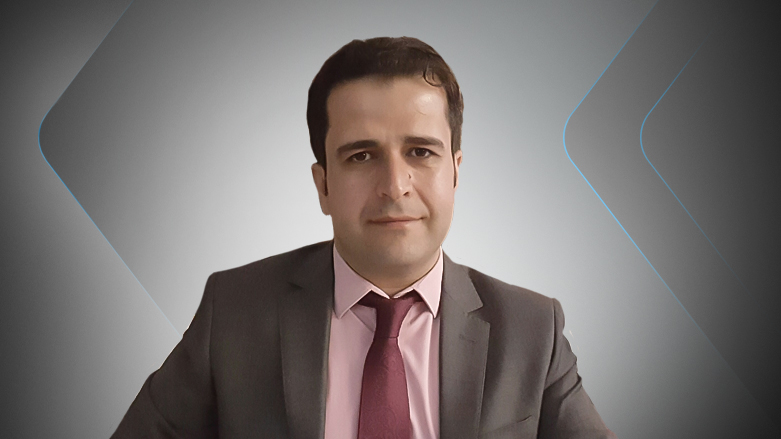
Bashdar Pusho Ismaeel is a London-based freelance writer and analyst, whose primary focus and expertise is on the Kurds, Iraq and Middle Eastern current affairs.
The views expressed in this article are those of the author and do not necessarily reflect the position of Kurdistan24.
Editing by Delovan Barwari