Bahrooz Jaafar
Writer
War, Energy, and Survival: How is the Gulf Conflict Reshaping the World System?
Summary
At the regional level, this war can be described as a “Third Gulf War,” as a significant proportion of Iran’s missile and drone activities have been directed toward Gulf countries, placing direct pressure on the region’s strategic core. In addition, the Israeli–American confrontation with Iran is not only military and political in nature but has evolved into a global economic conflict with far-reaching consequences.
This moment is particularly critical for the United States. For more than a decade, global discourse has emphasized the erosion of order and norms within the international system. A key question, therefore, emerges: will this war fundamentally transform the current unipolar global system, or will the United States and Israel succeed in reshaping regional and global dynamics in line with their strategic interests in the Middle East?
At the same time, the growing global demand for oil and gas raises further concerns. Why is the need for energy increasing, and how might energy security become an integral component of national security, potentially reshaping the global system? Moreover, how could the outcome of this conflict fundamentally alter Iraq’s political, economic, and strategic position?
Conceptualization
According to realist theory in international relations, the state is the primary actor within the international system. Within this framework, states pursue two central objectives: first, survival; and second, the expansion of power and influence. From this perspective, the current war is not only decisive for Israel but also critical for the survival of the Islamic Republic of Iran and the continuity of its political system.
International relations involve not only the interaction and confrontation of state and non-state actors but also the broader patterns of state behavior within the system. These dynamics are shaped by rules, norms, and order:
· Rules refer to formal, written agreements that states are expected to follow. These include international treaties and frameworks such as the United Nations Charter, trade agreements, environmental accords, and boundary or water-sharing agreements across different regions.
· Norms are unwritten expectations that guide state behavior. Although not legally binding, they carry significant weight. States generally recognize these as standards of acceptable conduct. For example, the non-use of nuclear weapons since World War II reflects a widely observed norm. While violations may not always result in formal punishment, they often lead to widespread international condemnation.
· Order refers to the broader structure of shared understandings and arrangements that enable global or regional stability. Just as music requires harmony and adherence to certain principles to produce coherence, international order depends on the observance of established rules and norms. This order is disrupted when geopolitical tensions escalate or when conflicts emerge.
Following the end of the Cold War, the bipolar system gave way to a largely unipolar order, with the United States assuming a leading role in shaping global governance based on the principles of liberal democracy, with the stated aim of promoting prosperity, peace, and security.
When rules, norms, and order at both regional and global levels are disrupted, the international system enters a period of uncertainty, requiring states and societies to prepare for significant transformation.
Energy Security as a Core Component of National Security
Disruptions in key maritime chokepoints have immediate and far-reaching global consequences. When the Bab el-Mandeb Strait in the Red Sea is threatened, approximately 40% of the world’s goods are put at risk. Likewise, war in the Middle East, particularly in the Strait of Hormuz could cut off up to 95% of the oil used by Japan for its industrial needs.
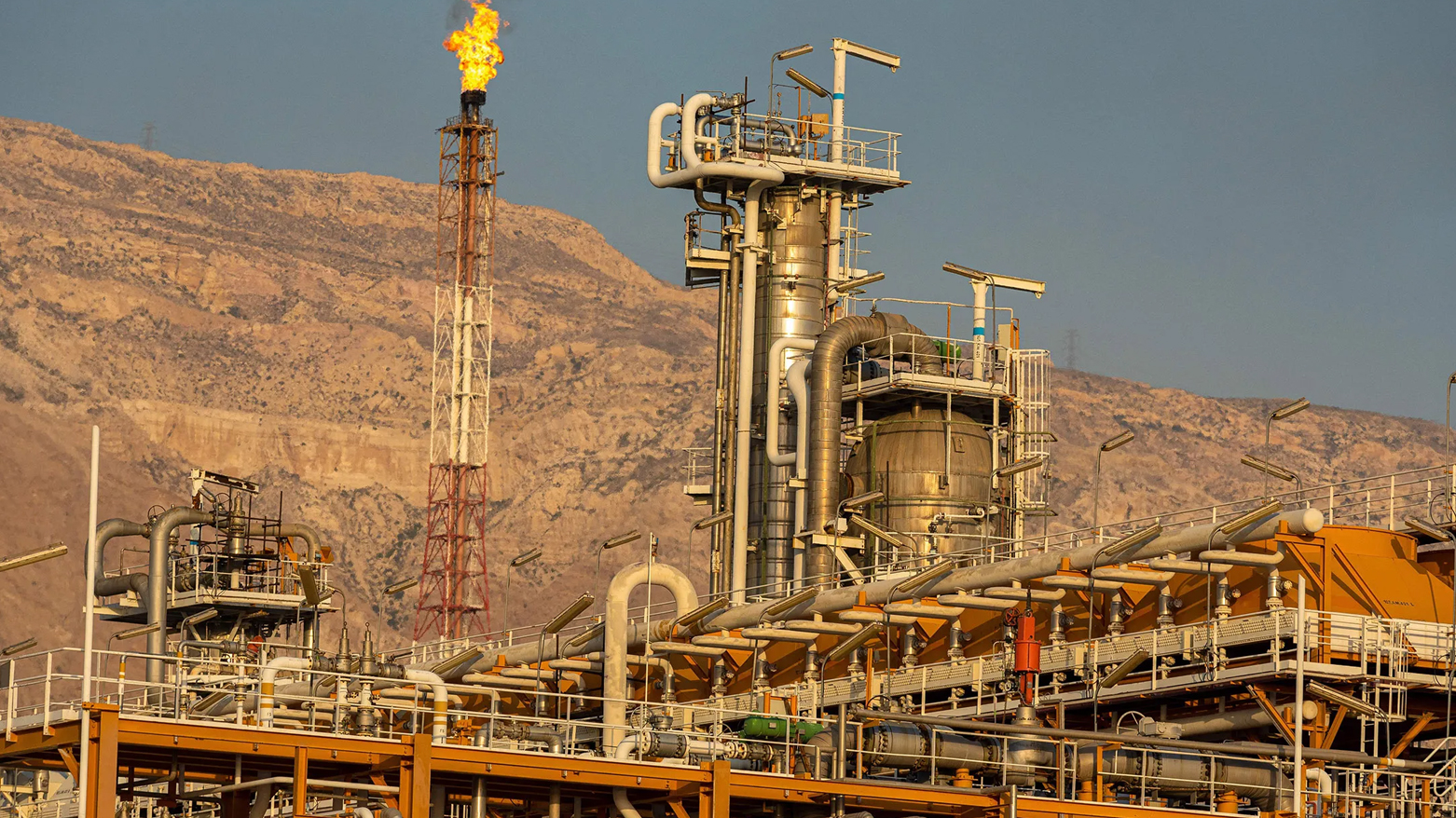
The conflict has already disrupted the export of 21 million barrels of oil per day through the Strait to global markets. In addition, 34% of chemical materials critical for food security have been affected, while daily operations involving 138 ships and containers at Jebel Ali Port in the UAE have been halted.
Beyond these global impacts, there is a direct and severe threat to Iraq, which lacks a comprehensive strategy to ensure energy security in this increasingly complex environment. Iraq derives approximately 95% of its revenue from oil—a highly vulnerable economic structure. Nearly all of this oil is exported from the Basra Gulf region and must pass through the Strait of Hormuz, leaving the country extremely exposed to any disruption in this critical corridor.
In general, what was hypothesized in earlier reports and research a decade ago has now materialized and must be addressed. The political elite and centers of power in Iraq are aware of the country’s highest national interests. However, due to the significant influence of Iran, Iraq’s national priorities have often been constrained or overridden.
This dynamic is further reflected in security developments on the ground. Armed groups affiliated with Iran have reportedly launched 555 drones and missiles within a single month targeted city in the Kurdistan Regional Government (KRG). Such incidents represent one of many indicators of the Iraqi state’s limited capacity to fully safeguard its sovereignty and internal security. According to the Iraqi Constitution (Articles 109 and 110), the federal government in Baghdad is responsible for preserving the country’s sovereignty and stability. However, in practice, fulfilling this responsibility remains a significant challenge under current political and security conditions.
From a strategic perspective, Iraq should have diversified its oil export routes. However, political constraints have prevented this from materializing. As a result, Iraq has incurred losses estimated at $9.6 billion during a single month of conflict due to the suspension of oil exports of approximately 3.5 million barrels per day. Iraq has considered alternative routes, such as a pipeline to Aqaba, passing through Jordan and Anbar, but this option has faced strong Iran's opposition. Another route to Baniyas in Syria has been inoperable for years due to conflict and infrastructure damage, and related projects have faced legal and political challenges within Iraq.
If Iraq does not open itself further to global markets and diversify its export channels, it risks losing its capacity to maneuver economically, diplomatically, and culturally in an increasingly competitive international environment.
Energy security is directly linked to national security and the functioning of the state. Without it, governance, economic performance, and social stability are all at risk of paralysis. Regional developments highlight this reality. For example, Egypt, a major actor in the Arab world, has taken significant steps to secure its energy needs. During the Gaza conflict, Egypt signed a $35 billion agreement with Israel to import natural gas from the Leviathan field, with supplies projected to reach 130 billion cubic meters by 2040. This represents one of the largest energy agreements between the two countries. Despite political sensitivities surrounding the deal, it proceeded, and Egypt’s gas imports subsequently increased by 14%.
Frankly, in 2023, the budget of the Popular Mobilization Forces (Hashd al-Shaabi), which is closely aligned with Iran, stood at approximately $2.6 billion. By 2025, its personnel had reached around 236,000, with the budget increasing to $3.5 billion. It is difficult to justify a situation in which Iraq, which derives nearly all of its government revenue from oil, effectively channels resources to armed groups that launch drones and missile attacks on airports and critical oil infrastructure in both Iraq and the Kurdistan Region. Such a scenario undermines state authority, threatens national security, and weakens the country’s capacity to manage its primary economic resources.
In principle, all states should aim to achieve sustainable development. However, in Iraq, decision-making authority is not fully consolidated within formal institutions such as the Council of Ministers, and the state’s capacity to exercise autonomous power remains limited. Under such conditions, foreign investment—one of the primary drivers of economic growth and prosperity tends to decline, as investors seek stable, predictable, and state-controlled environments.
Ensuring Energy Security: A Strategic Imperative for the United States
Despite extensive environmental policies and the efforts of the developed world to transition away from fossil fuels, global demand for oil and gas has not decreased; in fact, it has risen significantly.
The United States, as the world’s largest oil producer and consumer, relies heavily on hydrocarbons: 35% of its industry depends on natural gas, 25% on oil, and 12% on coal. Overall, 72% of U.S. energy consumption still comes from fossil fuels, even as global efforts toward industrial decarbonization intensify.
Historical data illustrate this trend. In 2005, global demand for natural gas was 2.74 trillion cubic meters; by 2025, this demand is projected to rise to 4.29 trillion cubic meters. Oil consumption has followed a similar trajectory: in 2005, the world consumed 84.7 million barrels per day, rising to 105 million barrels per day by 2025, and reaching 106 million barrels per day in 2026:
From a strategic perspective, the United States and Israel—as dominant regional and global actors—maintain detailed intelligence on hydrocarbon resources across the region. From the Eastern Mediterranean to Egypt’s Zohr field, from Cyprus’ Aphrodite and Calypso fields to Israel’s Leviathan, Tamar, Karish, Tanin, and Dalit fields, as well as Marine's field in the Gaza offshore and the Lebanese coast, these powers track energy reserves with precision. In northern Iraq and Syria, resources such as Kirkuk (where BP has acquired five fields), the Okaaz field in Anbar (estimated at 5.6 trillion cubic feet of gas), and Khormor and Chamchamal (operated by UAE’s Crescent Petroleum) are also closely monitored.
Our 2024 book, Deciphering the Eastern Mediterranean’s Hydrocarbon Dynamics: Unraveling Regional Shifts, published by the Emerald Group in the UK and available on Amazon, examines these dynamics in depth. Since 2016, we have operated the Mediterranean Institute for Regional Studies, conducting research, publishing interviews, and releasing articles in three languages. Given this extensive body of work, it is difficult to argue that Iraqi or Kurdish decision-making centers are unaware of the strategic importance of these hydrocarbon resources.
The UAE, Bahrain, and Gulf Vulnerabilities
The war has also placed significant pressure on Gulf states. For example, Bahrain—a country covering only 786 square kilometers, roughly the size of Iraq’s Chamchamal district—was targeted with 186 missiles and 419 drones in a single month by Iranian-backed forces.
Since the 1970s, the UAE has sought to reclaim its three islands (Greater Tunb, Lesser Tunb, and Abu Musa) from Iranian control. Both the UAE and Bahrain have entered the Abraham Accords, and the UAE has invested heavily in regional energy projects. Mubadala Petroleum and Taqa have been active in Israel’s Tamar field for more than three years, and the UAE has acquired an 18% stake in Delek Drilling for over $1 billion.
This conflict represents an existential challenge for the Arabian Gulf, particularly for the UAE, while the threat to Oman and Saudi Arabia is comparatively lower, due to differing geopolitical and security considerations.
Is the Global System Upside Down?
As Fareed Zakaria explained in 2008 in The World After America and later in The Future of Freedom, the United States no longer organizes global geopolitics as it once did. The tallest buildings are no longer in the U.S., symbolizing a shift in global influence.
Zakaria argued, “We are not talking about the decline of the United States, but the rise of others, such as China and India—countries with populations at least five times that of the United States. Other nations, including France and others, do not align fully with the unipolar U.S., yet many maintain strong relationships with leaders such as Vladimir Putin and Xi Jinping. Meanwhile, China’s technology companies, particularly in artificial intelligence, have permeated households worldwide.”
Scholars such as Joseph Nye and Robert Keohane describe this phenomenon as “power exchange” and “power erosion.” For the first time since World War II, Britain and NATO are not fully aligned with the United States, which continues to strive to maintain its hegemony and strengthen its economic position.
As I discuss extensively in my most recent academic book, Middle East Geopolitics and the Rise of Multipolarity: Global Turning Point (Springer Nature), this is also the era of global technology giants—Microsoft, Meta, TikTok, Amazon, Intel, Starlink, Alibaba, Apple, Huawei, Oracle, and hundreds of others. These companies play a decisive role in shaping the global system, complementing the influence of traditional state actors.
Geopolitically, the Middle East in general, and the Gulf region in particular, sit at the center of this global transition. More precisely, the region is pivotal in determining the balance of power between Asia (notably China, Iran, and Russia) and the Western world.
A Sensitive Moment for Humanity
As Vladimir Lenin famously said, “There are decades when nothing happens, and there are weeks when decades happen.” The current war occurs at a particularly sensitive moment. Since September 11, 2001, the United States has engaged in a series of costly conflicts in the Middle East, exceeding $7 trillion in combined expenditures for the U.S. and its allies. In 2008, a global financial crisis shook the world, and in 2020, the coronavirus pandemic delivered another major shock.
The ongoing conflicts, including the war between Russia and Ukraine, affect only part of the world, but they carry broader consequences that could reshape humanity depending on the war’s duration.
Moreover, the world faces increasing instability, and no single power or coalition of powers is positioned to reorganize the global order. There is no unified international strategy to address existential threats, whether from artificial intelligence, climate change and global warming, or global pandemics. This growing fragmentation highlights the urgency of coordinated global governance in an era of heightened risk.
The Consequences
Energy Security at the Core: Energy security lies at the heart of both regional and global systemic stability. The conflict in Iran presents a stark choice: either the Islamic Revolutionary Guard Corps must capitulate, or the strategic objectives of the United States and Israel will be challenged. If negotiations fail, resolving the war may require a decisive event that disables Iran’s human and economic capabilities. Ultimately, the victors must craft a compelling narrative to legitimize their actions on the global stage.
U.S. Military, Technological, and Economic Leverage: The United States remains a dominant military, technological, and economic power. Since the end of the Cold War, it has also provided unprecedented support to communities such as the Kurds. For the Kurds, this era offers unique opportunities—but only if they recognize the strategic moment and build robust institutions, particularly in energy security, which underpins long-term stability and autonomy.
Transformative Impact on Iraq: Regardless of the war’s immediate outcome, Iraq will experience decisive and fundamental changes. The conflict will reshape political, economic, and security structures, highlighting the vulnerabilities and dependencies that have long constrained Iraqi sovereignty.
A Multi-Stage, Multi-Region Conflict: The conclusion of the war will not occur in a single region or within a short timeframe. Israel and the United States are pursuing a phased strategy, recognizing that energy constitutes the lifeblood of both the economy and the dollar. This approach emphasizes control over trade routes, oil, and gas reserves, and will be implemented in stages across multiple geographical areas.
Persistent Resistance and Domestic Constraints: The main challenge for the United States and Israel is not limited to attacks on embassies or the inability to directly topple the Iranian regime. Public opposition to war, both in the U.S. and globally, constrains immediate action. Even if hostilities pause temporarily, underlying conflicts will likely resurface until strategic objectives are fully achieved. If regime change is pursued, southern Iran home to the strategic oil province of Khuzestan—will be a key focus. Various groups, including the People’s Mujahideen, Kurdish forces, Azeris, and Baluchs, reportedly maintain ready armed capabilities, leaving central Iran as the primary obstacle. Israeli and U.S. airstrikes have already targeted nearly 12,000 sites across the country, affecting Tehran, Isfahan, Karaj, and other urban centers.
Migration, Humanitarian Crises, and Enduring Instability: The humanitarian consequences of the war, including mass migration and civilian suffering, are well understood by international agencies and policymakers, including the former Trump administration. As John Mearsheimer notes, the conflict may temporarily subdue militias, but over time they often reconstitute. Thus, the war may pause, but its broader disruptions—political, economic, and humanitarian are likely to persist.
The views expressed in this article are those of the author and do not necessarily reflect the views of Kurdistan24.