David L. Phillips
Academic
Syrian Kurds: A Positive Force for Change in The Region
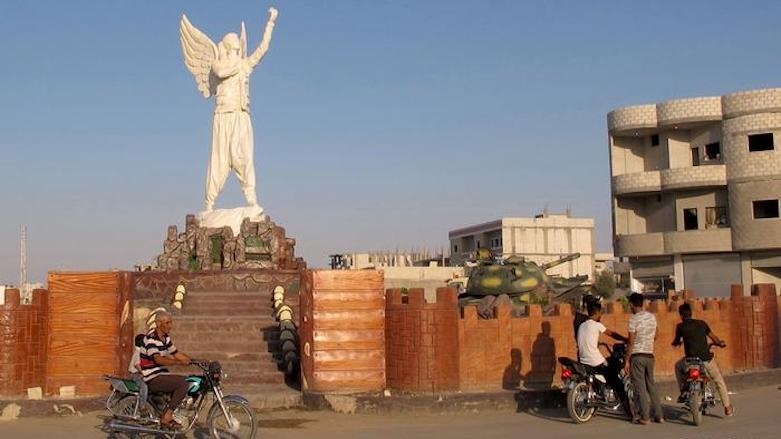
An after-action analysis requires a steely eyed assessment of what happened in the Autonomous Area of North and East Syria (AANES) leading to the defeat of the Syrian Democratic Forces (SDF) and the demise of its plans for democratic federalism in Kurdish regions of Syria and the region.
The Syrian Kurds represent a noble cause. Though they fought heroically, their defeat was inevitable without US support.
The Kurds joined the US-led Global Coalition Against Daesh in 2014. Ninety partners, including the Kurds, participated in the mission to degrade and destroy Daesh. Kurds were “good fighters” who joined the coalition because it was in their interest. They were used by the United States and ultimately betrayed.
Kurds paid a big price. About 11,000 were killed and 20,000 seriously injured. Mazloum Abdi, the able and principled commander of the SDF, was committed to coexistence. He negotiated an integration agreement with Syria’s interim president al-Sharra on March 11, 2025. The agreement envisaged equal representation for minorities and integration of the SDF's military and civilian structures into the new Syrian state, including control over border posts as well as oil and gas in the Kurdish northeast. These principles should still guide Damascus going forward.
The SDF delayed implementing the agreement, insisting that Damascus accept political decentralization as a precondition. Mazloum believed that, “The integration of our forces must take place within a comprehensive political agreement that recognizes decentralization and the rights of the components of North and East Syria.”
Though the US government did not categorize the SDF as a terrorist organization, President Erdogan viewed the SDF as a branch of the PKK and warned they “will be buried with the weapons”. Committed to ending conflict and a a modus vivendi, the PKK announced a decision to disarm, demobilize and reintegrate its fighters after decades resisting Turkish domination. Erdogan rejects political decentralization in both Turkey and Syria. When Erdogan suggested that the PKK’s decision to disband also extended to affiliated groups in Syria, Mazloum responded: “The PKK’s call to disarm concerns them alone and does not apply to our forces.”
Disunity has always been the Achilles heel of the Kurdish community. Kurds are divided by ethnicity, culture, and ideology in Turkey, Syria, Iraq and Iran. Kurds have long deliberated a Kurdish conference to develop a unified position on relations with Middle East countries. Tension existed between Masoud Barzani’s focus on centralized government and Öcalan’s preference for power-sharing and decentralization.
A Kurdish Unity Conference was convened in Qamishlo on April 26, 2025. It adopted a joint Kurdish political vision, based on the principle of a united, democratic, and decentralized Syria with Kurdish national rights enshrined in the constitution. The conference recognized Syria as a multiethnic, multicultural, and multireligious state with decentralized governance ensuring fair distribution of power and wealth. It endorsed full constitutional equality between men and women and the recognition of the Kurdish language as an official language in Syria alongside Arabic, as well as the cultural and linguistic rights of other communities such as the Alawites and Druze. The conference endorsed a unified Kurdish voice in negotiations with Damascus. It still serves as a guide to next steps.
Kurds want good relations with Syria’s Arab tribes. The Shammar and Baggara fought shoulder-to-shoulder with Kurdish forces against ISIS from 2015 to 2017. However, new frictions emerged as the war fronts cooled.
Arab leaders accused the SDF of marginalizing them politically and economically, monopolizing oil and wheat revenues. A statement signed by 14 tribal leaders in July 2025 demanded that Syria’s central government reassert sovereignty over the entire northeast. Tribal elites announced the creation of the “Council for Cooperation and Coordination in Jazira and the Euphrates” aimed at unifying tribal voices.
Self-criticism by the Kurds includes a critique of Murray Boochkin’s theories, which formed the ideological basis of the Rojava revolution. Boochkin espoused libertarian principles, and values of equality, freedom and sustainability. He envisioned a society linked through self-governing institutions that are highly decentralized with the distribution of power to entities at the local level. Kurds in Rojava envisioned a system of self-government based on Boochkin’s ideas, which emphasized decentralization, ecological justice and gender parity in local administration. In March 2005, Öcalan issued the ‘‘Declaration of Democratic Confederalism in Kurdistan”, which called for grassroots ‘‘democracy without the state.’’
Boochkin’s romantic ideals had broad appeal to Öcalan, the PKK, and the SDF. However, the Rojava revolution proved impractical and premature. The demise of the Autonomous Administration in North and East Syria marked the end democratic confederation, or at least a delay in its realization.
The SDF is still a force for positive change in Syria. For now, society in the Middle East has not yet evolved to embrace decentralization and grass-roots democracy. For Arabs and Turks, federalism is still a bridge too far.
The views expressed in this article are those of the author and do not necessarily reflect the views of Kurdistan24.