Dr. Ibrahim Khalid
Writer
Iraq’s Poverty Figures Tell a Different Story Than Baghdad’s Rhetoric
Kurdistan’s Lower Poverty Rates Challenge Baghdad’s Accusations
By Dr. Ibrahim Khalid
In mature societies, the majority of citizens, administrators, and politicians use numbers, data, and statistics as primary sources for understanding the reality around them. In contrast, in underdeveloped societies—including those in the Middle East—the vast majority derives its information and positions from speeches, slogans, and broad interpretations.
Data from the Iraqi Ministry of Planning does not attract much public interest in Iraq, yet it provides a more credible picture than all other sources of information in the country.
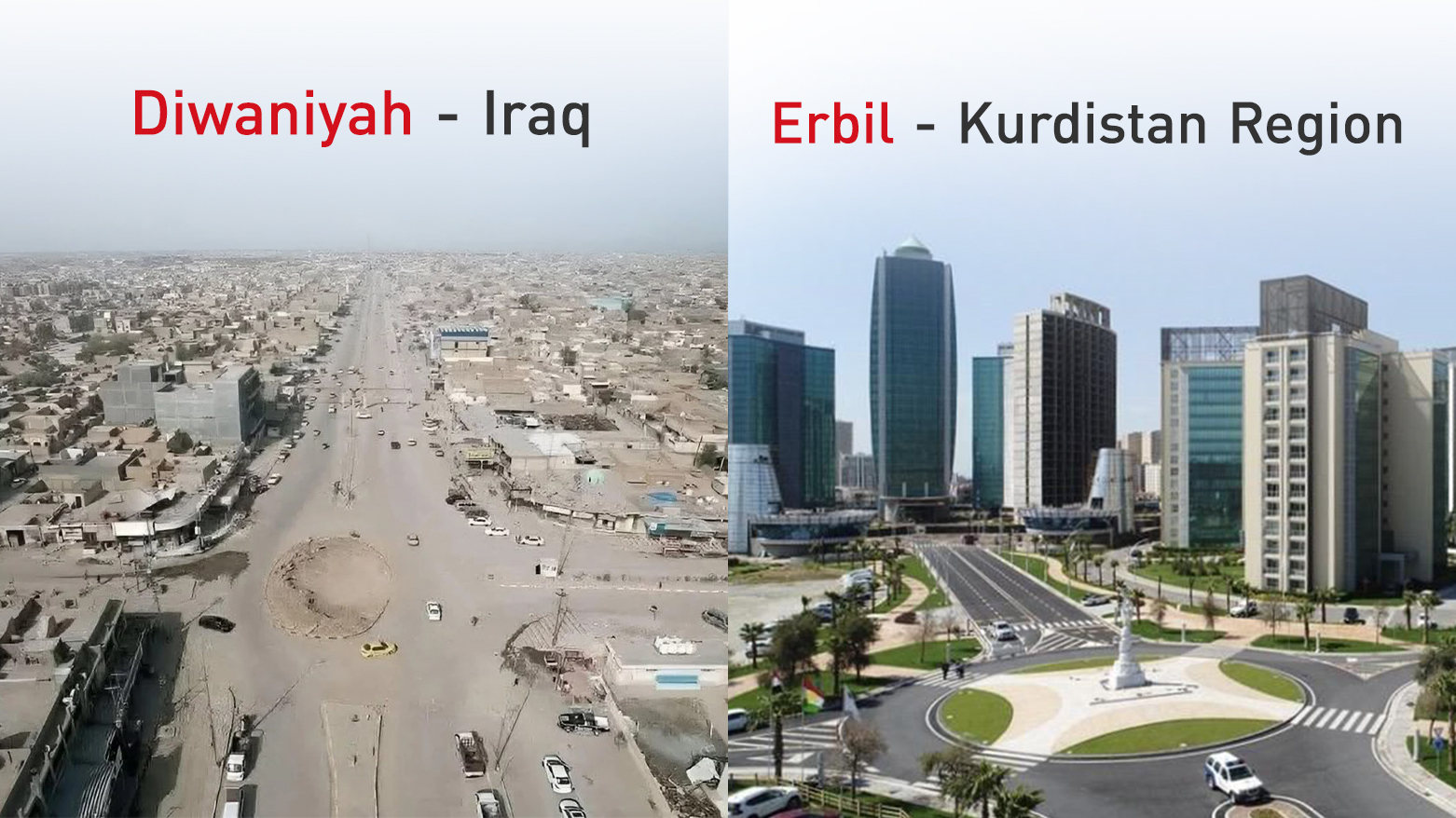
Data from the Ministry of Planning shows that the lowest poverty rate in Iraq is found in Erbil, and that poverty rates in Iraqi provinces overall are higher than those in the provinces of the Kurdistan Region, in some cases reaching more than six times (600%) the rate in Kurdistan. The figures at the end of this post are taken directly from Iraqi Ministry of Planning data published on April 30, 2026.
This is not a new phenomenon; most studies since 2003 have documented that the standard of living in Kurdistan—despite all the challenges and pressure created by Baghdad—is much better than in the rest of Iraq.
We are therefore facing a documented and sustained case spanning more than two decades, which further reveals the flaws, deficiencies, and ill intent in the mindset of the dominant parties in Baghdad, as well as the falsehood of the claims made by the “Kurdish opposition” linked to them.
For decades, successive governments in Baghdad have sought by all means to diminish the role of the Kurdistan Regional Government (KRG) and impose guardianship over it. They use various pretexts, the most prominent being that the absence of central government oversight leads to the spread of corruption in Kurdistan and the emergence of outlawed armed groups. However, reality proves the opposite, and there are many examples of this, including the issue of electricity. The budget of the Iraqi Ministry of Electricity for 2025 alone was equivalent to the entire budget of Kurdistan for the same year.
The KRG, headed by Prime Minister Masrour Barzani, was able—with that faltering and intermittent budget—to complete a modern road network, build a large number of dams, and secure electricity for most major cities in Kurdistan. Meanwhile, the budget of the Iraqi Ministry of Electricity was exhausted by the end of 2025 without securing electricity for even a single city.
Regarding outlawed armed groups, recent events have proven that “uncontrolled weapons”—which have been used against Kurdistan, the Gulf states, and even Baghdad itself—exist only in areas under the control of the Baghdad government. All of this, in addition to the Iraqi Ministry of Planning data, reveals that the scale of corruption, administrative failure, and uncontrolled weaponry is far greater in all regions of Iraq compared to Kurdistan.
The Iraqi Ministry of Planning data reveals what the Baghdad government does not want to disclose; it clearly shows that the pretexts used by successive Iraqi governments to manufacture crises with the Kurdistan Region are merely excuses divorced from reality, aimed at diverting attention from the corruption and administrative failure rampant across all sectors of the Iraqi state.
Unfortunately, the mental and historical framework of Eastern societies makes them vulnerable to exploitation, including political exploitation, which is exactly what is happening in Iraq.
These differences, documented by the Iraqi Ministry of Planning, also reveal the extent of the disorientation and subservience of the Kurdish opposition and the absurdity of its discourse. The agenda of this opposition, both its Islamic and secular wings, is limited solely to fighting the ruling parties in Kurdistan without providing any constructive contribution or even formal participation in the region’s institutions and bodies, under the pretext of widespread corruption among Kurdistan’s ruling parties. Yet at the same time, they rush to act as subordinates to the ruling parties in Baghdad, desperately seeking their satisfaction and participating with them in all fields, despite the fact that the scale of corruption and administrative failure among those parties is far worse than in Kurdistan.
We constantly see figures from this opposition defending Baghdad’s governments, justifying their administrative failures everywhere and by all means, and downplaying the statistics and data that reveal their shortcomings.
The question that arises here is: how would this opposition have acted if, for example, the Ministry of Planning statistics showed the same numbers in reverse—meaning the poverty level in Kurdistan was higher than in the rest of Iraq, with the highest poverty rates found in Zakho or Koya? Personally, I believe they would have called on Baghdad and several other capitals for military intervention in Kurdistan.
Excerpt from the latest statement by the Iraqi Ministry of Planning:
Provinces with the highest poverty rates: Al-Muthanna has the highest rate (43.6%), followed by Babylon (34.4%), then Diwaniyah (28.9%).
Provinces with the lowest poverty rates: Erbil (7%), followed by Sulaimani (8%).
Definition of a poor person: An individual whose monthly income is less than 137,000 IQD; however, the report also takes into account deprivation in the areas of health, education, and housing.
The views expressed in this article are those of the author and do not necessarily reflect the views of Kurdistan24.