Dr. Saman O. Hamad
Researcher
A Monument of Faith and Freedom: Erbil’s Barzani Grand Mosque to Blend Kurdish Identity, Architectural Brilliance, and Historical Legacy
In an op-ed, Dr. Saman O. Hamad describes the Barzani Grand Mosque in Erbil as a landmark symbolizing Kurdish identity, self-reliance, and cultural continuity, highlighting its massive scale, local workforce, and role as a future hub for faith, learning, and unity.
By Dr. Saman O. Hamad
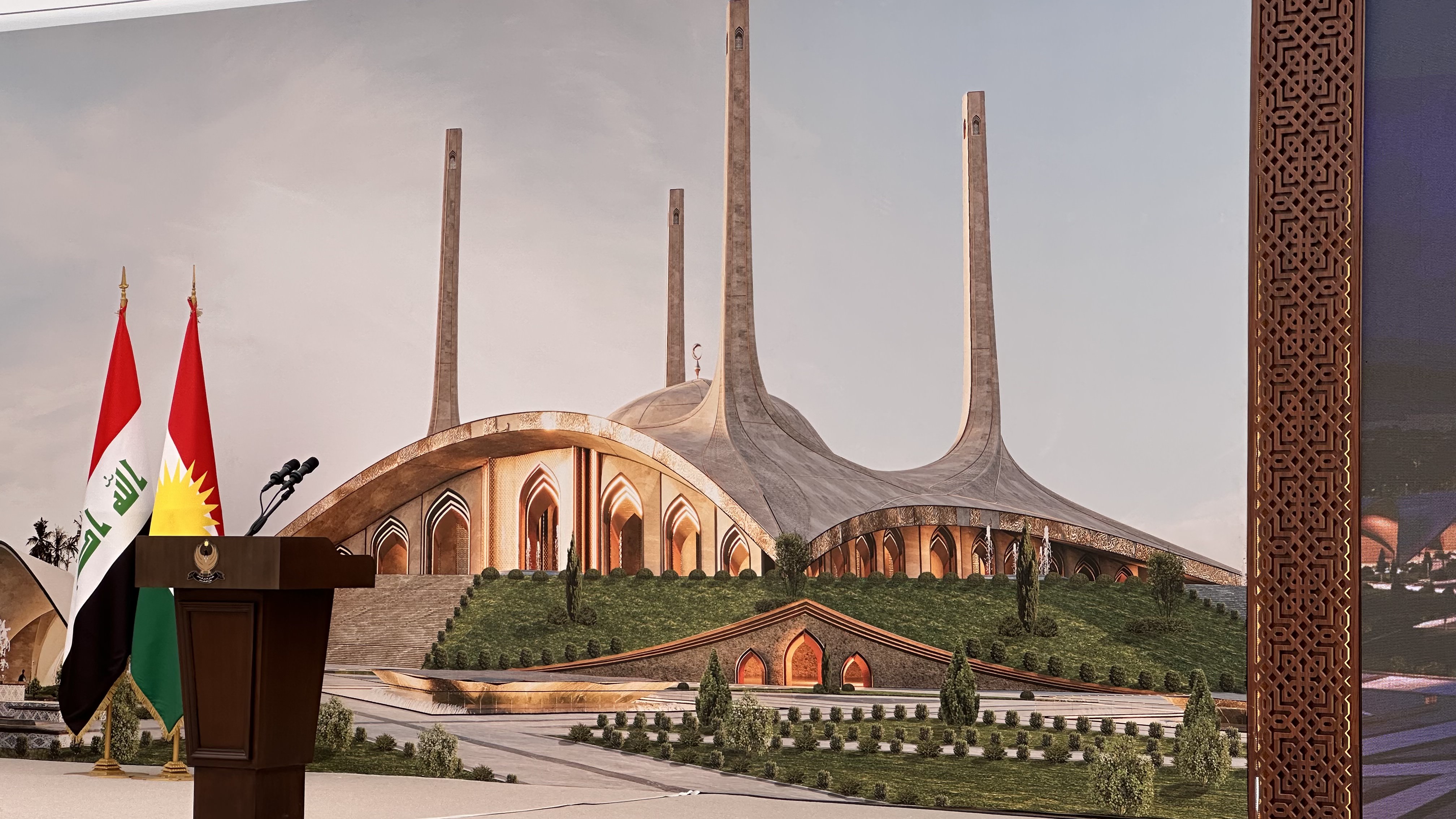
In a historic development that significantly alters both the physical landscape and the cultural paradigm of the Kurdistan Region, Prime Minister Masrour Barzani recently laid the foundation stone for the Barzani Grand Mosque in Erbil. Recognized as a definitive masterpiece of the Ninth Cabinet, this monumental project transcends the conventional scope of religious infrastructure; it stands as a profound manifestation of national identity, historical continuity, and a paradigm shift in Kurdish architecture.
Spanning an unprecedented two million square meters, the Barzani Grand Mosque is projected to become the largest landmark of its kind globally by surface area. Crucially, the Prime Minister emphasized that the entire enterprise will be executed utilizing 100% local expertise and workforce. This strategic reliance on domestic talent serves as an important indicator of the Region's advancing self-reliance and technical capabilities in large-scale civil engineering.
Historical Continuity: The Synthesis of Faith and Patriotism
While the physical dimensions of the mosque are historic, its underlying philosophy carries deeper academic and political significance. Within the context of Kurdish history, the project underscores a powerful message of continuity, deeply rooted in the legacy of the national leader Mullah Mustafa Barzani and the historical pioneers of the Kurdish liberation movement.
Long before the emergence of modern political Islam, Kurdish leadership in the late 19th and 20th centuries—led by prominent spiritual figures such as Sheikh Ubeydullah, Sheikh Abdulselam, Sheikh Mahmud, Sheikh Said, and Sheikh Ahmed of Barzan—pioneered a distinct institutional synthesis of faith and patriotism. These religious and spiritual authorities were historically positioned at the absolute vanguard of defending the territory, the nation, and the legitimate rights of the Kurdish people alongside all indigenous components of the society.
This harmonious intellectual balance is explicitly illustrated by a historical reflection shared by President Masoud Barzani, who observed: "When Barzani was in the mountains, he constantly carried the Holy Quran and the Diwan of Ahmad-i Khani (and Melayé Jaziri) with him; he never separated himself from these two."
From an analytical perspective, the juxtaposition of the Quran with classical Kurdish poetry serves as definitive evidence of a unique socio-political formula: a deep, moderate religious sentiment integrated organically with an unyielding national and patriotic consciousness. Historically, very few leaders have successfully synthesized the worldly struggle for self-determination with spiritual devotion without succumbing to ideological extremism. By advancing this specific historical path, the current administration seeks to safeguard the social fabric, preserve Kurdish cultural heritage, and reinforce a balanced national-religious identity for future generations.
Architectural Sovereignism and Urban Identity
Beyond its spiritual and historical dimensions, the Barzani Grand Mosque introduces a radical transformation to Erbil's urban and architectural landscape. Moving away from standard architectural forms frequently imported from neighboring regions, this landmark deliberately integrates authentic Kurdish motifs and cultural aesthetics directly into its structural design. This creative methodology endows the complex with a distinct national imprint, establishing a unique visual identity for the capital.
An Intellectual Hub for Knowledge, Unity, and Leadership
The Prime Minister emphasized that throughout the historical trajectory of Kurdistan, mosques functioned far beyond basic theological confines; they served as the primary institutions for nurturing visionary scholars and leaders, as well as vital centers for national consultation and collective unity.
Reflecting this profound institutional legacy, the strategic vision for the Barzani Grand Mosque ensures it will function as an inclusive, multidisciplinary complex serving all segments and diverse demographic components of the Kurdistan Region. The landmark is destined to become a premier global center for faith, spiritual enlightenment, advanced academic research, and institutional service to the homeland, thereby institutionalizing the Region's long-standing tradition of peaceful coexistence.
The views expressed in this article are those of the author and do not necessarily reflect the views of Kurdistan24.