Diyar Mala Mohammadamin
Academic and Researcher
The Peshmerga United: From Historic Struggle to National Institution
Diyar Amin argues that the Peshmerga's unification under the Ministry of Peshmerga marks a historic national milestone, completing years of reform while opening a new phase focused on modernization, professionalism, stronger command structures, and a unified force serving Kurdistan.
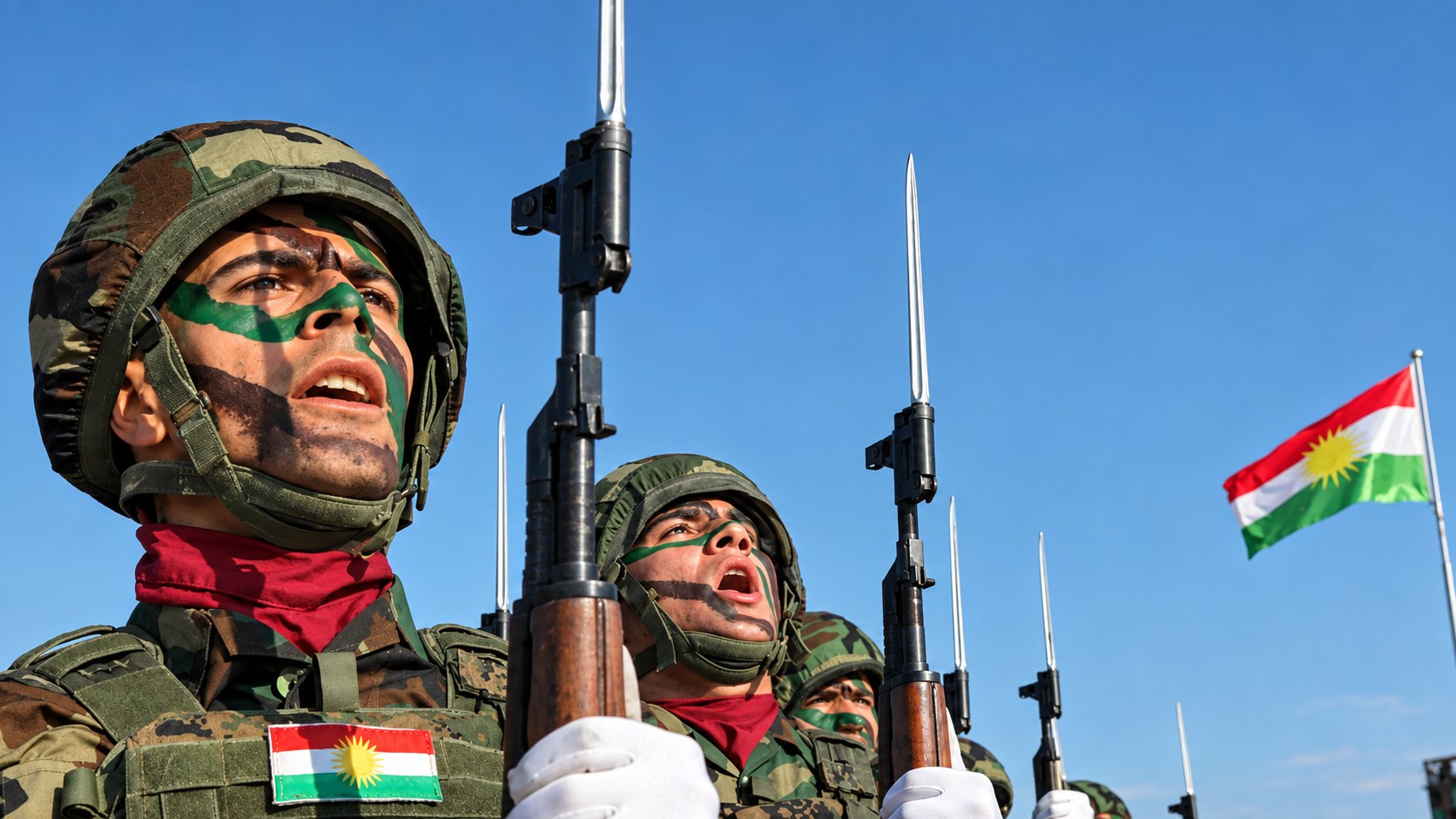
September 21, 2026, will be remembered as an important day in the history of the Kurdistan Region and the Peshmerga. After years of determination, political commitment, institutional reform and sustained effort, the Kurdistan Region has reached a historic milestone, the Peshmerga forces have been unified under the Ministry of Peshmerga within a single modern military structure. This achievement is much more than an administrative development. It is the realisation of a longstanding national objective and an important step in strengthening one of the most respected institutions in the history of the Kurdish people. The Peshmerga has always represented far more than a military force. It embodies the struggle, sacrifice and identity of the people of Kurdistan. Generations of Peshmerga have defended the land and people of Kurdistan, endured extraordinary hardships and made the ultimate sacrifice for freedom, dignity and security. Their legacy belongs to all of Kurdistan.
The unification achieved today therefore carries a significance that extends well beyond military organisation. It brings the history, sacrifices and achievements of the Peshmerga together within one national institutional framework. The foundations of today’s achievement were laid years ago. President Masoud Barzani played a foundational role in initiating the reform of the Peshmerga institution. As President Nechirvan Barzani recalled in his remarks at today’s ceremony, the reform process within the Ministry of Peshmerga dates back to 2016, when President Masoud Barzani initiated the process. That effort was undertaken at a time when the Peshmerga was carrying the immense responsibility of defending Kurdistan against ISIS and protecting the people of the Region and its diverse communities and playing a vital role in protecting the wider world from the threat posed by ISIS.
President Masoud Barzani’s role in the history of the Peshmerga is inseparable from the institution itself. As a national leader and longtime Peshmerga commander, he devoted decades to preserving its name, dignity and role in the struggle of the Kurdish people. Today’s achievement is therefore not an isolated event. It is the culmination of a vision that has developed over many years. The decisive phase of the unification process has taken place during the Ninth Cabinet of the Kurdistan Regional Government. From the beginning of his tenure as Prime Minister, Masrour Barzani placed the unification of the Peshmerga among the major commitments of his government’s agenda. Over the past four years, that commitment was translated into sustained institutional work, meetings, coordination and military reorganisation.
Today, that process has reached its declared completion. In his remarks at the unification ceremony, Prime Minister Masrour Barzani described the day as historic for Kurdistan and the Peshmerga. He noted that, following four years of intensive work and coordination, the forces had been brought under the umbrella of the Ministry of Peshmerga. The former 70 and 80 Forces have been reorganised within a unified command and control structure comprising brigades, divisions and two military area commands. The Ministry of Peshmerga Affairs has confirmed that both area commands have assumed their duties. This is the substance of today’s achievement: one ministry, a unified institutional framework, a unified command structure and a common military organisation. Prime Minister Masrour Barzani has therefore played a central role in turning a longstanding national objective into an institutional reality.
Yet today’s achievement is not being presented as the end of the Peshmerga’s development. Prime Minister Masrour Barzani made this point clearly. He described the unification as “the first stage and first step of a long process,” adding that the next stage is even more important. That next phase will focus on strengthening military capabilities, providing advanced weapons and developing professional capabilities, improving training in accordance with international military standards, and further developing the Peshmerga as a professional, organised and unified national force. This is a significant vision for the future. Unification provides the institutional foundation. Modernisation and professionalisation will build upon it. A unified Peshmerga must be equipped to meet the security challenges of the future, supported by modern military capabilities, professional training, effective command and control, advanced communications and strong cooperation with international partners. The objective is clear: a professional, modern, well-trained and well-equipped Peshmerga force capable of fulfilling its national responsibilities and protecting the security and stability of the Kurdistan Region.
The most powerful meaning of today’s achievement lies in the principle behind it. For generations, Peshmerga fighters have stood together on the battlefield. They have shared the same trenches, faced the same threats and sacrificed for the same homeland. Today, that unity on the battlefield is being reflected in the institution itself. President Nechirvan Barzani captured this principle when he said that Kurdistan needs “one force, one ministry and one command.” He emphasised that the Peshmerga must be a national force and that its loyalty must be to Kurdistan and its institutions.This is the essence of the reform. The Peshmerga is not simply an organisation of military units. It is a national institution whose history is woven into the history of Kurdistan itself. Its future must therefore be built on the same principles that sustained it through its most difficult years: sacrifice, discipline, professionalism, unity and service to the people.
The completion of Peshmerga unification is a moment of national significance. It brings together years of political vision, institutional reform, military effort and international cooperation. It reflects the contributions of the Ministry of Peshmerga, its commanders and officers, the Peshmerga fighters themselves, and the international partners who have supported the reform process. Above all, it honors the generations of Peshmerga who sacrificed their lives for Kurdistan. The path ahead is now clear. The foundation of a unified Peshmerga has been established. The next task is to make that institution stronger, more capable, more professional and better equipped to protect Kurdistan. September 21, 2026, should therefore be remembered not merely as the date on which a military restructuring was announced, but as the day on which a longstanding national aspiration reached a historic institutional milestone.
One Peshmerga. One institution. One national purpose. The unification is achieved. The next chapter begins.
Diyar Amin
PhD in International Relations
The views expressed in this article are those of the author and do not necessarily reflect the views of Kurdistan24.