Why President Barzani Deserves Recognition at This Historical Moment
Today, at 80, President Barzani is witnessing one of the most important developments of his lifetime: the Peshmerga’s movement toward becoming a unified national force. This historical journey lends particular significance to the present moment.
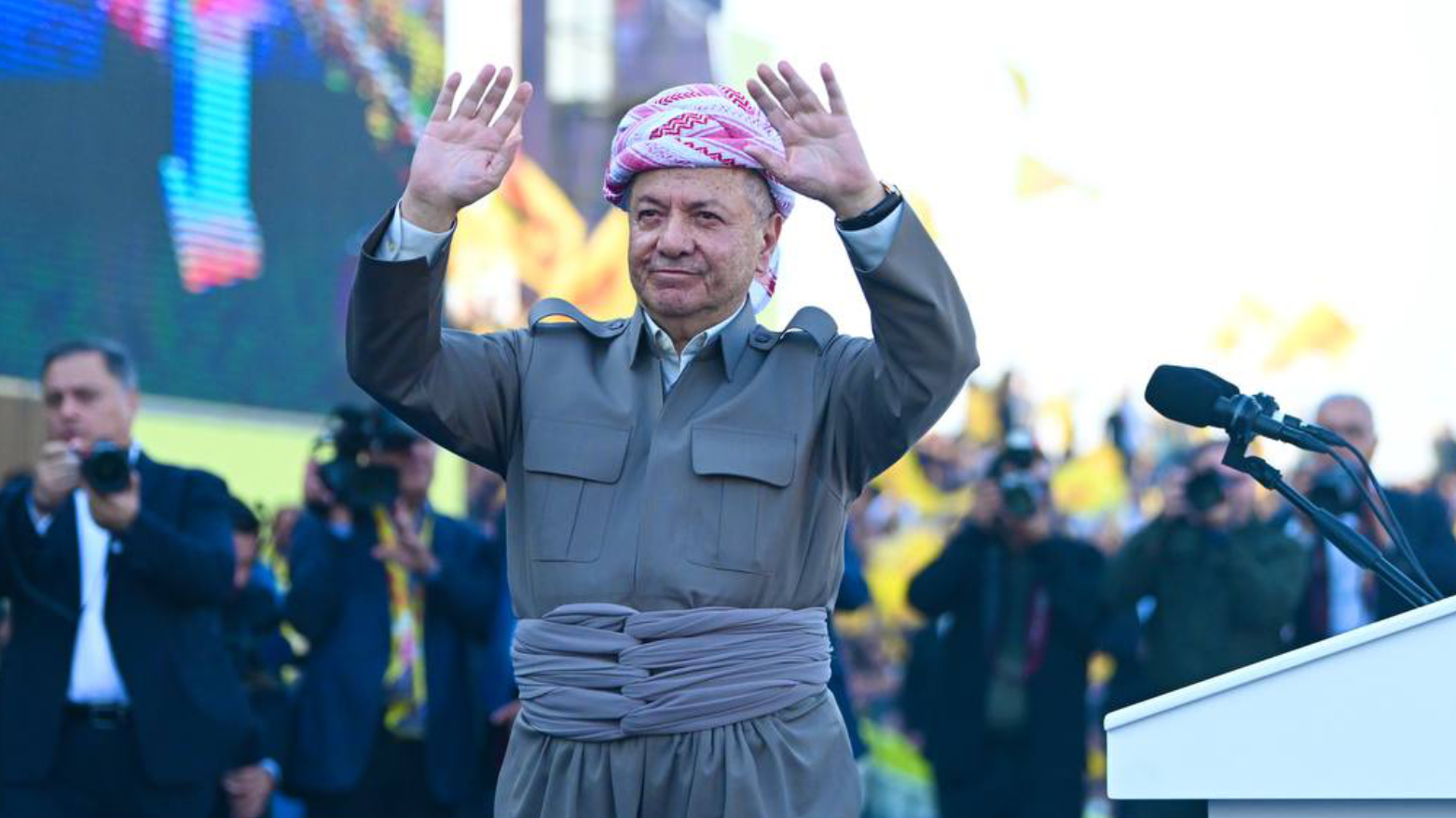
In politics, certain developments should not be judged solely by ceremonies, slogans, or partisan enthusiasm. Their historical and institutional consequences must also be considered. The unification of the Kurdistan Peshmerga forces is important from precisely this perspective. It is a development of considerable importance for the future of the Kurdistan Region and a deeply personal and historic moment in the political life of President Masoud Barzani.
Before it is a military force or an institution, the Peshmerga is a symbol and a deeply rooted national value in the hearts of Kurds. As President Barzani has said, “The Peshmerga was born of the tears and blood of the people of Kurdistan in their struggle to survive and confront oppression and occupation.” The Peshmerga is intertwined with Kurdistan’s political and revolutionary culture and remains an inseparable part of Kurdish identity. Strengthening it therefore means more than improving military capabilities; it also strengthens the security and stability of the Kurdistan Region.
President Barzani’s personal life reflects this connection. At 16, he took up arms for the first time as a Peshmerga, beginning a journey that would encompass more than six decades of struggle, war, diplomacy, and political responsibility. During a meeting in Washington in 2015, he told me that the Peshmerga was dearest to him in life. He has repeatedly described being a Peshmerga as his greatest honor. For him, being a Peshmerga is not merely a chapter from the past, but an identity and a place of honor he values above all else.
Today, at 80, President Barzani is witnessing one of the most important developments of his lifetime: the Peshmerga’s movement toward becoming a unified national force. This historical journey lends particular significance to the present moment.
Following the developments of 1991 and the establishment of the Kurdistan Region’s institutions, one of the most difficult legacies of the past was the existence of military structures shaped by partisan divisions. The Peshmerga stood for the defense of Kurdistan, but its command structure also bore the consequences of earlier political disagreements. Transforming these forces into a professional national institution under a unified command remained one of Kurdistan’s most important unfinished projects.
The war against ISIS was a defining turning point in this process. When ISIS seized large parts of Iraq in 2014 and Iraqi security structures collapsed across significant areas, the Peshmerga faced an existential threat. President Barzani was present on the front lines and engaged directly with commanders and Peshmerga fighters. His presence carried considerable symbolic and political significance.
The emphasis on removing partisan flags and symbols from the front lines and bringing Peshmerga forces together under the Kurdistan flag was also important. The message was clear: when Kurdistan faced an existential threat, national identity had to take precedence over party affiliation. Fighters from different political backgrounds defended the same land under one flag.
This shared experience matters beyond the war against ISIS. Despite substantial disagreements among the Kurdistan Region’s parties, particularly over the past two decades, the Peshmerga has not been used to settle internal political rivalries in the Region. Its national purpose has remained a shared point of commitment and cooperation, even as its organizational structures reflected partisan divisions. Unification offers an opportunity to bring those structures into alignment with the mission the Peshmerga has long represented.
Over the years, in my interviews and conversations with U.S. senators, members of Congress, generals, and prominent international political figures, I have repeatedly encountered assessments of President Barzani that emphasize his political influence, his ability to make consequential decisions in moments of crisis, and his enduring place in Kurdistan’s modern history.
Recognizing the historical importance of a leader does not mean overlooking political disagreements or controversies. Leadership should be assessed through decisions, their consequences, and the course of events. From the Peshmerga struggle and the developments after 1991 to post-2003 Iraq, the war against ISIS, the independence referendum, and its aftermath, President Barzani has been at the center of many defining moments in Kurdistan’s contemporary history.
Peshmerga unification is a milestone, but fulfilling its promise now depends on how the process is carried out. Genuine unity requires a single chain of command, professional training and organization, transparent administrative and financial structures, and the lasting separation of military institutions from partisan competition.
The consequences of this development will extend beyond the Kurdistan Region. A professional and unified Peshmerga can strengthen institutional stability, improve security cooperation between Erbil and Baghdad, and act more effectively against terrorism and the remaining threat posed by ISIS. This process can also contribute to Iraq’s broader debate about the future of armed groups: armed forces create lasting stability when they answer to lawful and legitimate institutions rather than political parties or factions.
Washington and Kurdistan’s other international partners have supported Peshmerga reform, professionalization, and unification for years. Progress in these areas can place the Kurdistan Region’s security relationships with the United States and other international partners on a stronger and more durable institutional foundation.
For President Barzani, the historical symmetry is striking. At 16, he first took up arms as a Peshmerga. Now, at 80, after more than six decades of a life shaped by the Kurdish struggle, he is witnessing the force that has defined his identity and life move toward becoming a unified national institution. This development may be one of the most significant moments of his long political journey.
It is in this context that congratulations and recognition for President Barzani can be understood: not merely for a political achievement, but for a milestone in a long journey that can strengthen the Kurdistan Region, deepen its relationships with Baghdad and Washington, and ensure that the Peshmerga’s national mission continues through a national institution.
By Rahim Rashidi (Mr. Kurd)
Head of the International Relations Office of
the Kurdistani Diaspora Confederation (KDC)