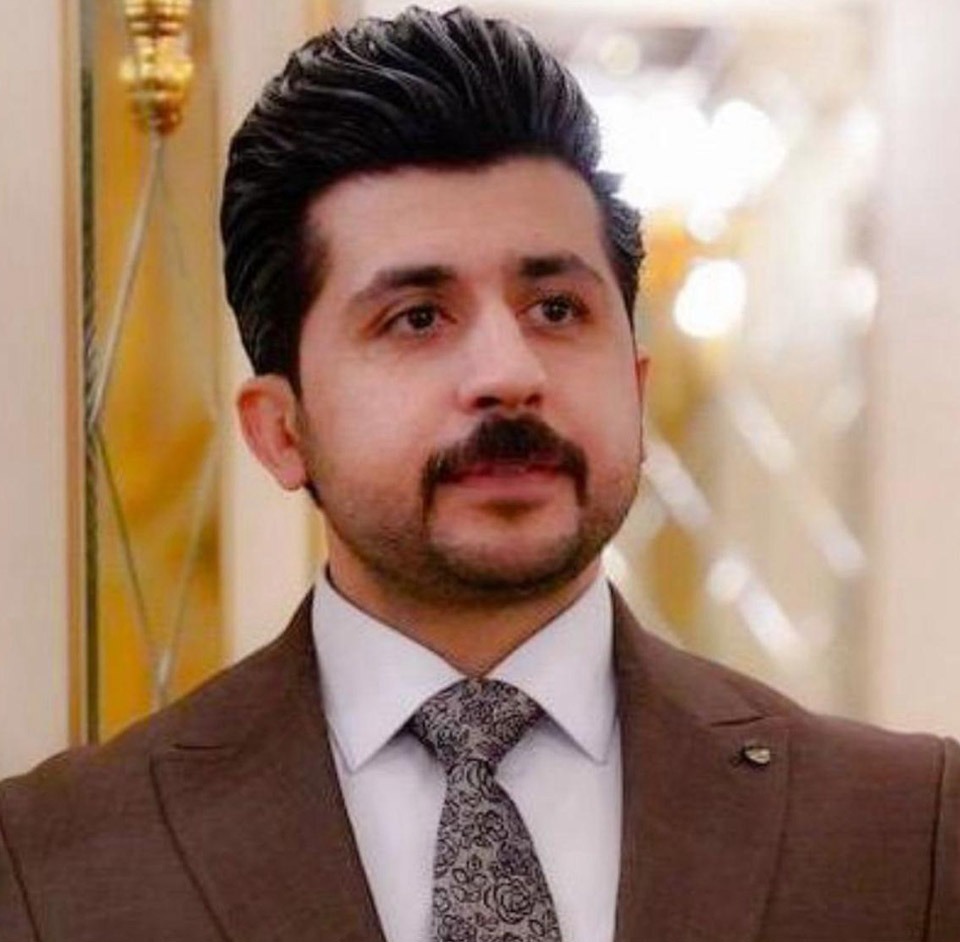
Wissam Massify
Academic and Researcher
International Organizations, the Veto, and the Erosion of Legal Responsibility in the Digital Age are "Code Without Consequence"
International organizations were designed for a world of borders, armies, and diplomatic cables. The threats they now face move through fiber-optic networks, cryptocurrency wallets and contested shipping lanes. Yet the body entrusted with primary responsibility for international peace and security, the UN Security Council, still operates on a 1945 bargain: any one of five permanent members can block a substantive decision. Between 2022 and 2026, that bargain produced a widening gap between the obligations international law proclaims and the responsibility anyone is actually made to bear.
The United Nations has not ignored technology. In December 2024 the General Assembly adopted the Convention against Cybercrime by consensus, and seventy-two states signed it in Hanoi in October 2025, the first UN criminal justice treaty in more than twenty years. The Global Digital Compact followed in 2024, and in 2025 the Assembly created a scientific panel and a global dialogue on artificial intelligence. These instruments create frameworks, not enforcement. By May 2026 only three states had ratified the Hanoi Convention. When digital wrongdoing demands binding measures, such as sanctions, investigations or referrals, the matter returns to the Security Council, where the veto decides.
Four episodes illustrate the pattern. On 25 February 2022, Russia vetoed a draft resolution condemning its own invasion of Ukraine. A party to the conflict sat in judgment of itself, an inversion of the oldest principle of justice: no one should be judge in their own cause.
The second episode is the most revealing for the digital age. On 28 March 2024, Russia vetoed the renewal of the Panel of Experts monitoring sanctions on North Korea. The panel was then investigating fifty-eight cryptocurrency thefts worth roughly three billion dollars, and had found that cyberattacks financed a large share of Pyongyang’s weapons programes. Monitoring passed to a Multilateral Sanctions Monitoring Team formed by eleven states outside the UN, which reported that North Korea stole more than 2.8 billion dollars in crypto-assets between January 2024 and September 2025. The facts are documented, but the findings no longer carry the authority of the Council. Responsibility was not abolished; it was quietly moved to a coalition whose conclusions bind no one.
Third, the United States vetoed draft resolutions on Gaza repeatedly. On 18 September 2025 it cast its sixth veto since the war began, against fourteen votes in favor, as famine was confirmed in parts of the territory. The International Court of Justice had already ordered provisional measures in January 2024, but under Article 94 of the Charter, enforcing the Court’s decisions also runs through the Council and therefore through the veto.
Fourth, on 7 April 2026 China and Russia vetoed a Bahraini draft on maritime security in the Strait of Hormuz, even after its sponsors removed any authorization of force. Eleven members voted in favor; the waterway remained largely closed to trade.
The lesson is not that one bloc abuses the system. Every permanent member that cast vetoes in this period did so to protect itself or a partner. The veto has become a legal immunity attached to power, not to merit.
Formal vetoes tell only part of the story. Security Council Report observed in August 2026 that, although just one veto had been cast that year, the mere threat of one continued to kill initiatives as effectively as the vote itself. Drafts are softened, delayed or never tabled. In such cases accountability does not fail; it never begins.
The digital age makes this more troubling, not less. Satellite imagery, blockchain analytics and open-source investigation now document violations almost in real time. The problem is no longer a shortage of evidence but a shortage of institutions able to act on it. Courts have tried to fill the gap: the International Criminal Court issued arrest warrants for President Putin in 2023 and for Prime Minister Netanyahu in 2024. In 2025, however, Washington imposed sanctions on Court officials, showing that powerful states can resist judicial bodies as well as political ones.
Some repair work is underway. General Assembly Resolution 76/262, adopted in April 2022, requires the Assembly to meet within ten working days after any veto. It was used after the Hormuz veto, with a debate held on 16 April 2026. This brings answerability, since vetoing states must explain themselves, but not accountability, since nothing they say carries consequences. In September 2026 Malaysia called for the veto to be abolished in cases of crimes against humanity, building on the French-Mexican initiative and the ACT Code of Conduct.
From my point of view, four practical steps would help the world, particularly developing countries. First, digital treaties should carry their own monitoring bodies, independent of Council mandates, so that evidence on cybercrime and sanctions evasion cannot be switched off by a single vote. Second, the General Assembly should use its residual powers under the Uniting for Peace tradition more boldly when the Council is blocked. Third, regional organizations and domestic courts applying universal jurisdiction should be strengthened as parallel routes to accountability. Fourth, we must always remember why international organizations were established and what their genuine role is, not merely a means of presenting democracy to the world. We must always remember the establishment of the UN to maintain international peace and preserve global security. Therefore, my message is: How far and to what extent will the disorder persist in the digital era?