
Abdulkareem Shakir
Writer
Walking the Long March in Beijing: What a museum can teach Kurdistan about keeping memory alive
Walking through a Beijing museum exhibition, a Kurdish visitor reflects on how China turned one generation's suffering into a lesson for the next — and draws out what Kurdistan can do to keep its own history alive
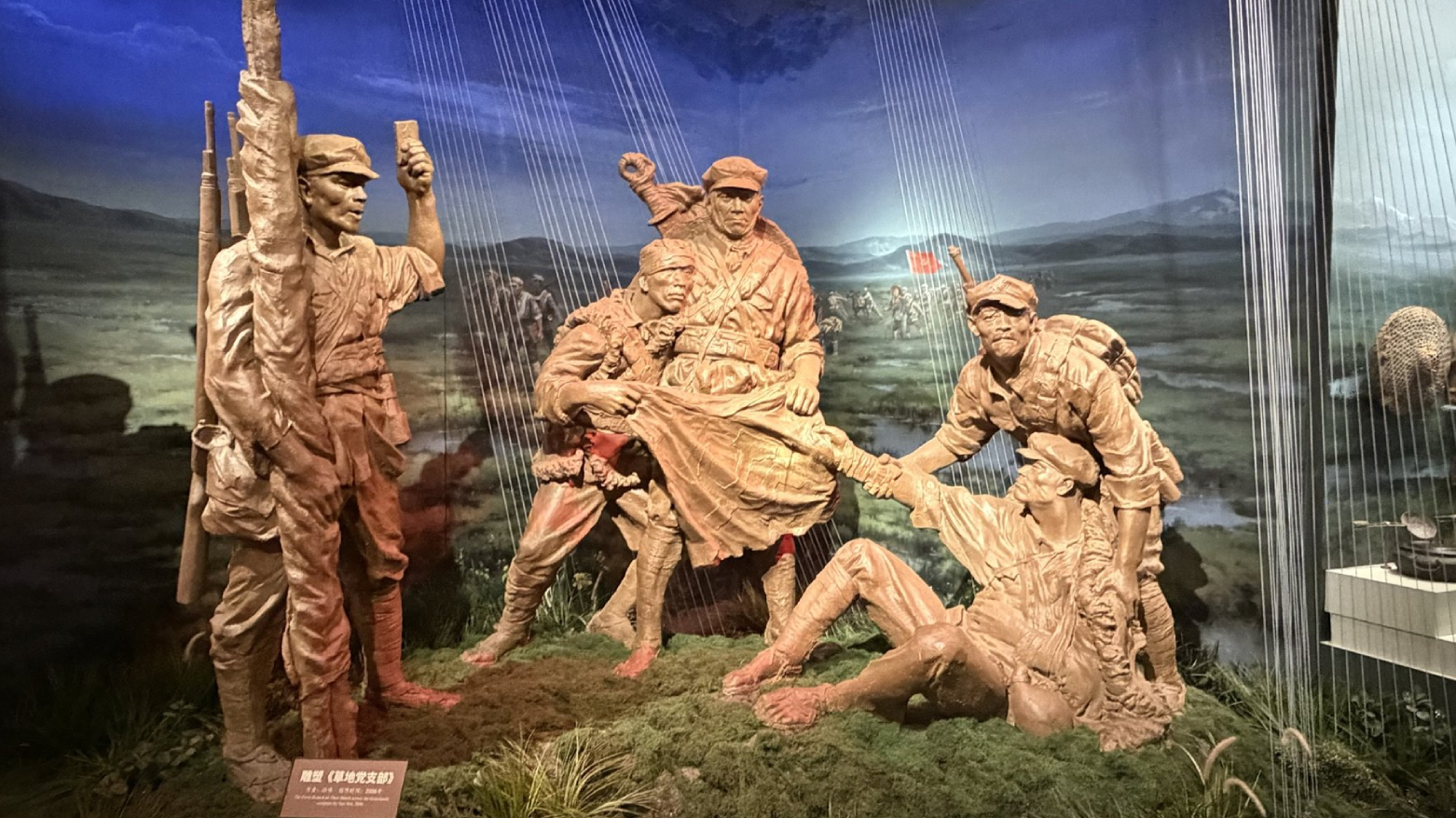
On the third floor of the Military Museum of the Chinese People's Revolution in Beijing, the lights dim, the floor seems to give way to grassland, and the walls turn into a stormy sky. Visitors are no longer only looking at history. For a few minutes, they walk through it.
The new permanent exhibition is called "The Great Expedition." It opened in late September 2026 for the 90th anniversary of the end of the Long March. Between 1934 and 1936, the Red Army retreated about 10,000 kilometers across China under constant attack, before reaching the northwest of the country.
The exhibition covers about 3,300 square meters, along a route more than 760 meters long. It holds 875 relics, 186 documents and 357 photographs and maps. More than 300 of these items are shown to the public for the first time. Walking through it, I kept asking myself one question: how does a nation turn the suffering of one generation into a lesson for the next? And could we, as Kurds, do the same for our own history and for the Peshmerga?

History told through people, not just dates
The first thing that struck me was that the exhibition is built around people. It tells 60 individual stories from the march. One panel shows old men who joined the march anyway: Dong Biwu was 49 when he crossed the snowy mountains, and Xu Teli was 58. Next to them stand sculptures of the "little Red Army soldiers," children who grew up on the march. Another panel shows women soldiers, who made the same journey under the same conditions.
A quote on the wall says it best. It comes from an enemy officer captured during the march: "If you had no fixed goal of serving the country and the people, why would these old men, children and women follow you for twenty thousand li?"

Making the past physical
The second lesson is how the exhibition makes history something you can see and almost touch. There are 14 recreated scenes. In one, soldiers pull a fallen comrade out of a swamp. In another, a group of men gathers in the grassland under a red flag. Large paintings show the army forcing its way across rivers under fire. A child who will never read a history book will still remember the moment they stood beside the frozen soldiers on the mountain.


Every object tells a story
The third lesson is respect for ordinary objects. Behind the glass are not only rifles and swords but also lanterns, worn cloth shoes, a blue enamel kettle, folded blankets, hand-drawn maps and handwritten orders. There is a stone tablet carved in 1935 in memory of fallen fighters. There is a wooden document box from an army headquarters. Each of these things belonged to someone, and together they make the story real.


Memory as an ongoing project
The fourth lesson is that this is not a monument built once and then forgotten. The museum also staged Long March exhibitions in 1996, 2006 and 2016, and each time it added newly discovered material. The memory is kept alive and renewed, and every new generation is shown more of it. The exhibition ends by linking the sacrifices of the past to the country's present. It is an official, state-led narrative with a clear message, but its method works.
What this means for Kurdistan
The Kurdish people have a long history of struggle, and the Peshmerga are at its center. Many of the men and women who lived that history are still with us. Their stories are in their memories, in old family photographs, in letters, and in weapons and belongings kept in homes across the region. Every year, some of these stories disappear forever.
We have important memorial sites, such as the Halabja Monument and Amna Suraka in Sulaimani. But a national museum of Kurdish history and the Peshmerga could do much more. After what I saw in Beijing, I believe it would need four things:
1-Collect now. Record the testimonies of veterans and martyrs' families while they are still alive, and gather personal belongings before they are lost.
2-Tell stories, not slogans. Show the individual fighter, the mother who waited, the village that sheltered fighters, and the child who grew up in the mountains, not only commanders and victories.
3-Make it immersive and educational. Use recreated scenes, digital archives and regular school visits, so that young Kurds experience their history instead of only hearing about it.
4-Make it belong to everyone. A national museum will earn the trust of future generations if it is run by historians and curators, includes the sacrifices of all Kurds, and is honest about difficult chapters.
Standing beside the frozen figures on that artificial mountain in Beijing, I thought of our own mountains, and of the Peshmerga who crossed them in snow, hunger and fear. Their sacrifice deserves more than speeches. It deserves a place where our children can stand, look, and understand what their freedom cost.