Barzan Wildlife Thrives Under Decades of Environmental Protection
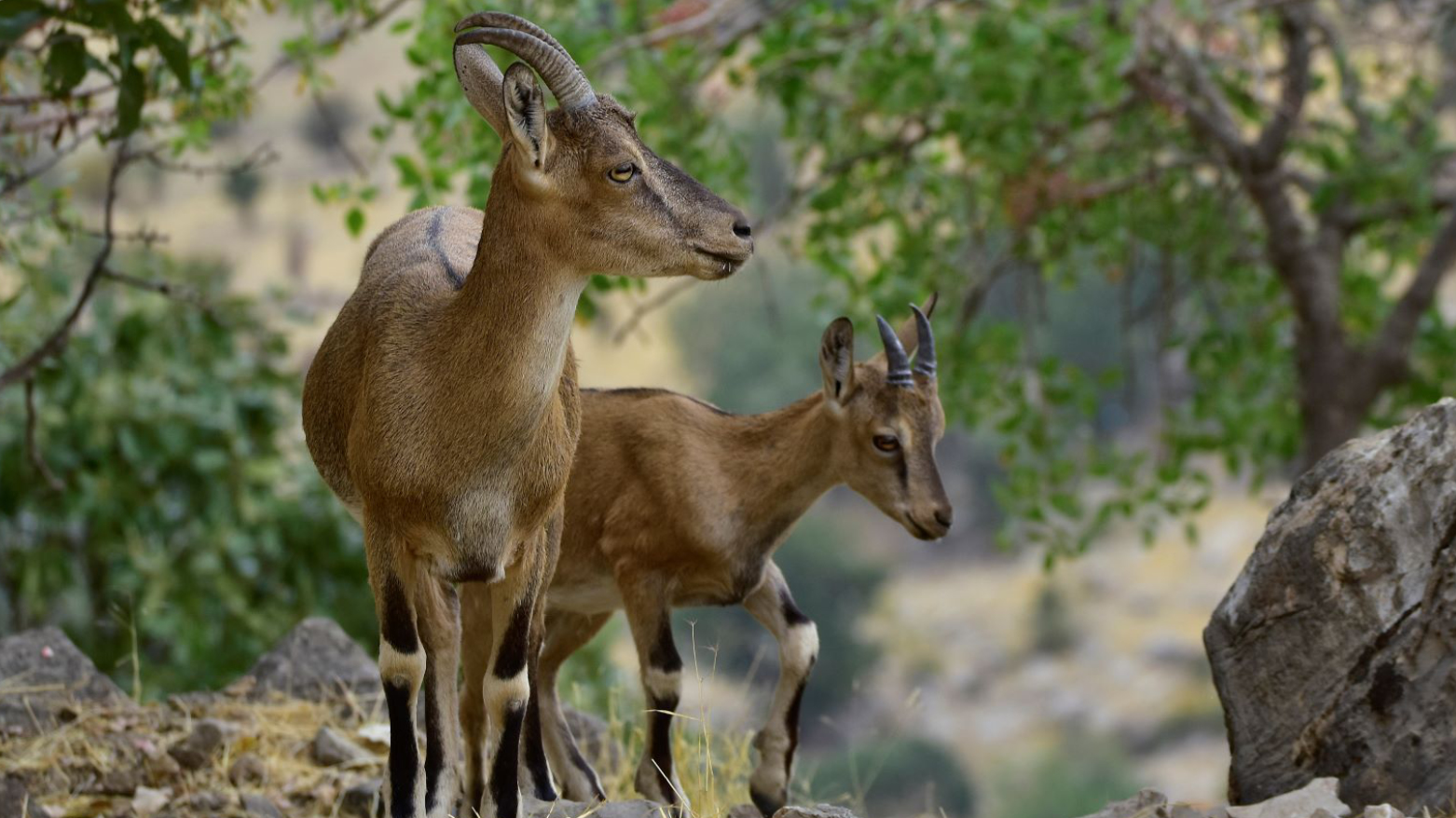
Photographer Ghafour Korkyi captures bezoar ibex, mountain goats and other wildlife thriving in Barzan, where decades of environmental protection have created a safe natural refuge.
ERBIL (Kurdistan24) - Bezoar ibex and wild mountain goats move freely across the green slopes and rugged mountains of Barzan, offering a rare glimpse of wildlife living in close proximity to human settlements without apparent fear.
Photographer Ghafour Korkyi captured the scenes across the Barzan area, where herds of animals can be seen roaming open landscapes that have long been protected by local environmental traditions.
The photographs highlight the region's biodiversity and the relationship between wildlife and nearby communities, where animals can approach farms and residential areas more freely than in many other parts of the region.

The conditions are rooted in a system of customary environmental protection associated with Sheikh Ahmad Barzani, whose rules placed strict restrictions on poaching, tree cutting and other forms of damage to the natural environment.
Those practices have continued across generations, alongside protection by relevant authorities in the Kurdistan Region.
The result is a landscape where wildlife has retained significant space to move and reproduce.
Alongside bezoar ibex and mountain goats, the Barzan environment is also home to rare bird species, wolves, bears and other animals that have become far less common elsewhere because of hunting, development and the loss of natural habitats.

The photographs by Korkyi show animals scattered across mountains and valleys, reinforcing Barzan's reputation as one of the Kurdistan Region's important wildlife areas.
Environmental activists regard the experience as an example of how community traditions and formal protection can work together.
They argue that Barzan demonstrates how restricting hunting and protecting vegetation can allow ecosystems to recover and wildlife populations to survive.

The approach is also cited as an example of environmental management that relies not only on government measures but on the participation and acceptance of local communities.
In Barzan, those customs have helped create conditions in which protecting nature is treated as part of everyday social responsibility.
The images offer a visual record of that relationship.

Rather than showing wildlife isolated from people, they depict an environment where animals, villages and agricultural land exist within the same wider landscape.
For environmental advocates, that coexistence is what makes Barzan particularly distinctive.
The continued presence of bezoar ibex, mountain goats and other species reflects decades of protection and a local culture that has placed limits on activities that could damage the natural environment.
As Korkyi's photographs show, the result is a landscape where wildlife remains visible, active and closely connected to the mountains and valleys that have sheltered it for generations.


Photos: Ghafour Korkyi