Iran’s IRGC Announces 54th Strike Wave on Israel, Debuts Sejjil Missile
The IRGC announced the 54th wave of strikes on Israeli targets using Sejjil missiles for the first time.
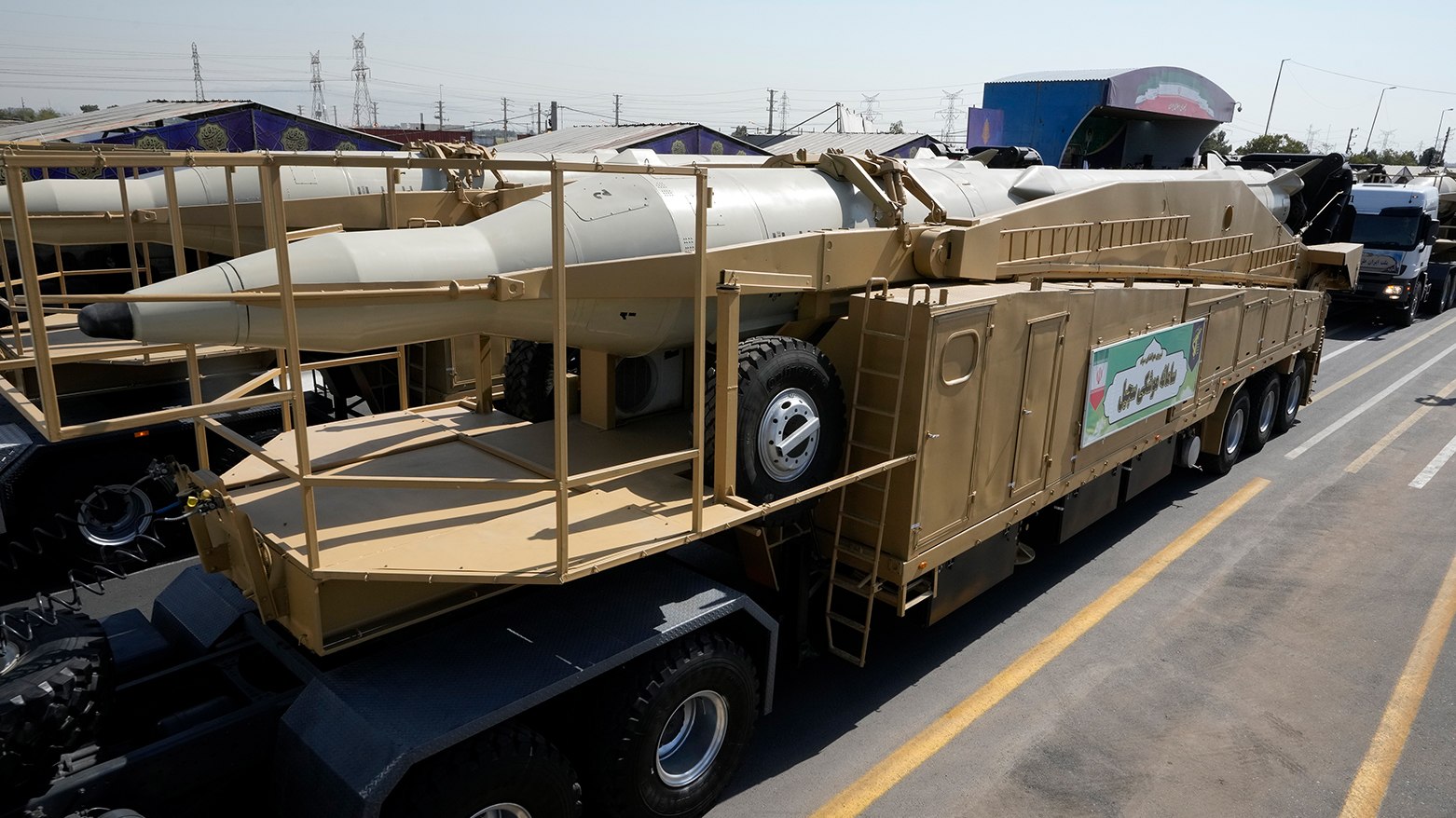
ERBIL (Kurdistan24) - Iran's Islamic Revolutionary Guard Corps announced on Sunday the execution of the 54th wave of its military operation against Israel, marking the first use of the Sejjil missile in the ongoing campaign.
The IRGC, in a statement released through its public relations office and reported by Iran's IRGC-linked Tasnim News Agency, described the operation as successfully carried out under the code name "Ya Zahra (peace be upon her)."
The news agency wrote that the “action was dedicated to martyrs Mehdi and Hamid Bakeri, as well as the martyrs of the East Tigris,” according to the statement.
The operation involved the launch of multiple missile types targeting key Israeli military sites.
These included super-heavy Khorramshahr missiles equipped with two-ton warheads, along with Kheibar Shekan, Qadr, and Emad missiles.
The statement highlighted the deployment of the strategic, solid-fuel Sejjil missile for the first time in this phase of the operation, known as "True Promise 4."
Targets struck encompassed management and decision-making centers related to Israel's aerial operations, vital military and defense industrial infrastructure, and military assembly points located in the heart of Israeli territory, the IRGC said.
The announcement invoked a Quranic reference, stating: "Striking them with stones of hard clay [Sejjil]."
The IRGC emphasized that the wave was conducted "by the grace and power of God," underscoring the operation's success in hitting the specified sites.
No further details on casualties, damage assessments, or immediate responses from Israeli authorities were provided in the statement.
This announcement comes amid the broader context of Operation True Promise 4, which has seen multiple waves of similar actions, though prior installments did not include the Sejjil missile, according to the IRGC's description.
The Sejjil, noted for its solid-fuel propulsion, represents a strategic addition to the arsenal employed in these strikes.
Officials from the IRGC did not elaborate on the specific timing of the launches or the exact locations within Israel beyond the general categories outlined. The statement focused solely on the operational details and the missiles' capabilities, without mentioning any international reactions or escalatory implications.
The inclusion of the Sejjil missile in this wave marks a notable escalation in the types of weaponry used, as per the IRGC's account. Previous waves of the operation, while employing other ballistic missiles like the Khorramshahr and Emad, had not featured this particular system, the statement noted.
The latest Iranian strikes follow a U.S.-Israeli military campaign against Iran that began on Feb. 28, 2026, with airstrikes targeting Iranian leadership, air defenses, missile sites, and nuclear facilities, according to reports from Reuters and the Institute for the Study of War.
The operation, codenamed Epic Fury by the U.S. and Roaring Lion by Israel, resulted in the death of Supreme Leader Ali Khamenei and other senior officials, as detailed in accounts from Wikipedia and the International Institute for Strategic Studies.
U.S. President Donald Trump stated the objectives included preventing Iran from obtaining a nuclear weapon, destroying its missile program, and promoting regime change.
The campaign has involved ongoing strikes, with Iran responding by threatening regional targets and closing the Strait of Hormuz, impacting oil and gas production, according to the BBC and Al Jazeera reports referenced in the Commons Library briefing.