Kremlin Blends WWII Memory with Ukraine War Messaging on Victory Day
ERBIL (Kurdistan24) - Russian President Vladimir Putin characterized the ongoing conflict in Ukraine as a defensive struggle against an "aggressive force" managed and equipped by the North Atlantic Treaty Organization (NATO) during a speech delivered at the annual Victory Day commemorations on Saturday.
According to a report by the Moscow Times, Putin utilized the 81st anniversary of the Soviet victory over Nazi Germany to frame Russia's current military operations as a "just" cause, directly linking historical memory to contemporary strategic objectives.
The address, delivered on a Red Square notably absent of heavy military hardware, served as a primary platform for the Kremlin to rally national sentiment around the "special military operation."
Putin asserted that the legacy of the 1945 victory continues to serve as the fundamental inspiration for Russian personnel currently deployed in Ukraine.
The Moscow Times reported that the president emphasized a narrative of ideological continuity, suggesting that the current military engagement is a modern iteration of the Soviet Union's fight against existential threats, while simultaneously identifying the entire NATO bloc as the primary antagonist in the current geopolitical landscape.
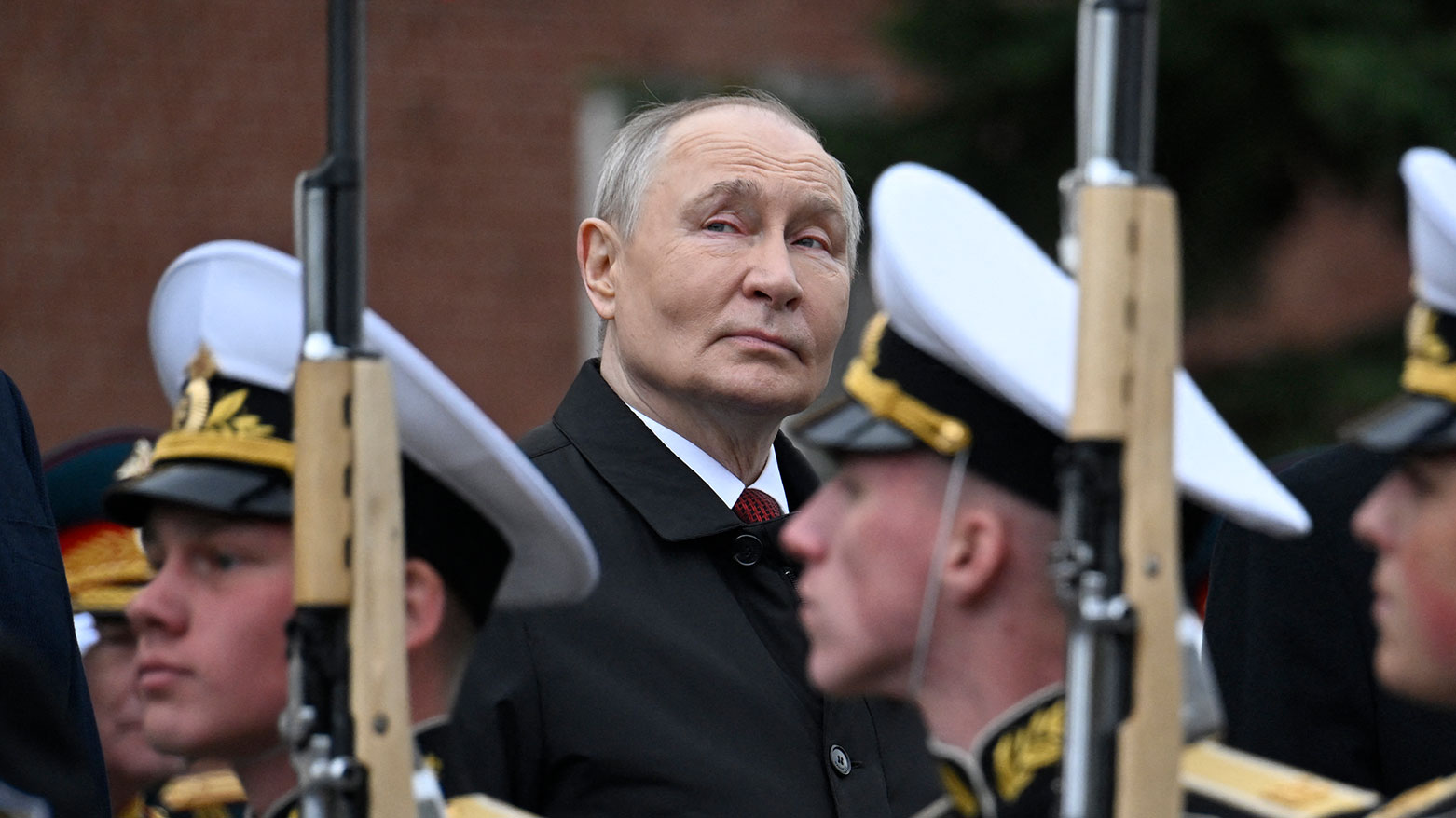
Russia celebrates the 81st anniversary of the Soviet Union's victory over Nazi Germany in World War Two (WWII). (AFP)
Victory Day Parade and Symbolic Messaging
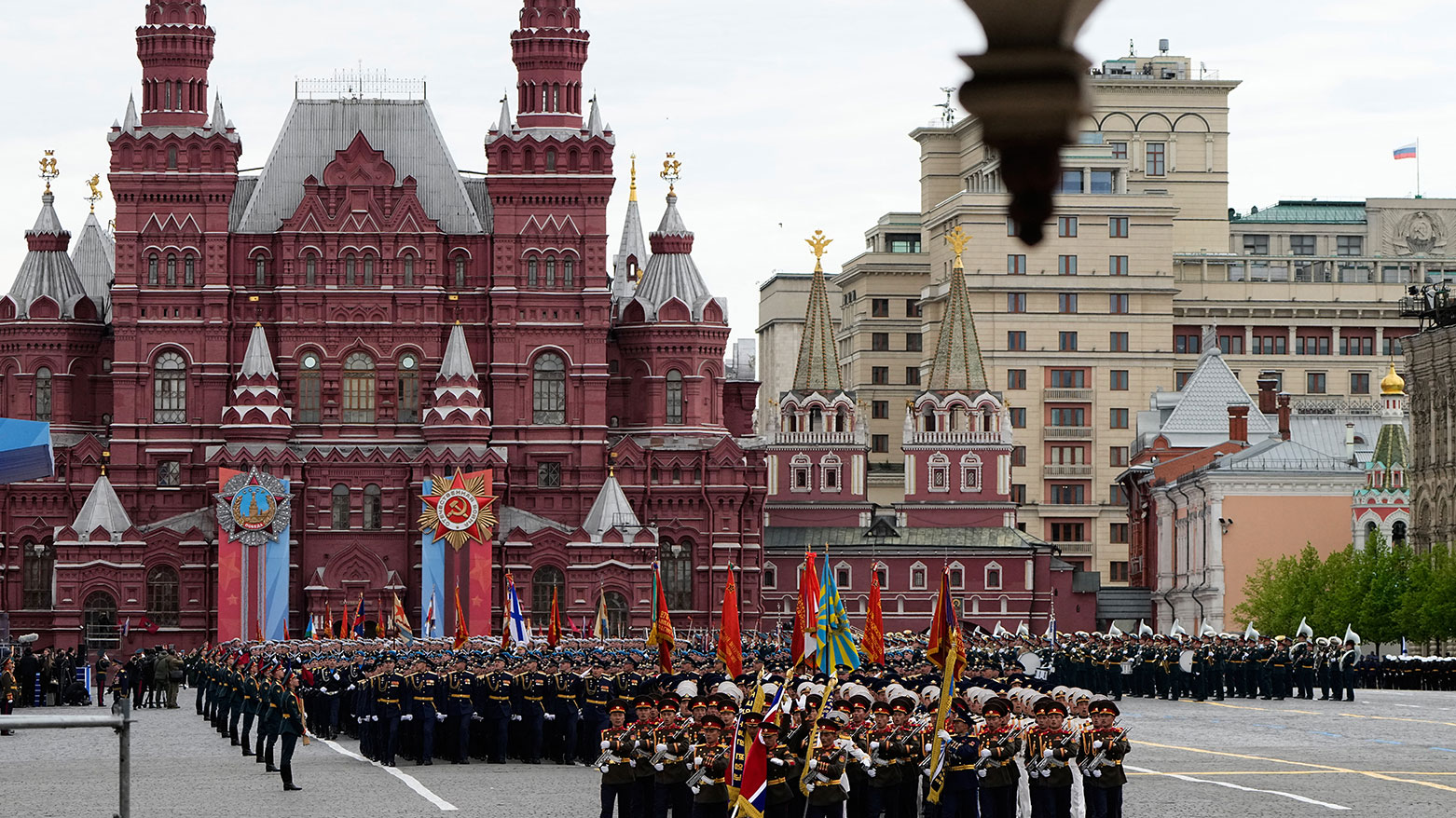
The scale and symbolism of the Victory Day parade on Moscow's Red Square functioned as a deliberate exercise in state messaging, designed to project national resilience despite a difficult security environment.
According to the TASS Russian News Agency, the proceedings commenced with the traditional march of the banner group of the Preobrazhensky Regiment Honor Guard, carrying the legendary Victory Banner.
TASS noted that the event was attended by various international leaders, reflecting the Kremlin's efforts to maintain diplomatic visibility.
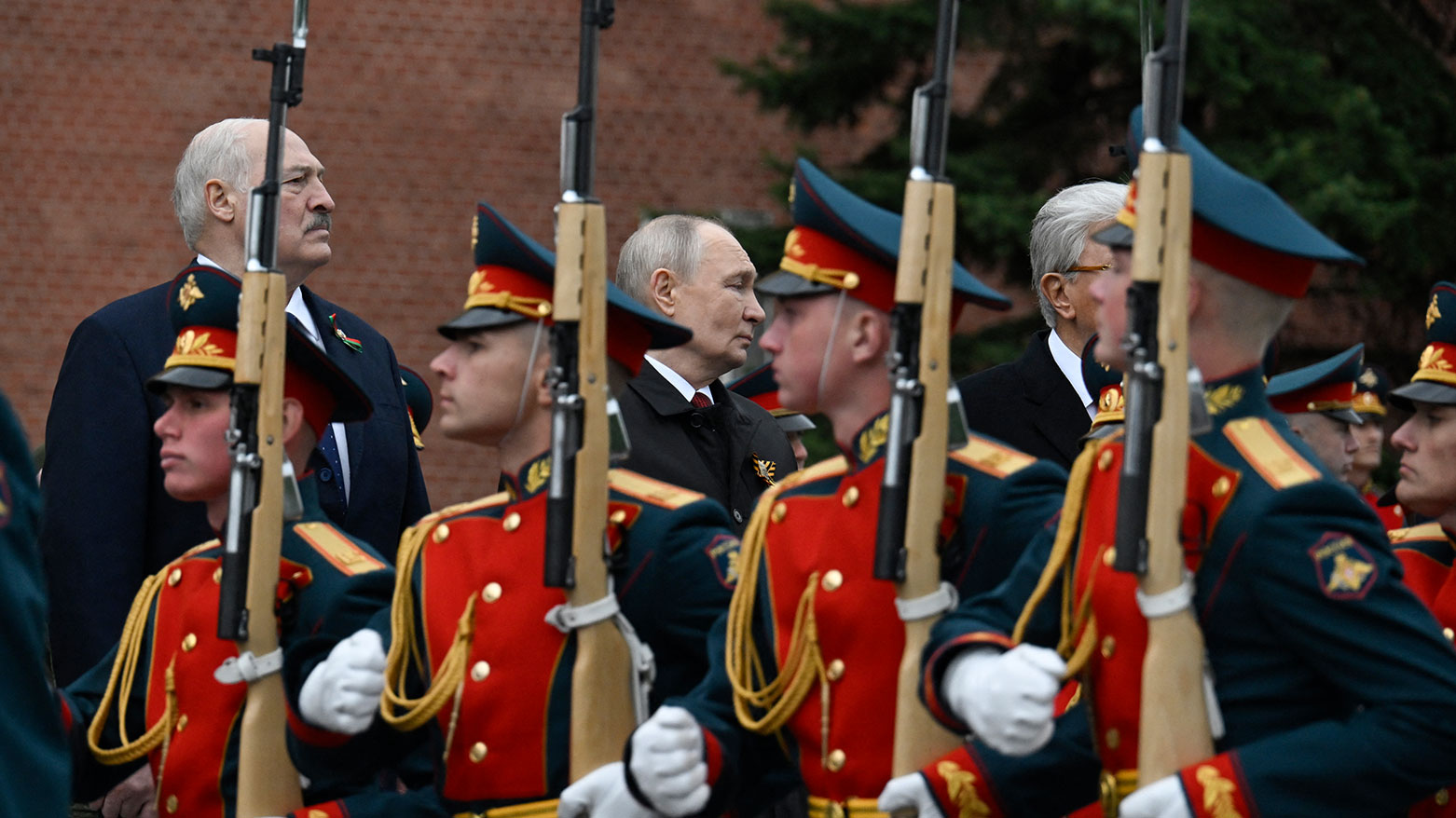
Russia celebrates the 81st anniversary of the Soviet Union's victory over Nazi Germany in World War Two (WWII). (AFP)
While the parade remains a cornerstone of Russian political identity, the Moscow Times reported that this year's celebrations were significantly downsized.
For the first time in nearly two decades, no tanks or advanced missile systems were on display, a shift attributed to heightened security concerns following a series of long-range attacks within Russian territory.
Despite the reduced military display, Sputnik News Agency reported that the event remained a vehicle for reinforcing the connection between historical sacrifice and current front-line efforts.
Official state narratives consistently portrayed the 1945 triumph as a foundational moral compass for the soldiers participating in the current campaign, positioning them as the direct successors to the generation that defeated Nazism.
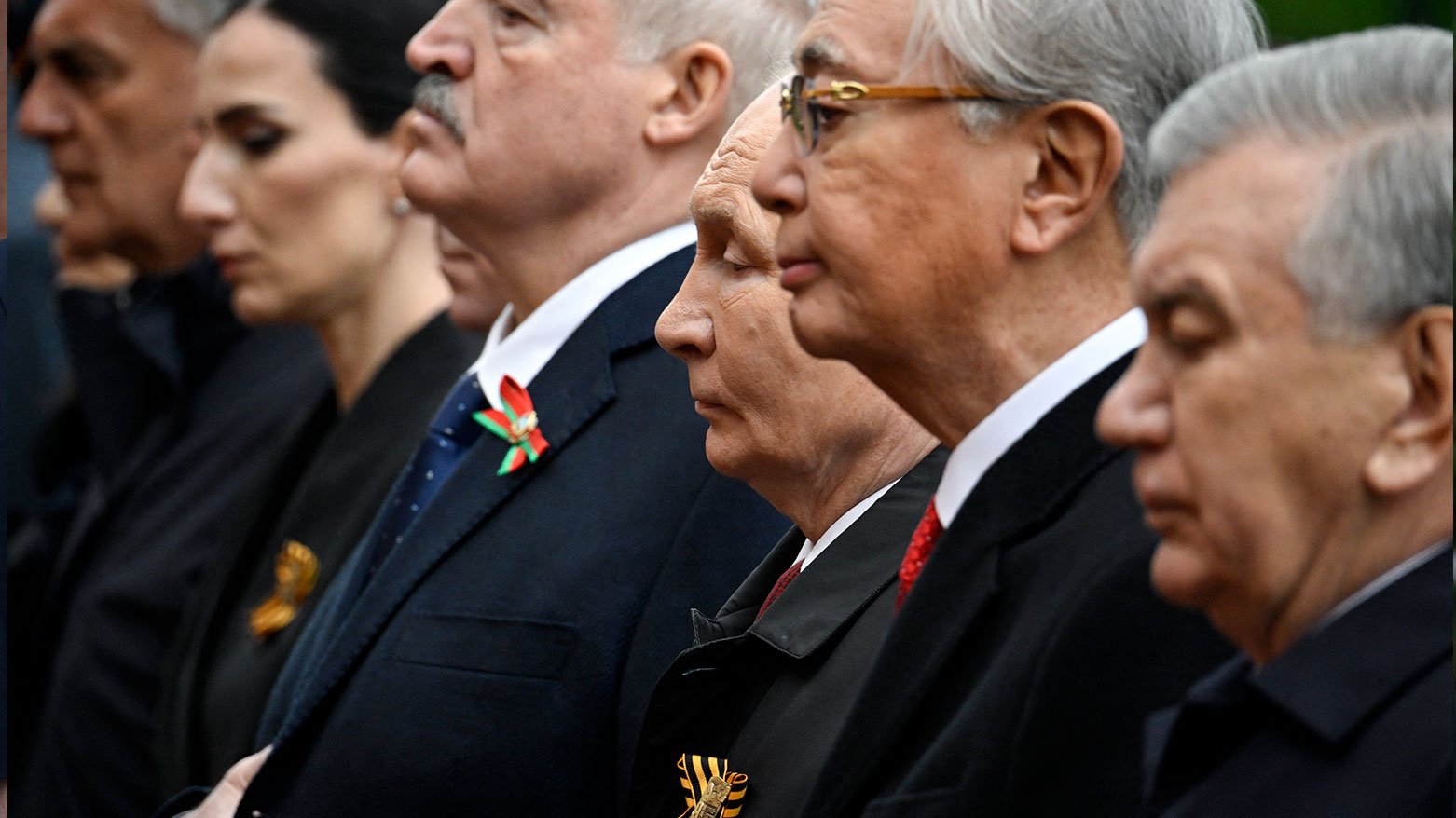
Russia celebrates the 81st anniversary of the Soviet Union's victory over Nazi Germany in World War Two (WWII). (AFP)
Putin Frames Ukraine War in NATO Context
In his combative address, President Putin explicitly situated the conflict in Ukraine within the broader framework of Russia's deteriorating relations with the West.
The Moscow Times reported that Putin described his soldiers as being engaged in a direct confrontation with a force "armed and supported by the entire NATO bloc."
By framing the war as a challenge to NATO's regional influence, Putin sought to elevate the stakes of the conflict from a localized engagement to a systemic struggle for Russian sovereignty and security.
According to Sputnik News Agency, Putin told the assembled troops and veterans that "our heroes are moving forward" despite the aggressive nature of the opposition.
The agency reported that Putin's speech emphasized a sense of moral certainty, with the president stating his firm belief that Russia's cause remains "just."
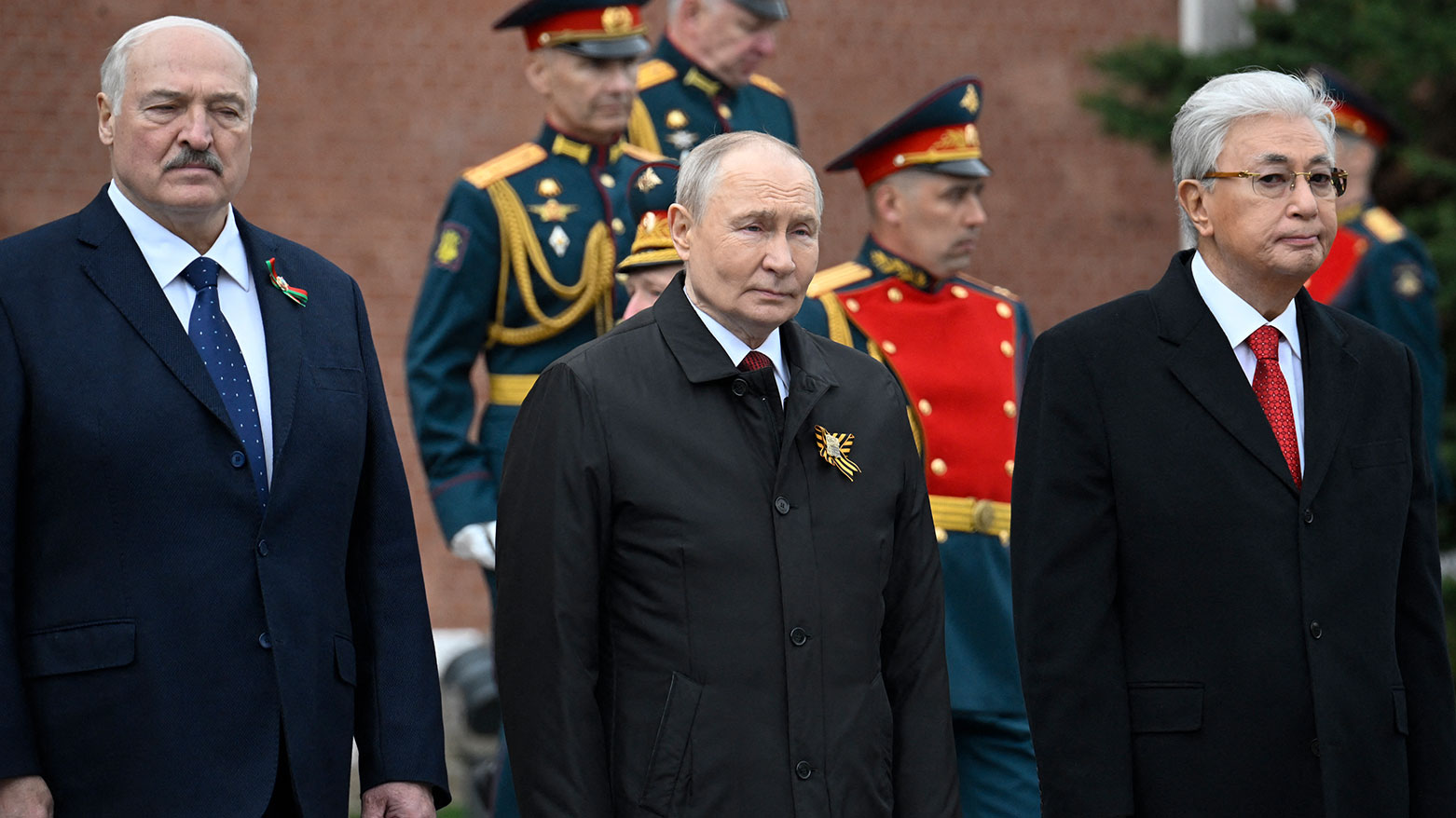
Russia celebrates the 81st anniversary of the Soviet Union's victory over Nazi Germany in World War Two (WWII). (AFP)
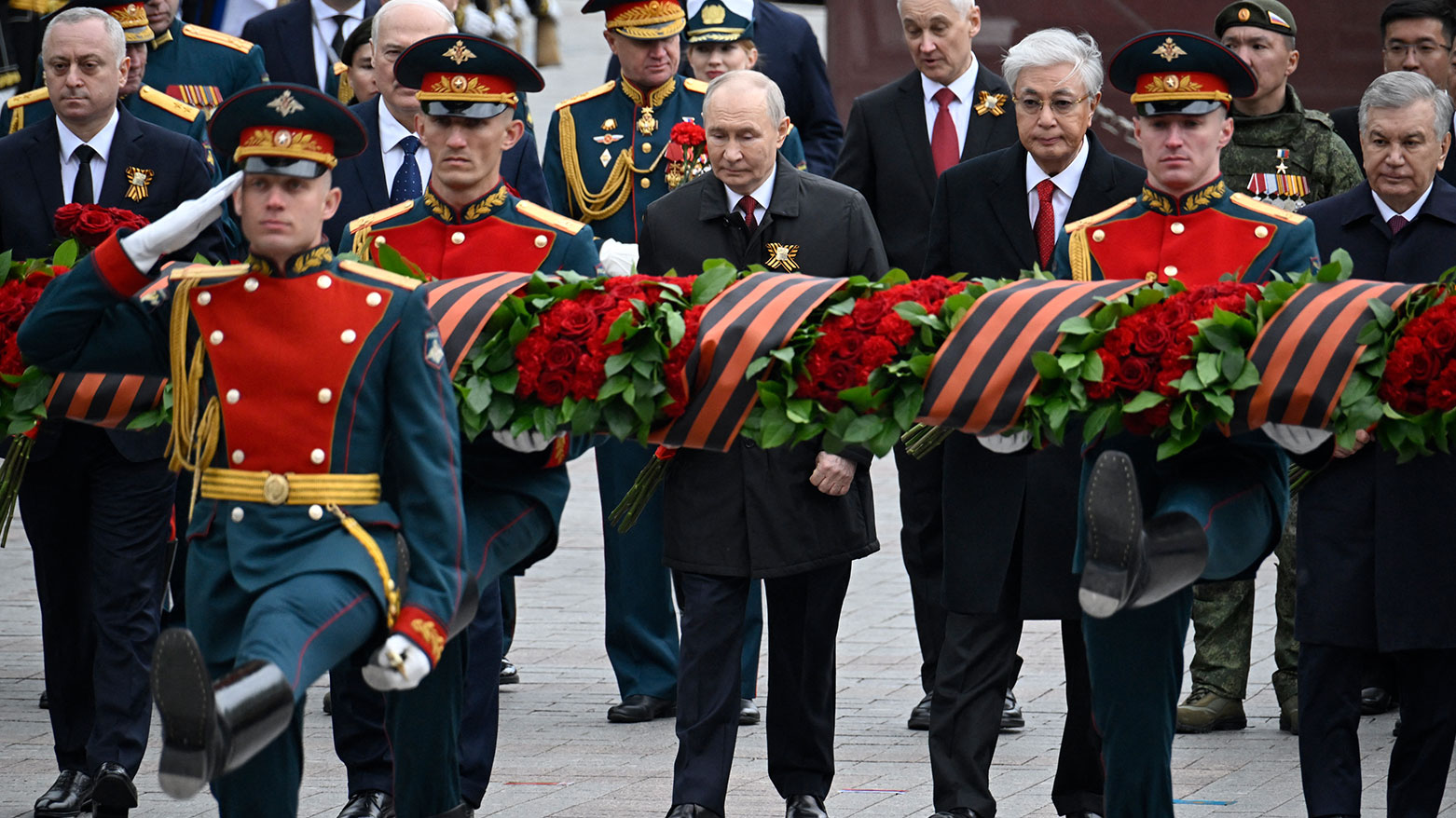
This messaging was reinforced by the composition of the reviewing stand; for the first time, a veteran of the current invasion was seated alongside Putin, signaling a symbolic merger of the 1941-1945 Great Patriotic War and the current military operation.
Agentsvo, an exiled media outlet cited by the Moscow Times, identified the veteran as Leonid Ryzhov, a brigade commander involved in early fighting in the Luhansk region.
The Three-Day Ceasefire and Diplomatic Engagement
The Victory Day commemorations occurred under the umbrella of a fragile three-day ceasefire brokered following an appeal from U.S. President Donald Trump.
The Moscow Times reported that the truce, which came into effect on May 9, was intended to facilitate a large-scale prisoner exchange involving 1,000 detainees from each side.
Trump expressed hope via his Truth Social platform that the pause in hostilities might signal "the beginning of the end" of the conflict, which has entered its fifth year and resulted in hundreds of thousands of casualties.
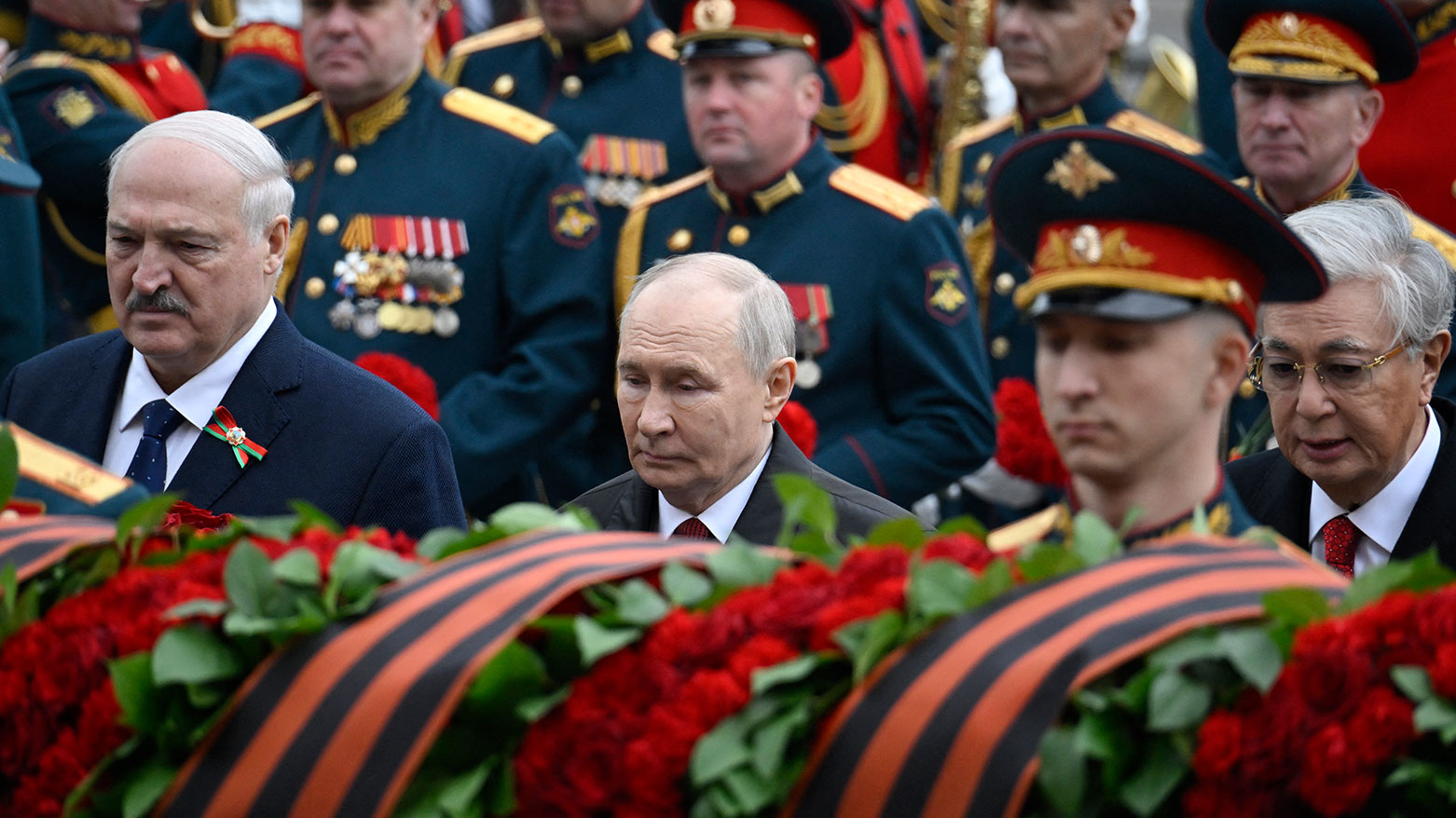
Russia celebrates the 81st anniversary of the Soviet Union's victory over Nazi Germany in World War Two (WWII). (AFP)
The ceasefire significantly influenced the security dynamics of the holiday.
The Moscow Times noted that Ukrainian President Volodymyr Zelensky issued a formal decree ordering his military to refrain from attacking the parade.
Zelensky stated that the lives of Ukrainian prisoners returning home through the swap were more significant to his government than a potential strike on Red Square.
Both the Ukrainian Air Force and the Russian Defense Ministry reported a marked decrease in drone activity during the ceasefire period, though the broader diplomatic process remains stalled as Washington's strategic focus has shifted toward tensions with Iran.
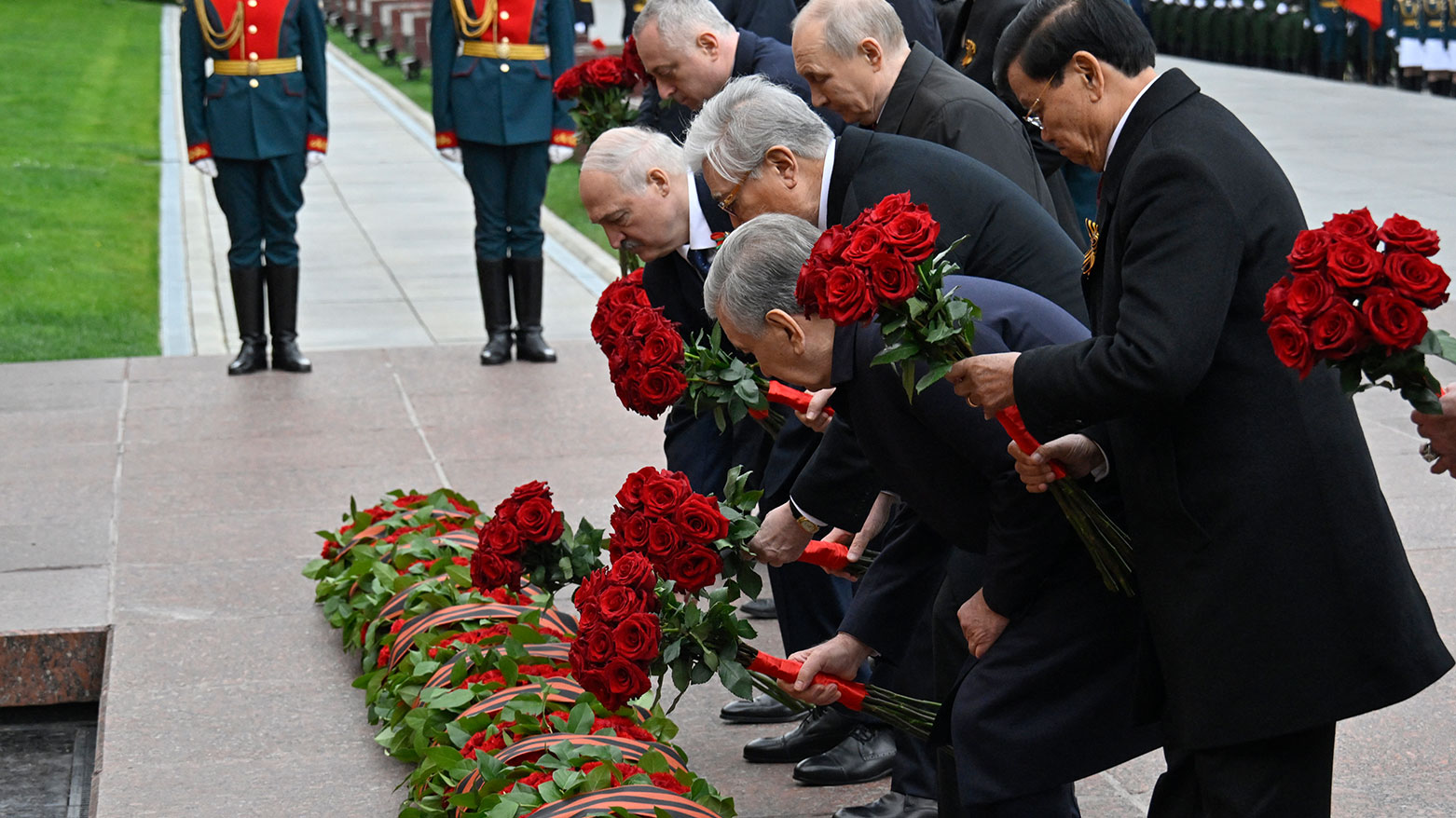
Russia celebrates the 81st anniversary of the Soviet Union's victory over Nazi Germany in World War Two (WWII). (AFP)
International Participation and Shifting Alliances
The presence of foreign dignitaries and international troops provided a glimpse into Russia's evolving diplomatic alignments.
TASS reported that the celebrations were attended by leaders from various states, including Slovak Prime Minister Robert Fico, Belarus President Alexander Lukashenko, and leaders from Kazakhstan, Uzbekistan, Laos, and Malaysia.
This attendance occurred despite warnings from Kyiv against participating in the Moscow-led events.
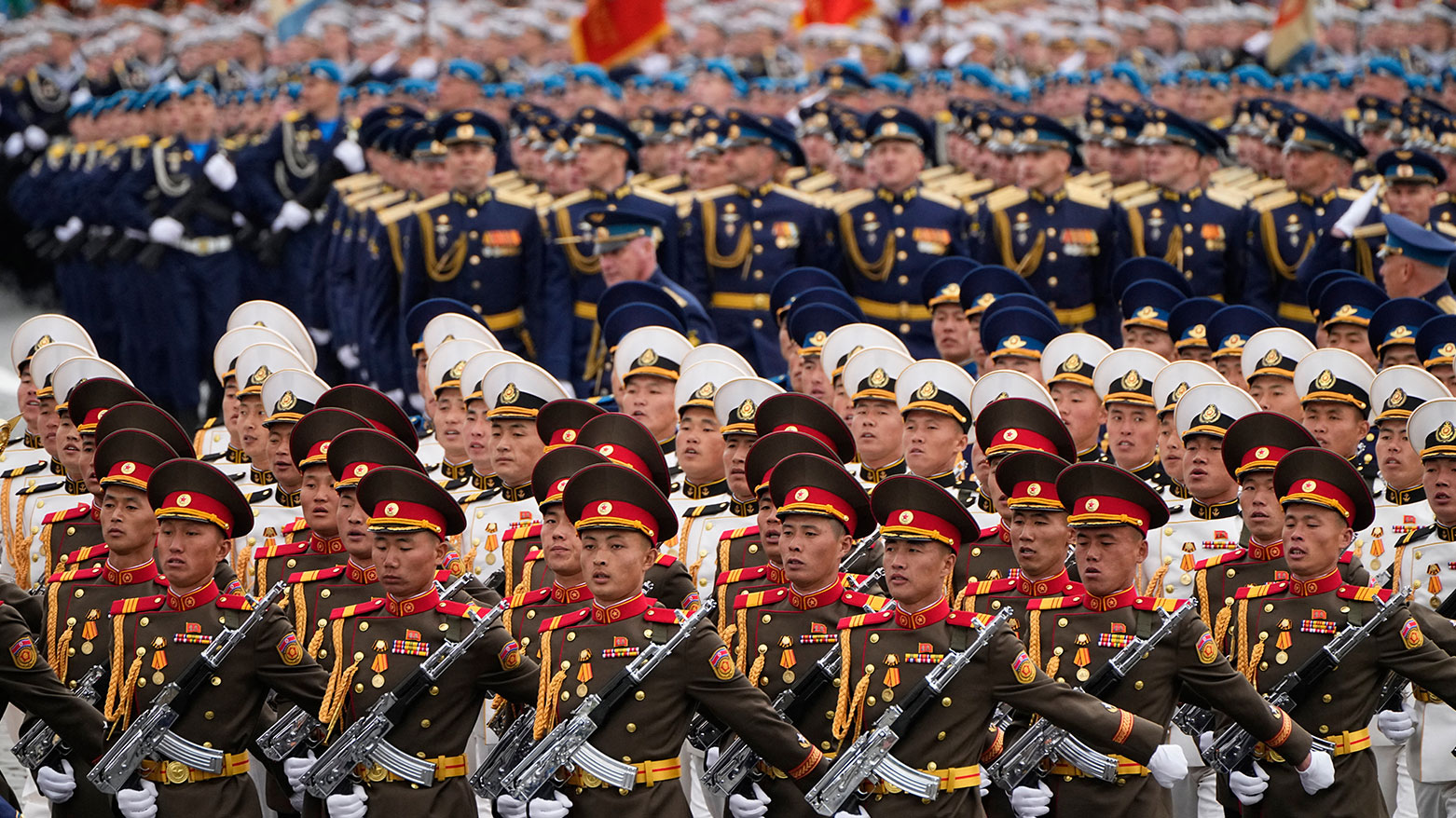
A notable development in this year's parade was the first-ever participation of a military contingent from North Korea.
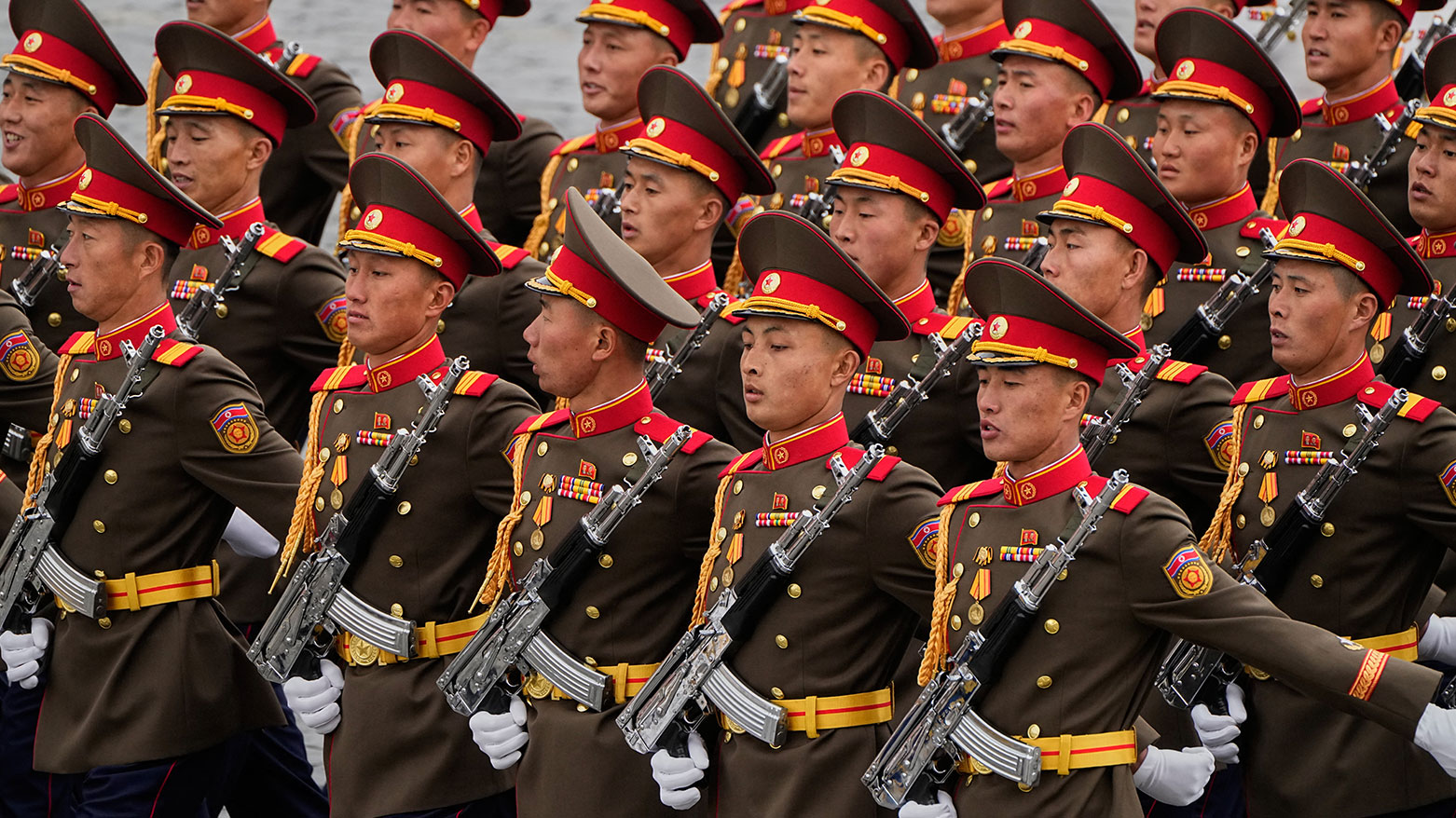
Russia celebrates the 81st anniversary of the Soviet Union's victory over Nazi Germany in World War Two (WWII). (AFP)
According to a broadcast commentary cited by the Moscow Times, North Korean servicemen were recognized for their "significant contribution" during engagements in Russia's Kursk region.
The commentator praised the North Korean troops for demonstrating "mass heroism" and "selflessness" while fighting what the Kremlin describes as "neo-Nazi invaders."
This inclusion highlights a deepening military partnership between Moscow and Pyongyang as the war in Ukraine continues to reshape international defense cooperation.
Russia celebrates the 81st anniversary of the Soviet Union's victory over Nazi Germany in World War Two (WWII). (AFP)
WWII Memory Central to State Messaging
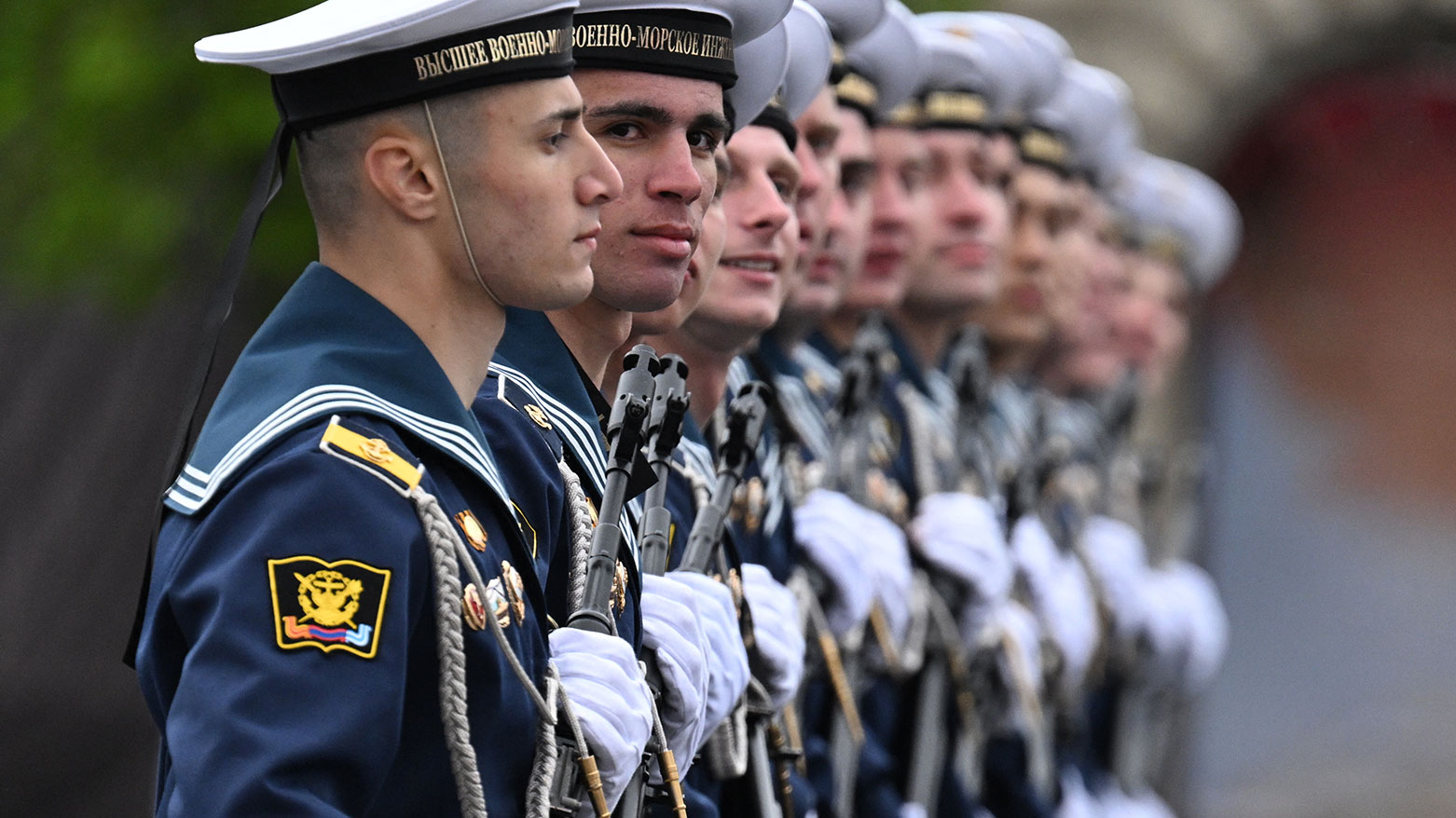
A primary theme of the official messaging reported by Sputnik News Agency was the preservation of historical "truth" as a matter of national honor. Putin called for the firm suppression of attempts to "falsify" the events of World War II or to "glorify Nazis and collaborators."
At a ceremonial reception in the Kremlin, the president emphasized that the architecture of a future multipolar world must be rooted in the norms of the United Nations and the principle of "indivisible security," according to Sputnik.
Putin's rhetoric sought to establish a direct moral lineage from the Soviet soldiers who "saved the world from total, merciless evil" to the participants in the "special military operation."
Russia celebrates the 81st anniversary of the Soviet Union's victory over Nazi Germany in World War Two (WWII). (AFP)
Sputnik reported that Putin credited Soviet losses with the restoration of sovereignty to European states that had capitulated to Nazi Germany.
By linking the defeat of Nazism in 1945 to the current struggle against a "NATO-backed force," state media and official speeches constructed a narrative of perpetual struggle against external threats, aimed at reinforcing national unity and domestic support for the war.
Russia celebrates the 81st anniversary of the Soviet Union's victory over Nazi Germany in World War Two (WWII). (AFP)
Official Narratives Emphasize National Unity
Beyond the military and historical framing, the Victory Day events were utilized to promote a vision of a unified Russian society.
Sputnik News Agency reported that Putin characterized the fate of the country as being decided by all its citizens, including factory workers, scientists, and teachers, alongside the armed forces.
He noted that modern weapons are being developed based on contemporary "combat experience," continuing the industrial traditions of the previous century.
TASS detailed the technical components of the celebration, noting that the parade involved about 1,000 combatants of the special military operation and specialized unmanned systems units.
Russia celebrates the 81st anniversary of the Soviet Union's victory over Nazi Germany in World War Two (WWII). (AFP)
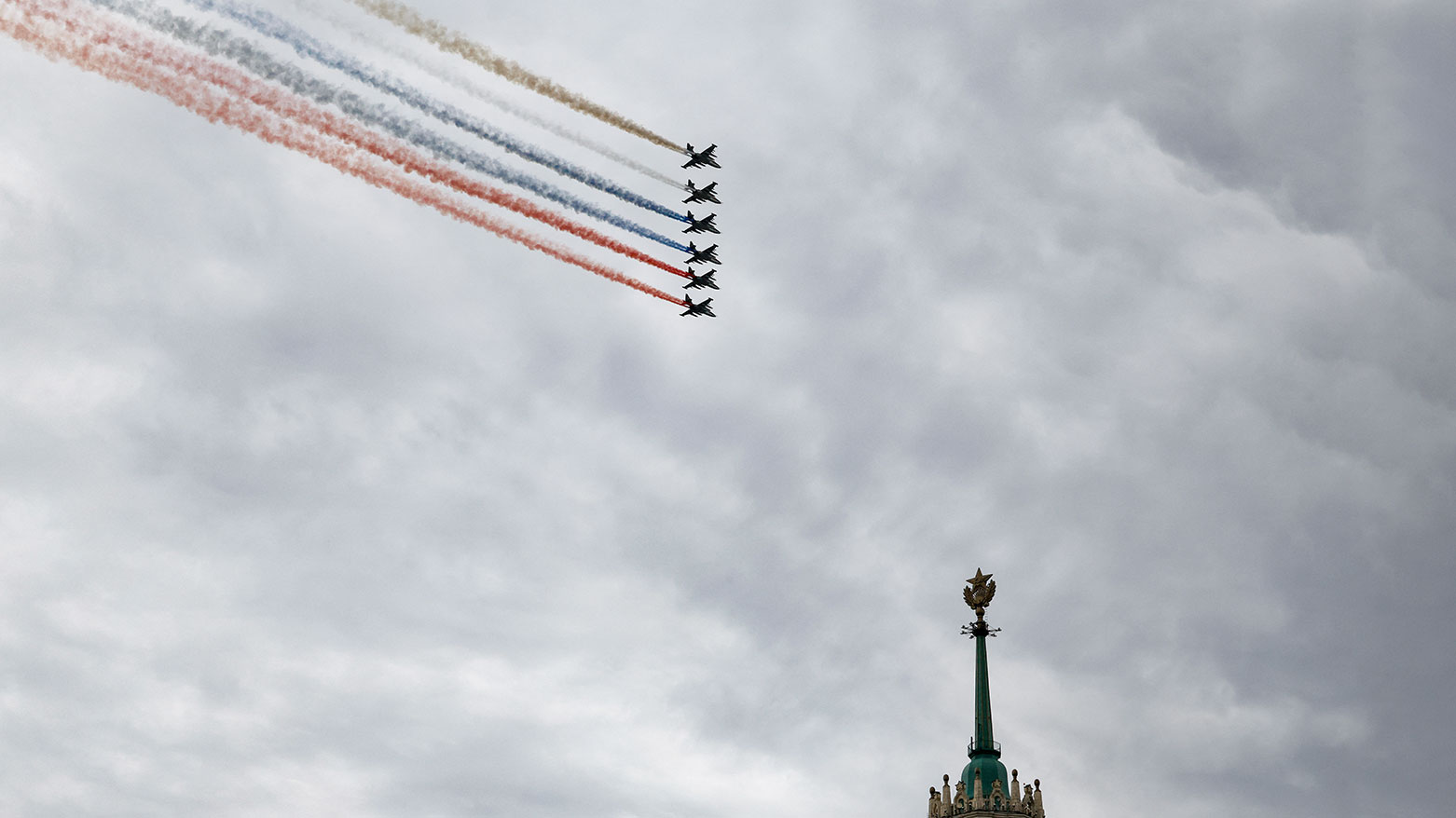
The event concluded with a fly-past of Su-30SM and MiG-29 fighter jets performing aerial stunts over central Moscow, followed by attack aircraft releasing smoke in the colors of the Russian national flag.
According to the report, these displays were intended to project military competence and technological advancement to both domestic and international audiences.
The Moscow Times noted that despite the combative rhetoric, the tight security measures, including disruptions to mobile internet and empty streets observed by AFP reporters, highlighted the Kremlin's sensitivity to potential disruptions.
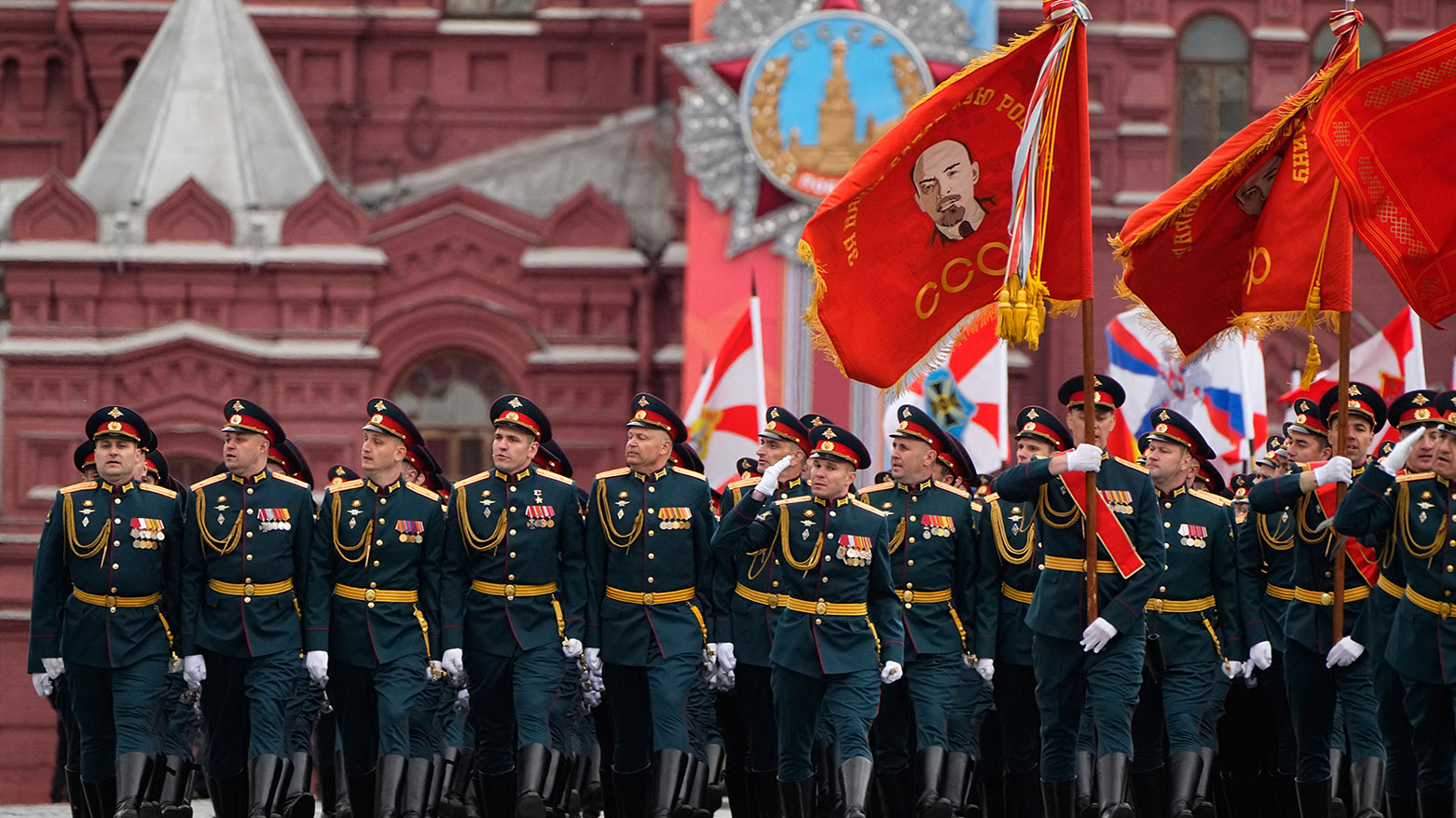
Russia celebrates the 81st anniversary of the Soviet Union's victory over Nazi Germany in World War Two (WWII). (AFP)
The contrast between the president's assertions of military progress and the physical scaling back of the parade provided an analytical window into the current state of the conflict.
Victory Day remains a central platform for Russia to broadcast its wartime narrative.
President Putin continues to link the 1945 Soviet triumph to the current conflict in Ukraine, framing the war as a necessary defense against NATO expansion.
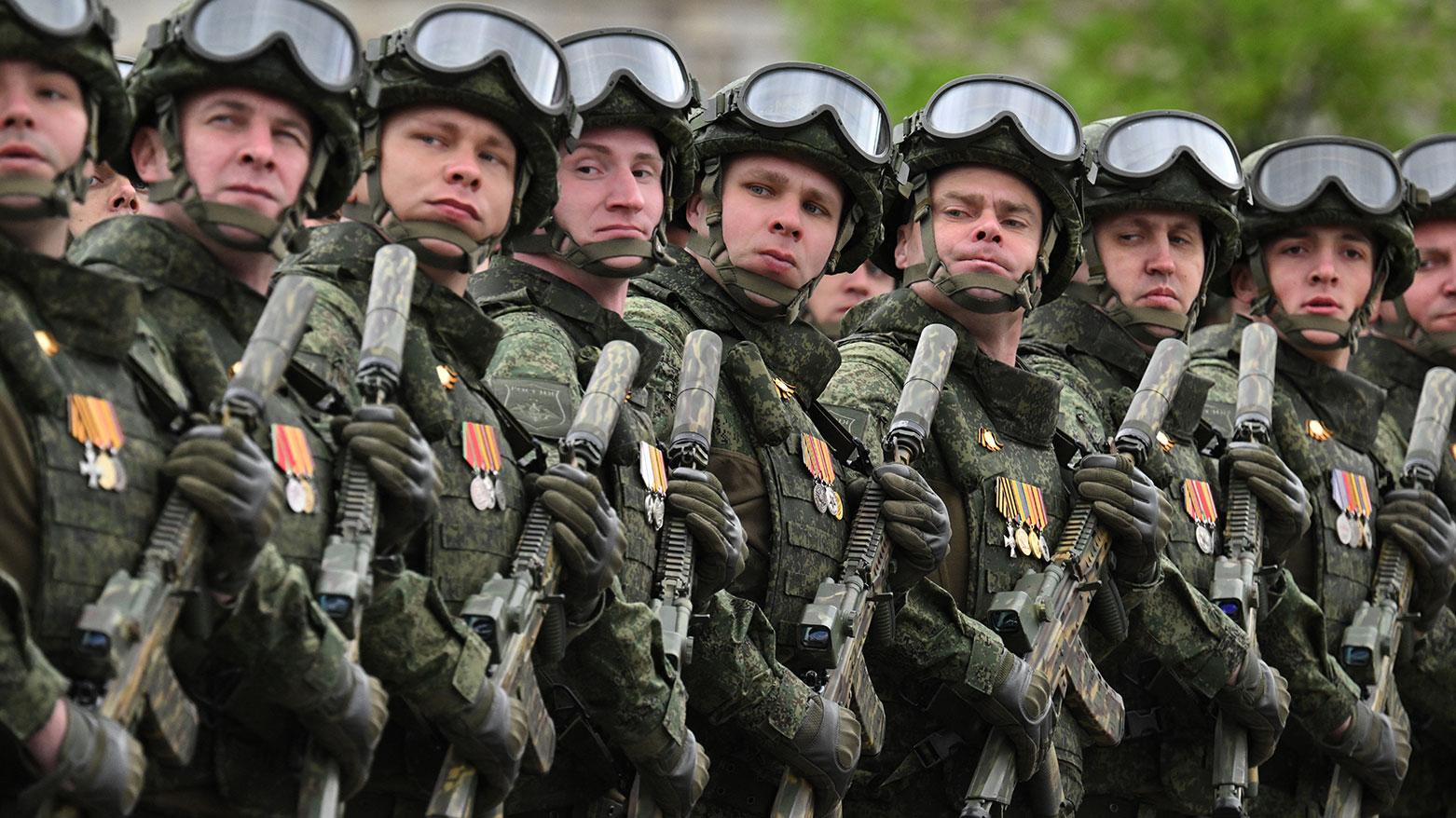
Russia celebrates the 81st anniversary of the Soviet Union's victory over Nazi Germany in World War Two (WWII). (AFP)