Israel Intensifies Attacks on Lebanon as Military Readiness Rises Over US-Iran Talks
Israeli strikes across southern Lebanon killed several civilians and wounded dozens more as Israel simultaneously raised its military preparedness amid ongoing US-Iran nuclear negotiations.
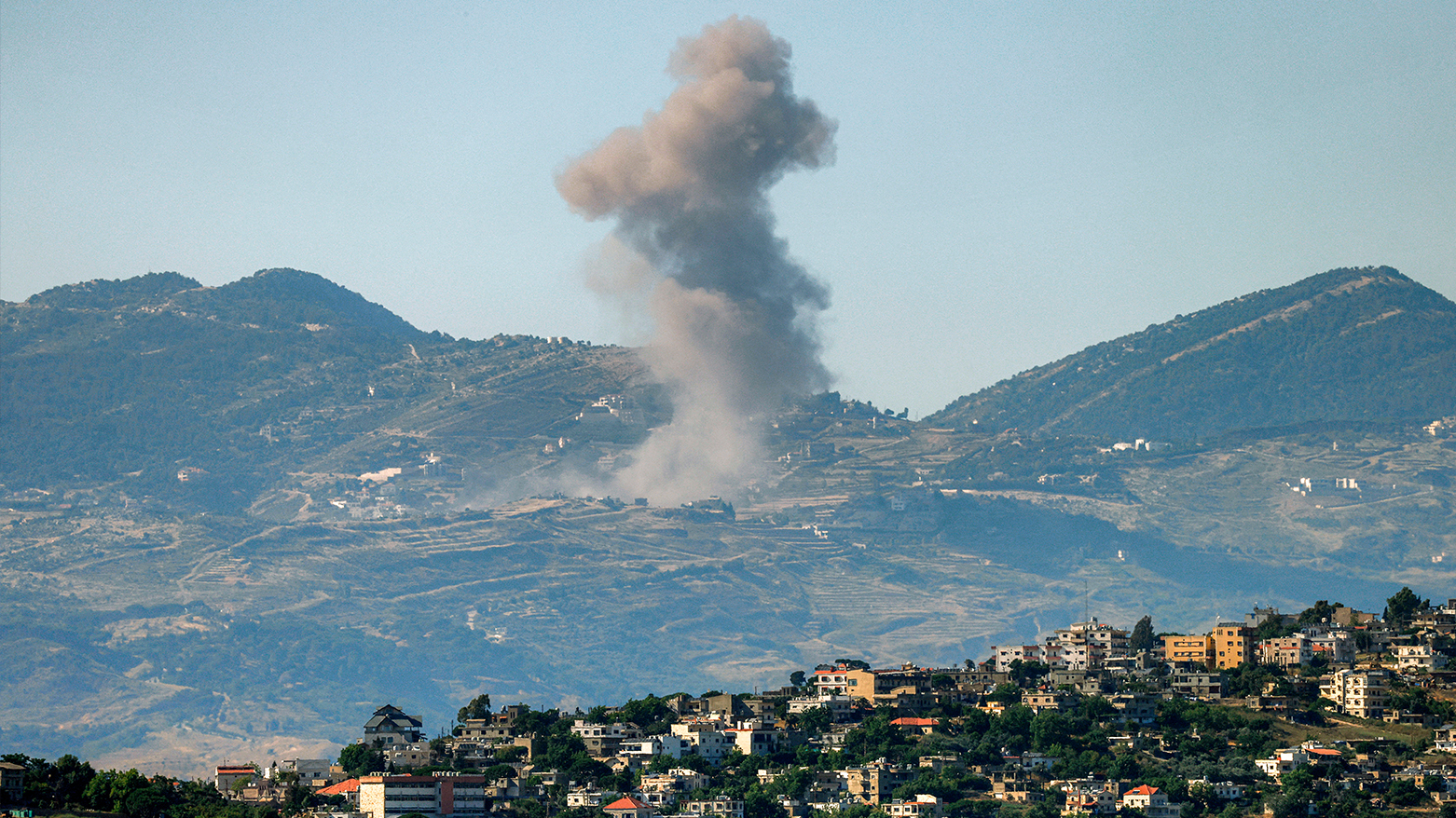
Erbil (Kurdistan24) - Fresh Israeli airstrikes struck multiple locations across southern Lebanon early on Saturday, killing several civilians despite recent confirmations from both Israel and Hezbollah that a ceasefire remains in effect.
According to regional media reports, Israeli warplanes carried out three airstrikes on Nabatieh al-Fawqa before dawn.
The attacks followed exchanges of fire between Israeli forces and Hezbollah, as well as artillery shelling targeting villages in the Nabatieh district, including Habboush, Mayfadoun, and Nabatieh al-Fawqa.
Additional Israeli strikes reportedly targeted the villages of al-Nemirieh, Choukin, Kfarjouz, and Arab Salim in the Nabatieh district, as well as Jabal al-Rafee in the Jezzine area of southern Lebanon.
Lebanon's official National News Agency reported that Israel launched airstrikes on more than 12 locations across southern Lebanon between midnight and Saturday morning.
The attacks killed three people in Nabatieh and another person in Deir al-Zahrani. Lebanon's Al-Liwaa newspaper also reported the death of an additional individual east of the city of Sour.
The latest strikes came one day after Hezbollah sources and a senior Israeli official reaffirmed the existence of a ceasefire.
The Israeli official stated that "as long as Hezbollah does not attack us, there will be no war," while also noting that Israeli forces continue to maintain positions in an approximately 10-kilometer-wide area along the border in southern Lebanon.
The escalation has cast uncertainty over ongoing diplomatic efforts between Washington and Tehran.
Iran announced the postponement of a planned signing meeting that had been scheduled for Friday in Switzerland, citing the attacks on Lebanon.
On June 19, 2026, US President Donald Trump confirmed during a telephone interview with NBC News that he had personally urged Israel to accept a ceasefire.
Trump described the step as "positive" and said the ceasefire was "the icing on the cake" for the broader agreement being pursued with Iran.
Lebanon's Health Ministry reported on Friday that Israeli airstrikes in southern Lebanon killed 18 people and wounded 33 others.
Earlier, on Jun. 15, 2026, the Israeli military announced that since the beginning of the conflict, 31 Israeli soldiers, including officers, had been killed and 1,302 others wounded.
Meanwhile, data from Lebanon's Health Ministry indicate that Israeli attacks since March 2 have killed more than 3,756 people and wounded 11,632 others.
More than one million people have also been displaced.
As diplomatic negotiations between the United States and Iran continue, Israel has reportedly increased its military readiness across all branches of its armed forces.
According to a report by the Israeli news outlet Walla, Israeli defense institutions were caught off guard by the signing of a memorandum of understanding between Washington and Tehran.
Previous Israeli intelligence assessments had suggested that the negotiations were more likely to collapse than result in a formal agreement.
The report said Israeli security agencies have spent recent days preparing for a new phase following clear messages from the United States that it would not tolerate attacks or ceasefire violations that could jeopardize its understandings with Iran.
Israeli military officials have reportedly ordered heightened readiness at every operational level in preparation for the possibility of renewed tensions should negotiations break down.
Israeli defense institutions are closely monitoring several issues, particularly the future of Iran's enriched uranium stockpiles and its missile program.
According to Walla, Israeli officials fear that any final agreement could alter the regional balance of power and affect Israel's deterrence posture.
A senior security source quoted in the report said: "Israel's broad attack against Iran was based on threats posed by the ballistic missile program, not solely the nuclear project."
The source warned that the absence of clear limits on that issue could force Israel to reassess its political and security options in the future.
The report concluded that some defense officials believe the reopening of the Strait of Hormuz after mine-clearing operations would weaken one of Iran's key pressure tools if negotiations encounter future obstacles.
Israeli military institutions, it added, continue preparing for all possible scenarios that may emerge from any future understanding between Washington and Tehran.