Inside Kurdistan's New Water Project: A Milestone for 53 Villages
|
Summary Prime Minister Masrour Barzani inaugurated a strategic potable water project serving 53 villages in the Barzan area, presenting it as a major investment in water security, public services and sustainable development while reaffirming the KRG's commitment to regional stability and constitutional governance. |
ERBIL (Kurdistan24) - Beneath the mountains surrounding Barzan, where generations have depended on springs and seasonal water sources, a new chapter in the Kurdistan Region's infrastructure development unfolded as Prime Minister Masrour Barzani inaugurated a strategic potable water project that will deliver clean drinking water to 53 villages across the area.
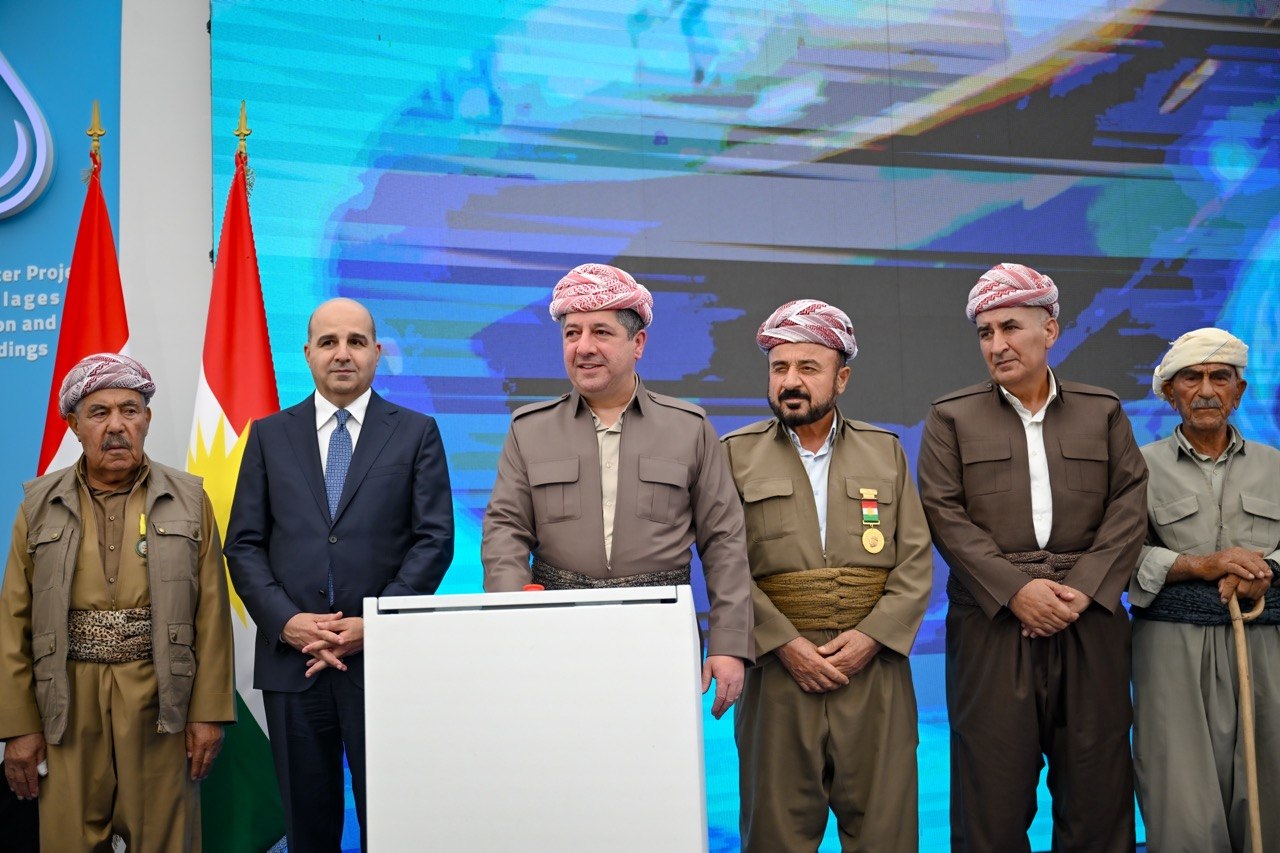
The ceremony brought together government officials, engineers, local residents, tribal figures and Peshmerga veterans, reflecting both the practical importance of the project and the symbolic weight attached to its completion.
Against a backdrop of reservoirs, pipelines and newly built treatment facilities, the inauguration marked more than the commissioning of a public utility, it represented the completion of a long-awaited investment intended to improve daily life for thousands of people across the Barzan area.

In his remarks, Prime Minister Barzani described the project as part of the Kurdistan Regional Government's continuing effort to ensure that essential public services reach communities throughout the Kurdistan Region without distinction. The network serves villages across the Barzan area while also extending benefits to communities in the Barozhya, Nzarya, Zebari and Surchi areas, reflecting what he characterized as a broader commitment to balanced regional development.
The scale of the infrastructure becomes increasingly apparent as the ceremony moves beyond the podium. Modern treatment facilities, pumping systems and transmission lines illustrate years of planning and engineering that transformed an ambitious proposal into an operational network capable of supplying reliable drinking water to rural communities.

For many residents gathered at the site, the inauguration also carried the significance of a project that overcame repeated setbacks. Prime Minister Barzani noted that the initiative was originally approved in 2013 but was delayed by successive crises, including the financial downturn, the war against ISIS and the COVID-19 pandemic. Construction resumed in 2022 before eventually reaching completion through the combined efforts of the companies involved in its execution.
The Prime Minister paid particular tribute to the engineers, technicians and specialists responsible for completing the project, emphasizing that the workforce behind its delivery consisted entirely of local expertise. Their work, he said, demonstrated the growing technical capacity within the Kurdistan Region to execute complex infrastructure projects using Kurdish talent.

The occasion also provided an opportunity to acknowledge those whose sacrifices, Barzani said, made today's development possible. Addressing the gathering of Peshmerga commanders and veterans, he credited the Region's progress to decades of struggle and the sacrifices of the martyrs, linking modern infrastructure projects to the security and stability achieved through those efforts.
As visitors toured the facility, attention naturally shifted from engineering to the landscape itself. Flowing water, green valleys and surrounding forests underscored another message emphasized throughout the event: that water infrastructure and environmental stewardship must advance together.

Barzani described water as one of the Region's most valuable resources and urged continued efforts to protect it through responsible use. He also praised Barzan's longstanding culture of environmental preservation, encouraging residents to continue safeguarding forests, wildlife and public spaces while treating the natural environment as a shared responsibility passed down through generations.
The project, he said, forms part of a wider strategy that extends well beyond Barzan. Similar investments have already been completed or are underway across the Kurdistan Region, including major water initiatives serving both sides of Erbil and other population centers. Together, these projects aim to strengthen long-term water security while expanding reliable public services as communities continue to grow.

Prime Minister Barzani thanked the Ministry of Municipalities and Tourism, the Directorate of Water and Sewerage, local administrative institutions and Mergasor officials for their roles in delivering the project. He also acknowledged Mela Mustafa for closely following its implementation and supporting efforts to ensure public services reached local residents.
Although the inauguration centered overwhelmingly on infrastructure and community development, the Prime Minister also used the occasion to address broader regional and political developments.

He reiterated that the Kurdistan Region seeks to remain outside the conflicts affecting the wider Middle East, stressing that continued violence and attacks only deepen instability while bringing no lasting benefit. He called for an end to ongoing attacks against the Kurdistan Region and expressed hope that peace and stability would return across the region.
Turning to domestic affairs, Barzani said relations between Erbil and Baghdad had entered a constructive phase under Iraq's current government, reaffirming the Kurdistan Regional Government's support for implementing Iraq's Constitution and welcoming efforts by Prime Minister Ali Zaidi to combat corruption.

He also renewed his call for political parties within the Kurdistan Region to reactivate Parliament and work toward forming a new government, arguing that prolonged institutional delays ultimately affect citizens awaiting public services and effective governance.
Yet the lasting image from the day remained neither political nor ceremonial. It was the sight of water beginning its journey through a network built to serve villages that had waited years for reliable access to one of life's most essential resources.

For the communities gathered beneath Barzan's mountains, the inauguration marked not simply the completion of another infrastructure project, but a tangible investment in public health, sustainable development and the continued effort to build resilient communities across the Kurdistan Region.


