Trump Lifts Four-Decade Ban on Direct US Flights to Lebanon After Oval Office Meeting With President Aoun
The first Lebanese head of state to visit the White House in nearly two decades secures a landmark aviation commitment from Trump, who vowed to help Lebanon "a lot" as Washington backs Beirut's
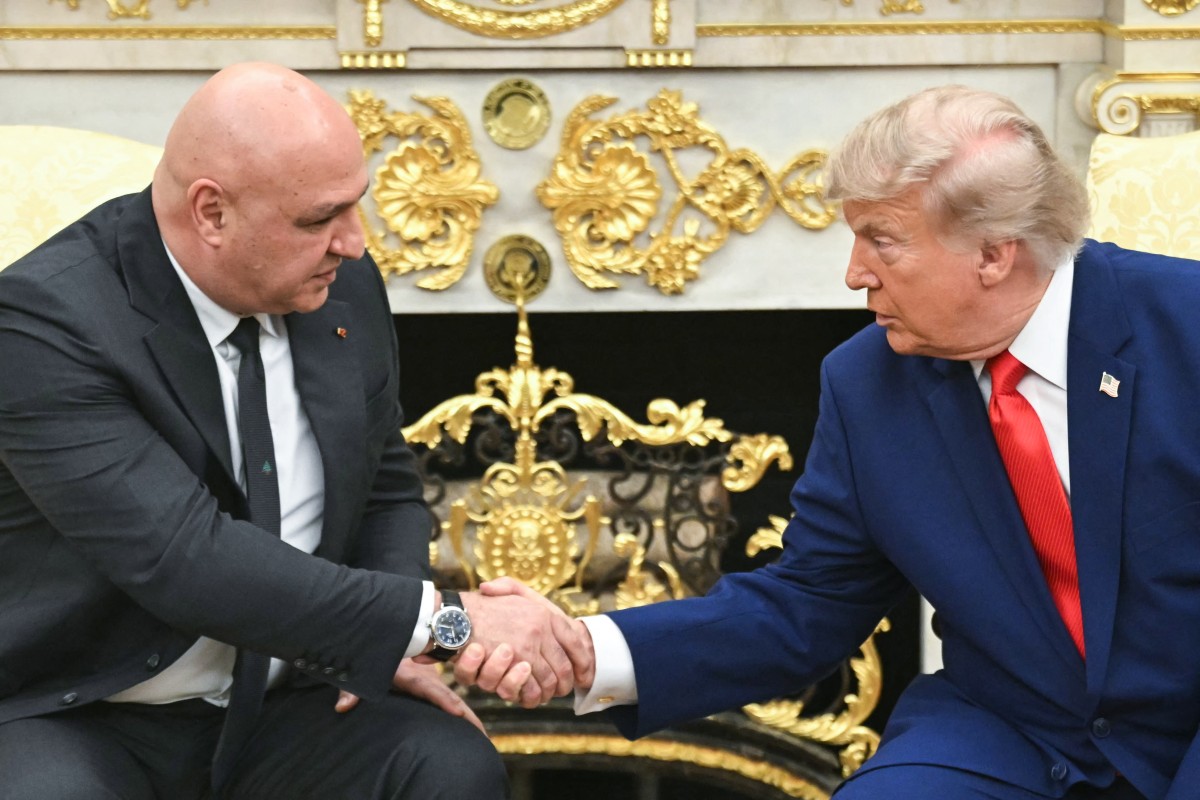
ERBIL (Kurdistan 24) - President Donald Trump lifted a ban on direct flights between the United States and Lebanon that has been in place for more than four decades, announcing the decision on Tuesday on Truth Social immediately after hosting Lebanese President Joseph Aoun at the White House in a meeting that marked the first visit by a Lebanese head of state to Washington in nearly two decades.
"After meeting with the President of Lebanon, Joseph Aoun, who has done a remarkable job working to transform his country, I am hereby directing my Administration to allow all US airline carriers to fly directly to Lebanon so that Americans can easily visit this beautiful land," Trump wrote on Truth Social on Tuesday. "Hopefully, other countries will do the same. Enjoy!"
As Al-Monitor confirmed on Tuesday, direct flights between the United States and Lebanon have effectively been suspended since 1985, when the Reagan administration halted air links following the hijacking of TWA Flight 847 by Lebanese Islamist militants with ties to Hezbollah. The Boeing 727 was seized after departing Athens, forced to Beirut, and held for 17 days, during which US Navy diver Robert Stethem was killed and 39 American hostages were held captive before their eventual release. Washington subsequently imposed restrictions that prevented direct air service between the two countries, a suspension that has remained in place through more than four decades of Lebanese civil war, political collapse, and regional conflict.
Aoun's visit to the White House on Tuesday was the first by a Lebanese president since 2009, as NOTUS reported on Tuesday. Trump told reporters in the Oval Office that Lebanon "has been a very badly treated place and country and we're going to have it properly treated," pledging that Washington would help Lebanon "a lot." The two leaders discussed US military support for the Lebanese Armed Forces, the implementation of the Washington framework agreement between Lebanon and Israel signed on June 26, 2026, and the ongoing pilot phase of Israeli withdrawal from southern Lebanon.
As the New Arab confirmed on Tuesday, the State Department said on Monday that operations in three villages of one pilot zone had begun under the framework agreement. Two of them, Froun and Srifa, were not under Israeli military control to begin with, and the Lebanese army was already present there, while Israeli forces had been present in part of the third village, Zawtar al-Gharbieh. The Israeli military said it would "adjust its force posture in one of the pilot areas" to enable the Lebanese Armed Forces to carry out their mission, and the Lebanese army said it began deploying troops in Zawtar al-Gharbieh on Tuesday.
Aoun pressed Washington during the Oval Office discussions to support the withdrawal of Israeli troops from southern Lebanon and back Beirut's government-led push to curb Hezbollah's influence, two goals that align with the broader US position that Hezbollah must disarm, its infrastructure must be dismantled, and the Lebanese state must regain full control over its territory, as the State Department has repeatedly stated.
Trump's aviation announcement carries immediate symbolic weight that goes well beyond the logistics of airline routes. As Newsweek reported on Tuesday, for Lebanon, restoring direct US air links would represent one of the clearest signals in decades that Washington views the country as stable enough to reconnect with the American aviation network. The move would provide a significant boost to Lebanon's large diaspora in the United States and Canada, reducing travel times, encouraging tourism and investment, and strengthening commercial ties as Beirut seeks to revive an economy devastated by years of financial collapse, the August 2020 port explosion, and the latest round of regional conflict.
Practical implementation, however, faces significant hurdles. As Newsweek noted on Tuesday, Lebanon currently carries a Level 4 "Do Not Travel" rating from the US State Department, the highest warning level Washington issues, which advises American citizens against visiting the country for any reason. Any resumption of direct services would also require extensive US technical and security assessments of airport infrastructure, passenger screening procedures, aviation safety systems, and cooperation frameworks between Lebanese and American authorities, a process that could take months regardless of the presidential directive.
Lebanon currently operates one international airport, situated in southern Beirut near the Dahiyeh district, a Hezbollah stronghold that has been subjected to heavy Israeli bombardment during successive conflicts, as the Times of Israel noted on Tuesday. Beirut has also begun work to convert an airbase near the Syrian border into a passenger hub, a project that reflects the Lebanese government's effort to diversify its aviation infrastructure as it prepares for an eventual return to normalcy.
As Bloomberg confirmed on Tuesday, the broader significance of Trump's announcement is diplomatic and political as much as it is logistical. It signals Washington's investment in Lebanon's sovereign future under Aoun's leadership, ties American commercial connectivity to the success of Beirut's state-building project, and places the United States alongside the momentum building around the June 26 framework agreement as a tangible stakeholder in Lebanon's recovery.
|
BRIEF: |