Iraqi Oil Minister Heads to Türkiye to Finalize Strategic Pipeline Export Agreement
Ankara talks seek to establish a new legal framework for crude exports through Ceyhan as Baghdad looks to reinforce energy revenues amid mounting fiscal pressure.
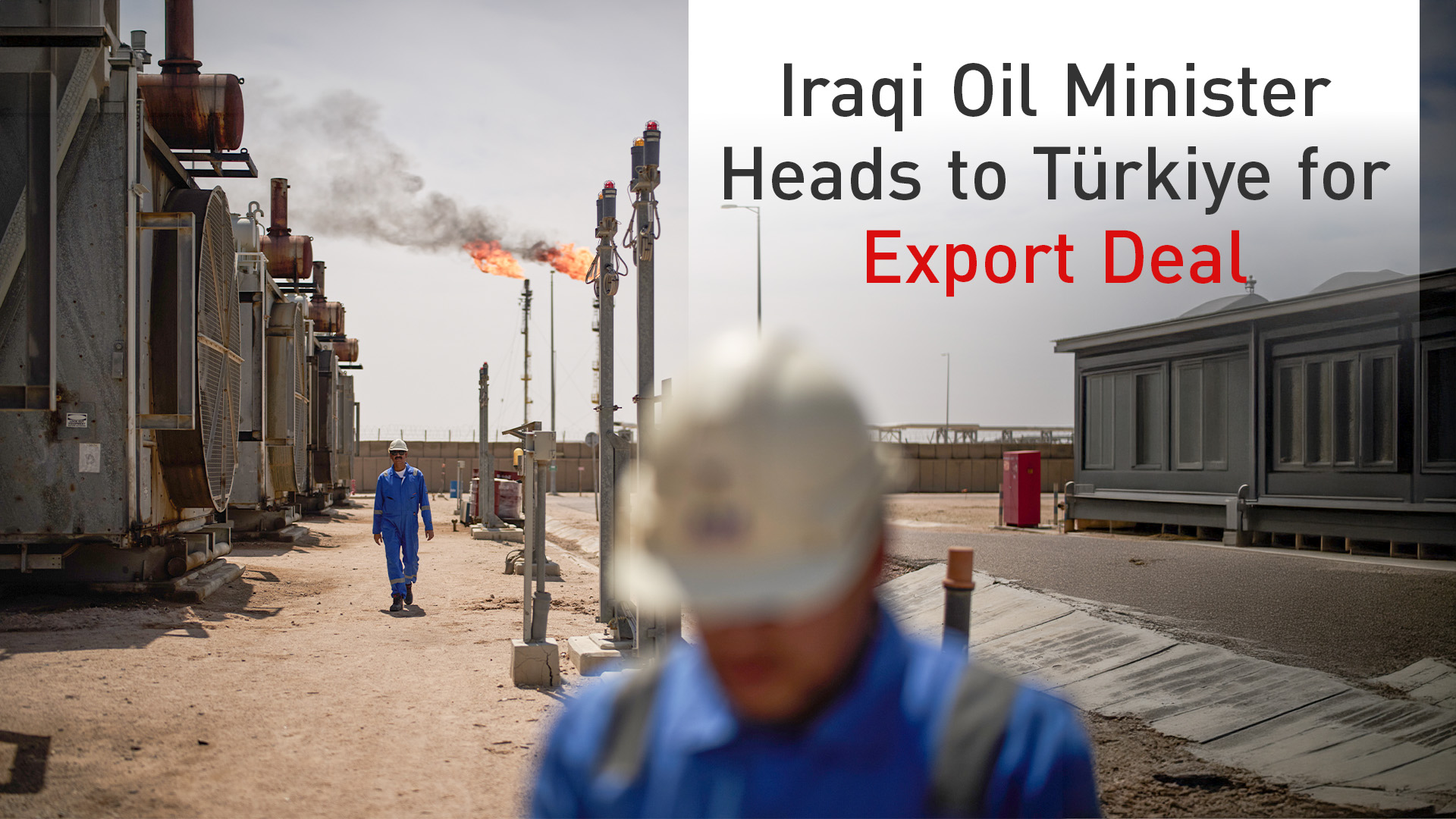
ERBIL (Kurdistan24) - Iraq's Oil Minister Basim Mohammed Khudair is expected to arrive in Ankara on Saturday leading a high-level delegation for negotiations aimed at concluding a new oil transit agreement with Türkiye, a move that could pave the way for restoring and securing crude exports through one of the country's most important energy corridors.
According to a source within Iraq's Ministry of Oil, who informed Kurdistan24, the visit is intended to finalize a specialized agreement governing the transportation and loading of Iraqi crude through the Iraq-Türkiye pipeline system to the Mediterranean port of Ceyhan.
The proposed framework would replace the previous bilateral arrangement that expired on July 27 and establish the legal basis for the continued operation of a route that has long been central to Iraq's export strategy.
The timing of the negotiations carries added significance as Iraq grapples with mounting financial pressures linked to weakening state revenues.
Finance Minister Falih Sari recently warned lawmakers that Baghdad requires approximately 7.8 trillion Iraqi dinars each month to finance public-sector salaries alone, while acknowledging a substantial funding gap despite recent disbursements.
Government spokesperson Haider Aboudi has likewise described a widening imbalance between monthly expenditures and oil-generated income, saying the government has increasingly relied on domestic borrowing and treasury bonds to bridge the shortfall.
Against that backdrop, efforts to secure stable export channels have taken on renewed urgency as policymakers seek to reinforce the country's primary source of revenue.
The Ankara discussions also follow the completion of rehabilitation work on the Kirkuk-Ceyhan pipeline.
An official from Iraq's North Oil Company said in June that preparations to restore the line had been finalized and that experimental pumping would precede the resumption of regular exports, signaling that the infrastructure is being readied for renewed commercial operations.
Together, the completion of technical work and the negotiation of a new transit framework suggest Baghdad and Ankara are seeking to align legal and operational conditions before exports resume on a sustained basis.
The agreement under discussion is expected to regulate the transportation and loading of Iraqi crude through the cross-border pipeline network, providing a renewed mechanism for cooperation between the two neighboring countries after the expiration of the previous accord.
By establishing updated rules for pipeline operations, both governments are aiming to ensure continuity in oil flows while strengthening long-standing energy ties.
For Iraq, restoring dependable access to Ceyhan would represent more than the reopening of an export route.
It would reinforce an outlet that connects Iraqi production with international markets through the Mediterranean, offering an important alternative for crude shipments and supporting broader efforts to stabilize export capacity during a period of economic strain.
The negotiations also unfold as governments across the Gulf reassess energy logistics amid uncertainty surrounding maritime trade through the Strait of Hormuz.
According to Agence France-Presse (AFP), nearly 15 million barrels of crude oil per day moved through the strategic waterway in 2025, prompting several regional producers to accelerate projects designed to diversify export routes.
Saudi Arabia has expanded capacity on its East-West Pipeline and is considering further increases, while the United Arab Emirates is advancing a second pipeline to Fujairah to increase exports that bypass Hormuz, according to AFP.
Kuwait and Bahrain have also explored possible future connections to Saudi Arabia's pipeline network as part of wider regional planning.
Within that evolving landscape, Iraq's discussions with Türkiye highlight a parallel effort to strengthen overland export infrastructure.
While AFP also noted that international discussions continue regarding a separate pipeline linking Iraqi oil fields with Syria's Mediterranean coast, the negotiations in Ankara concern an established corridor that could be positioned to resume exports once legal arrangements are finalized and operational procedures are completed.
Should the agreement be concluded, it would mark an important step toward restoring one of Iraq's principal export arteries at a time when reliable energy revenues have become increasingly vital.
Successful implementation would not only support Baghdad's efforts to improve fiscal resilience but also reinforce economic connectivity with Türkiye and contribute to a broader regional push to diversify oil export routes amid persistent geopolitical uncertainty.