Iran Presidency Rejects Claim Pezeshkian Offered to Resign 28 Times
Iranian officials reject Mohammad Bagher Kharrazi's claim that President Masoud Pezeshkian repeatedly sought to resign, as unverified reports of security and political reshuffles intensify scrutiny of Tehran's internal power dynamics.
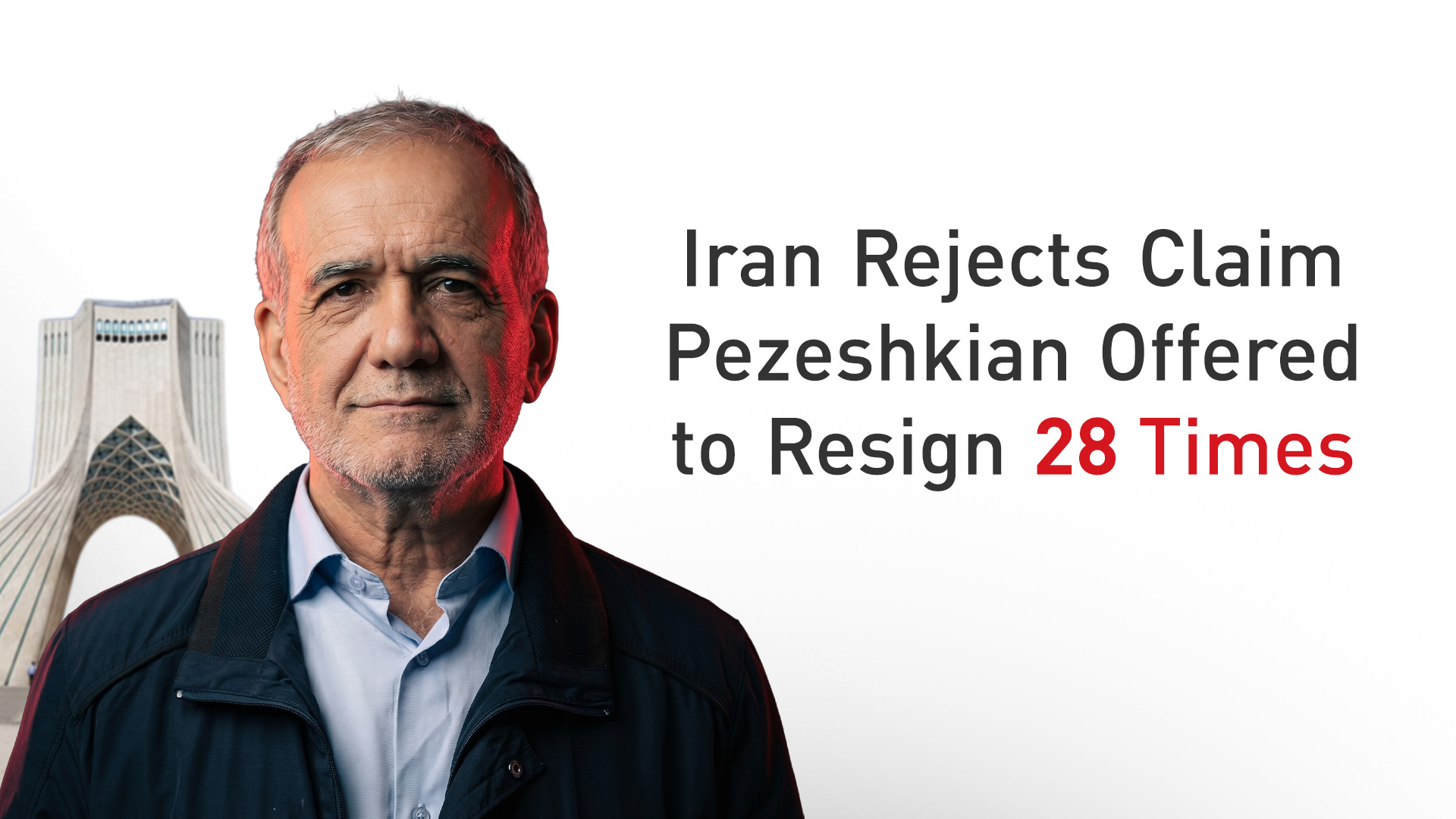
ERBIL (Kurdistan24) - Iran's presidency has forcefully rejected claims that President Masoud Pezeshkian has repeatedly sought to step down, dismissing allegations by political figure Mohammad Bagher Kharrazi as "pure fabrication" and triggering a broader debate over rumors of discord within the country's leadership.
The controversy began after Kharrazi, secretary-general of the Hezbollah of Iran organization, alleged that Pezeshkian had submitted, or threatened to submit, his resignation 28 times since taking office.
He further claimed that Supreme Leader Mojtaba Khamenei had warned the president that any future resignation would be accepted.
The President's Office swiftly denied the account, insisting that no such discussions had taken place and accusing those behind the reports of attempting to mislead public opinion.
Officials characterized the allegations as baseless and said they were designed to create political uncertainty at a sensitive time.
Resignation Allegations Rejected
The dispute quickly widened beyond the original claim, drawing renewed attention to speculation over relations between the administration and other centers of power in Tehran.
While Kharrazi's remarks circulated widely across Iranian media and social platforms, government representatives emphasized that they should not be interpreted as evidence of internal instability.
Seyyed Mehdi Tabatabaei, deputy for communications and information at the President's Office, described the resignation narrative as "pure fabrication," saying the issue had never been under consideration.
He argued that the reports were part of a broader effort to manipulate public perceptions of the government.
The administration also received support from the Government Information Council. Its head, Elyas Hazrati, criticized what he described as recurring attempts by political opponents to weaken the government through resignation rumors.
He maintained that Pezeshkian's governing approach has consistently emphasized "national consensus" and dialogue rather than public confrontation over institutional disagreements.
The latest rebuttal follows similar official denials issued earlier this year after reports claimed the president had submitted a resignation letter, suggesting the government has sought repeatedly to contain speculation surrounding the executive branch.
Claims of Institutional Reshuffles
Kharrazi's remarks extended beyond the presidency, touching on alleged changes within Iran's security and diplomatic establishment.
He claimed senior personnel shifts were being prepared at the Supreme National Security Council, including replacing its current secretary with another prominent official.
He also asserted that Foreign Minister Abbas Araghchi had been informed that he would no longer oversee the country's nuclear negotiations.
Those assertions, however, remain unverified.
No official announcements confirming changes to the Supreme National Security Council or alterations to the Foreign Ministry's responsibilities have been issued, and the relevant institutions have not publicly endorsed Kharrazi's account.
Political Fallout
The allegations nevertheless prompted reactions from across Iran's political spectrum.
Some commentators called for clarification from state institutions, arguing that speculation over senior appointments risks fueling uncertainty during a politically sensitive period.
Others dismissed the remarks as inflammatory, while critics of the administration used the controversy to question the government's stability.
The episode underscores the intense scrutiny surrounding Iran's internal decision-making, particularly following recent changes at the highest levels of the country's leadership.
Even unverified claims concerning the presidency or strategic institutions have attracted significant public attention, reflecting broader interest in how authority is exercised within the Iranian political system.
For now, the only confirmed position remains that of the presidency, which has categorically rejected Kharrazi's allegations and denied that President Pezeshkian has sought to resign.
Meanwhile, reports of broader institutional reshuffles and changes to the management of the nuclear file remain allegations that have not been substantiated by official announcements, leaving the controversy as another illustration of the sensitivity surrounding power dynamics in Tehran.