Houthi Strike on Saudi Airport, Vessel Attack in Hormuz Deepen Regional Tensions Amid Diplomatic Push
Qatar says mediation between Washington and Tehran continues despite Iran denying talks, while maritime security deteriorates in the Strait of Hormuz
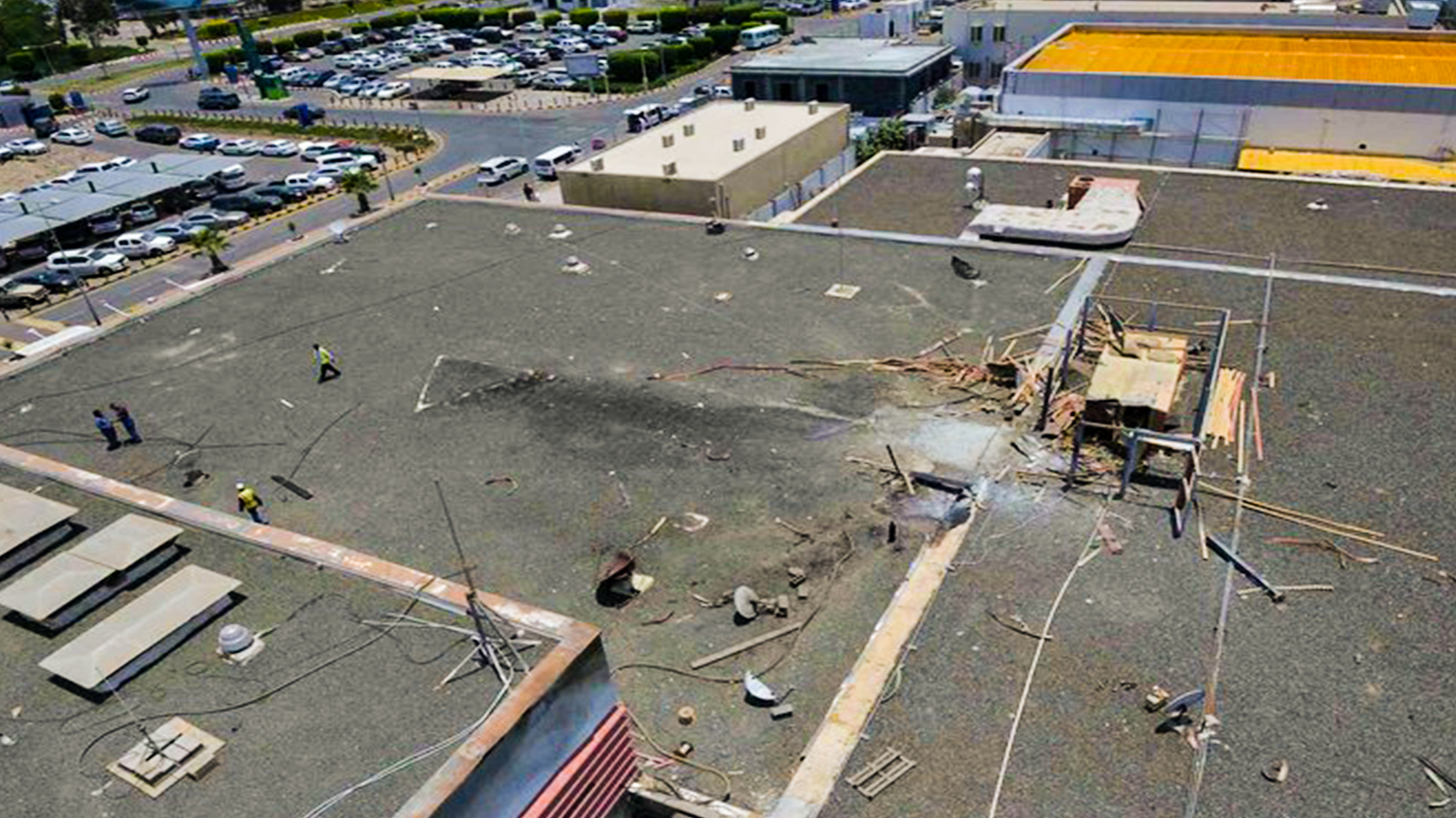
ERBIL (Kurdistan24) — Yemen's Iran-backed Houthis claimed on Tuesday that they carried out a drone strike on a Saudi airport, while a commercial vessel was hit by an "unknown projectile" in the Strait of Hormuz, underscoring mounting regional tensions even as Qatar continues efforts to revive diplomacy between the United States and Iran.
Houthi military spokesman Yahya Saree said the group had "successfully targeted a sensitive target belonging to the Saudi enemy at Najran Airport using a drone."
He said the strike on the airport in southern Saudi Arabia was carried out "in response to the Saudi enemy's violation of airspace over the Saada and Hajjah governorates using drones."
A regional source familiar with the matter told AFP that the airport's main radar was struck, disrupting operations. Saudi authorities had not commented on the reported attack at the time of publication
The claimed strike follows the Houthis' recent declaration of a maritime blockade on Saudi Arabia and attacks on vessels linked to the kingdom, raising fears of a broader escalation beyond Yemen.
Qatar says mediation efforts continue
Amid the heightened tensions, Qatar said diplomatic efforts to ease the conflict between Washington and Tehran remain active, although no direct negotiations are currently scheduled.
"We can confirm that the efforts are still ongoing with all parties," Qatari Foreign Ministry spokesman Majed Al Ansari told reporters during a regular briefing.
He said mediators are seeking a short-term breakthrough that could pave the way for broader negotiations.
"Our focus right now is on lowering escalation, reopening the strait, and reopening the door for diplomacy between the parties," Al Ansari said.
He added that Qatar remains optimistic that renewed talks could eventually produce a broader agreement.
The comments came a day after U.S. President Donald Trump said he had agreed to continue pursuing diplomacy with Iran at the request of Qatar, Saudi Arabia, the United Arab Emirates and other countries, while warning that Tehran faced a "last chance" to reach a deal.
Trump said negotiations were centered on the Strait of Hormuz and claimed the vital shipping route could reopen "literally by tomorrow."
Iran, however, denied on Monday that negotiations with Washington were taking place.
Al Ansari said Qatar is working closely with Pakistan and Oman to facilitate indirect contacts between the two sides.
"Qatar, Pakistan and now Oman are all working together," he said, adding that Doha and Muscat are exchanging proposals and draft texts between Washington and Tehran.
Fire aboard vessel hit in Strait of Hormuz
Meanwhile, maritime security concerns intensified after a cargo vessel was struck by what authorities described as an "unknown projectile" while transiting the Strait of Hormuz.
The United Kingdom Maritime Trade Operations (UKMTO) said the incident occurred about 20 nautical miles (37 kilometers) northeast of Al Khasab, Oman, and that an investigation was underway.
British maritime security company Vanguard Tech later identified the vessel as the Liberia-flagged bulk carrier MINOAN PIONEER.
According to the company, the projectile struck the ship's engine room, triggering a fire in the accommodation section.
"The crew are fighting the fire and require assistance, while the third engineer is reported missing," Vanguard Tech said.
The company added that the vessel suffered a complete power blackout after the strike. Its distress call was relayed by the nearby Panama-flagged tanker SURIANAME PROSPERITY, which reported that the damaged ship urgently required assistance.
The incident adds to growing concerns over the security of commercial shipping in one of the world's most strategically important maritime chokepoints.
The United States and Iran have remained in a state of conflict since Feb. 28, when U.S. and Israeli forces launched surprise strikes on Iranian targets, triggering months of military confrontation across the Middle East.
Although a ceasefire and preliminary understandings have reduced direct hostilities, negotiations have repeatedly stalled, with Washington and Tehran continuing to dispute the future of the Strait of Hormuz.
The narrow waterway connects the Persian Gulf to the Gulf of Oman and carries a substantial share of the world's seaborne crude oil and liquefied natural gas exports.
In recent months, repeated attacks on commercial vessels have disrupted shipping traffic and heightened concerns over global energy supplies.
Iran has sought to assert greater control over the Strait of Hormuz and impose transit tolls on vessels using the route, a position strongly opposed by the United States and its regional allies.
The waterway has become a central issue in ongoing mediation efforts led by Qatar, Oman and Pakistan, which are seeking to de-escalate tensions and revive broader negotiations between Washington and Tehran.