Iraq Promulgates Anti-Terrorism Law With Severe Penalties
New legislation defines terrorist conduct broadly, covering attacks, sabotage, sectarian incitement, kidnapping and support for terrorist acts, with capital punishment prescribed for specified offenses.
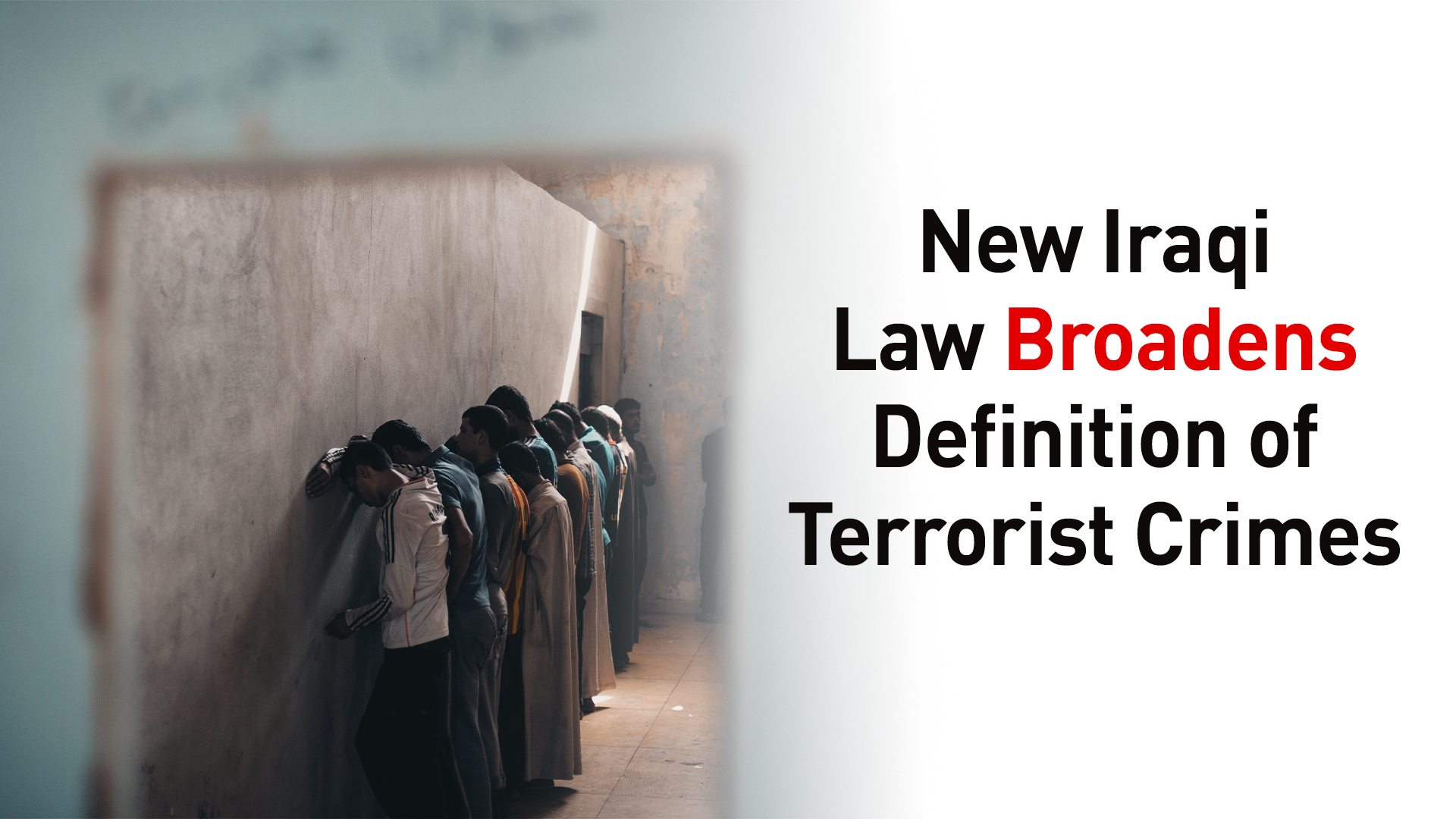
ERBIL (Kurdistan24) - Iraq has formally promulgated its anti-terrorism legislation, setting out a broad range of conduct classified as terrorist activity and prescribing severe penalties for those convicted of specified crimes.
The Iraqi government published the legislation on Thursday, saying the move was intended to make the rules and penalties known to the public and prevent individuals from claiming ignorance after becoming involved in prohibited activities.
The law covers not only direct attacks but also certain forms of planning, financing, incitement and logistical support. Its provisions therefore extend beyond the person who physically commits an act to others who deliberately facilitate it.
What Iraq's Law Defines as Terrorism
Under the published legislation, terrorist conduct encompasses criminal acts carried out by individuals or organized groups against people, institutions or property when intended to threaten national security, undermine national unity, spread fear or create disorder.
The provisions also address deliberate damage to public and private property. Sabotaging or destroying government buildings, state institutions, administrative facilities or other public spaces can fall within the law when undertaken with the prohibited terrorist purpose.
The legislation further addresses attempts to seize or disable such facilities in ways intended to undermine their functioning or destabilize the country.
What Activities Are Prohibited?
A significant part of the framework concerns violence directed at state security structures.
Armed attacks on military and police bases, recruitment centers, security offices, military units, communications infrastructure and military camps are covered when connected to terrorist intent.
The law also targets conduct that could trigger sectarian or religious violence.
Efforts to provoke civil war or sectarian conflict, including arming people or financing them for such purposes, are among the activities addressed.
Protection is also extended to diplomatic and international targets.
The legislation covers attacks against embassies and diplomatic missions operating in Iraq, as well as Iraqi institutions, Arab and foreign companies, and international governmental and nongovernmental organizations.
Kidnapping and unlawful detention are likewise included in circumstances specified by the law.
Abducting or restricting a person's freedom for ransom or for political, sectarian, ethnic or religious purposes can constitute a terrorist crime where the conduct threatens national security or the country's territorial or social integrity.
Who Can Be Held Responsible?
The legislation does not limit responsibility to those who directly carry out an attack.
According to the published provisions, individuals who deliberately plan, finance, incite or provide logistical assistance for specified terrorist crimes can also face the penalties prescribed by the law.
This distinction is important because it places supporting conduct within the legislation's scope when it is connected to the commission of a terrorist offense.
The law therefore distinguishes the range of conduct that can contribute to a terrorist crime from the question of whether an individual has actually been convicted.
The penalties described apply to people found guilty under the relevant provisions.
What Are the Penalties?
The most severe punishment specified is capital punishment.
According to the government announcement, the death penalty applies to individuals convicted as principal perpetrators or accomplices in the terrorist crimes covered by the relevant provisions.
The same punishment is prescribed for those convicted of inciting, planning, financing or providing logistical support for such crimes.
The legislation also provides for life imprisonment in certain circumstances. This applies to individuals who intentionally conceal terrorist acts or knowingly provide terrorists with shelter or a safe haven in an effort to prevent their prosecution.
The severity of these penalties reflects the seriousness with which the legislation treats conduct considered to threaten national security, public safety or national unity.
Why the Government Published the Law
The government's stated purpose in formally publishing the legislation is to ensure that its prohibitions and penalties are publicly known.
That approach is particularly relevant to provisions that cover forms of assistance beyond the physical commission of an attack. By making the rules public, the government says individuals should be aware of the consequences associated with participating in, facilitating or concealing terrorist activity.
The legislation consequently provides a framework covering both violent acts and specified forms of support surrounding them.
For Iraqi authorities, the law places attacks on state institutions, security forces, diplomatic missions and public order within a common legal framework while also addressing conduct that could fuel sectarian conflict or enable terrorist networks to operate.
Its formal promulgation therefore marks the publication of the rules Iraq will use, according to the supplied government announcement, to define and punish the range of conduct covered by its anti-terrorism legislation.