Iran’s Supreme Leader Adviser Says Foreign Forces Must Leave Middle East
Ali Akbar Velayati says US and Israeli defeat strengthened Iran’s belief that foreign forces drive insecurity and must leave the Middle East.
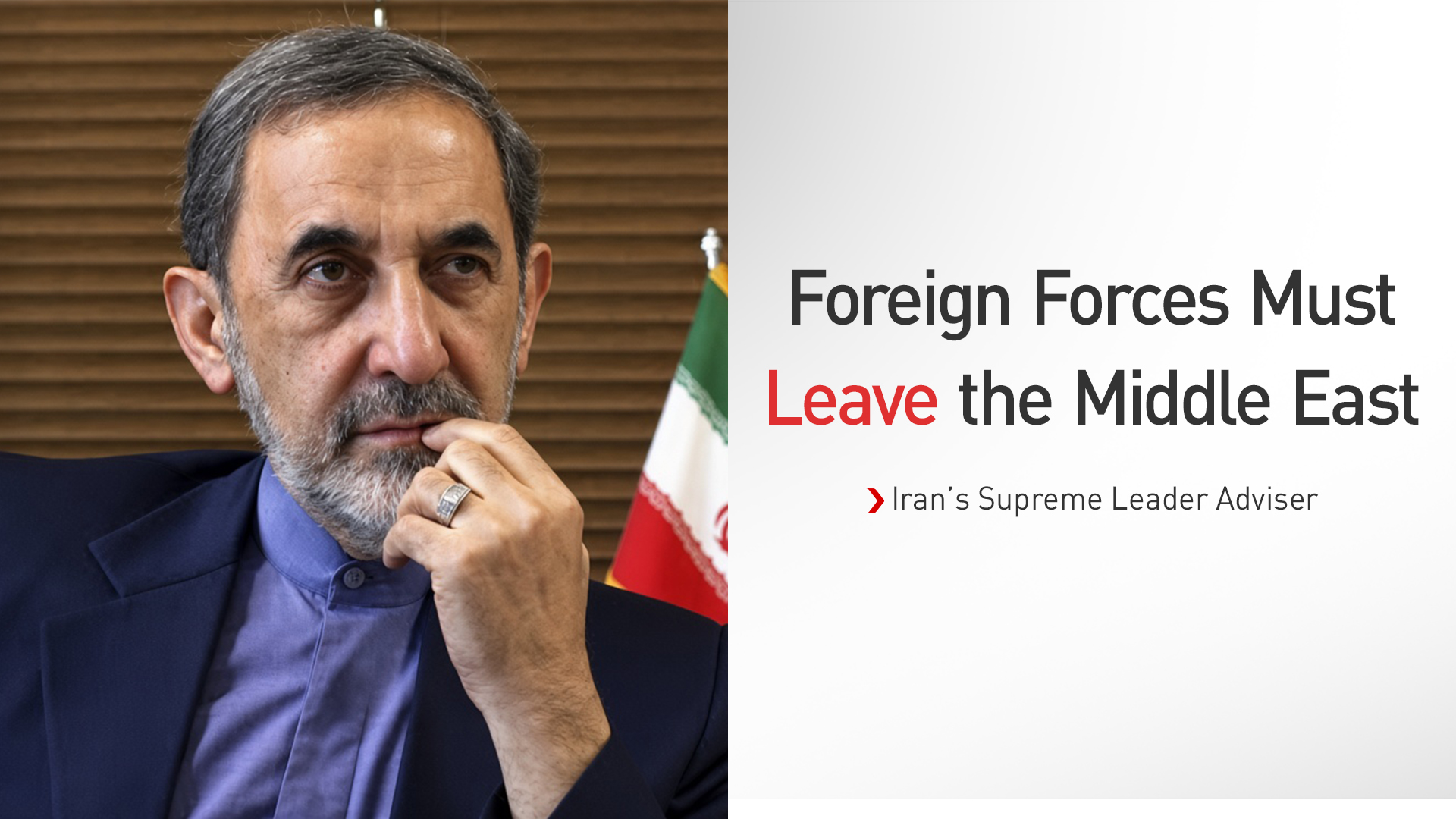
ERBIL (Kurdistan24) - Ali Akbar Velayati, international affairs adviser to Iran’s Supreme Leader, said Saturday that recent developments had strengthened the belief that foreign forces are the main cause of insecurity in the Middle East and should leave the region.
In a message posted on X on Saturday, using hashtags related to the Strait of Hormuz and Bab al-Mandab, Velayati said the resilience of Iran’s armed forces, the steadfastness of Iranians, and what he described as the courage of the Resistance Axis had shaped recent developments.
“Recent developments reflect the resilience of the armed forces, the steadfastness of Iranians, and the courage of the Resistance Axis,” Velayati wrote.
He added that the “U.S. and Zionist regime's defeat reinforced the belief that foreign forces — the main cause of insecurity — must leave the region.”
Velayati also said that increasing cooperation among regional states could help ensure regional security.
“Growing cooperation among regional states can secure its security,” he wrote.
His remarks come amid heightened tensions between the United States and Iran in recent months of 2026, particularly following Iran’s closure of the Strait of Hormuz to commercial shipping, which led to a significant rise in oil prices and disrupted part of global trade.
The administration of US President Donald Trump imposed a series of heavy economic sanctions on Iran, contributing to what the supplied background describes as an unprecedented crisis in the Iranian economy. Oman played a mediating role in efforts to ease tensions and reach a solution.
US Treasury Secretary Scott Bessent said in remarks that he expected a 30-to-60-day ceasefire agreement with Iran to be signed that day or the following day, with the reopening of the Strait of Hormuz identified as a key provision of the agreement.
Bessent said reopening the Strait of Hormuz would lead to lower energy prices in global markets.
He also said Washington had tightened sanctions on Tehran and that Iran was facing severe food-price inflation, with the rate estimated at between 150 and 180 percent. He further said Iran no longer had the ability to pay the salaries of its armed forces.
Velayati’s remarks place greater regional cooperation and the departure of foreign forces at the center of Iran’s stated position on regional security.