Iran Bets on Strait of Hormuz to Pressure Trump: AP
Tehran is using the Strait of Hormuz and prolonged economic pressure as leverage against Washington while facing mounting military, economic and domestic risks.
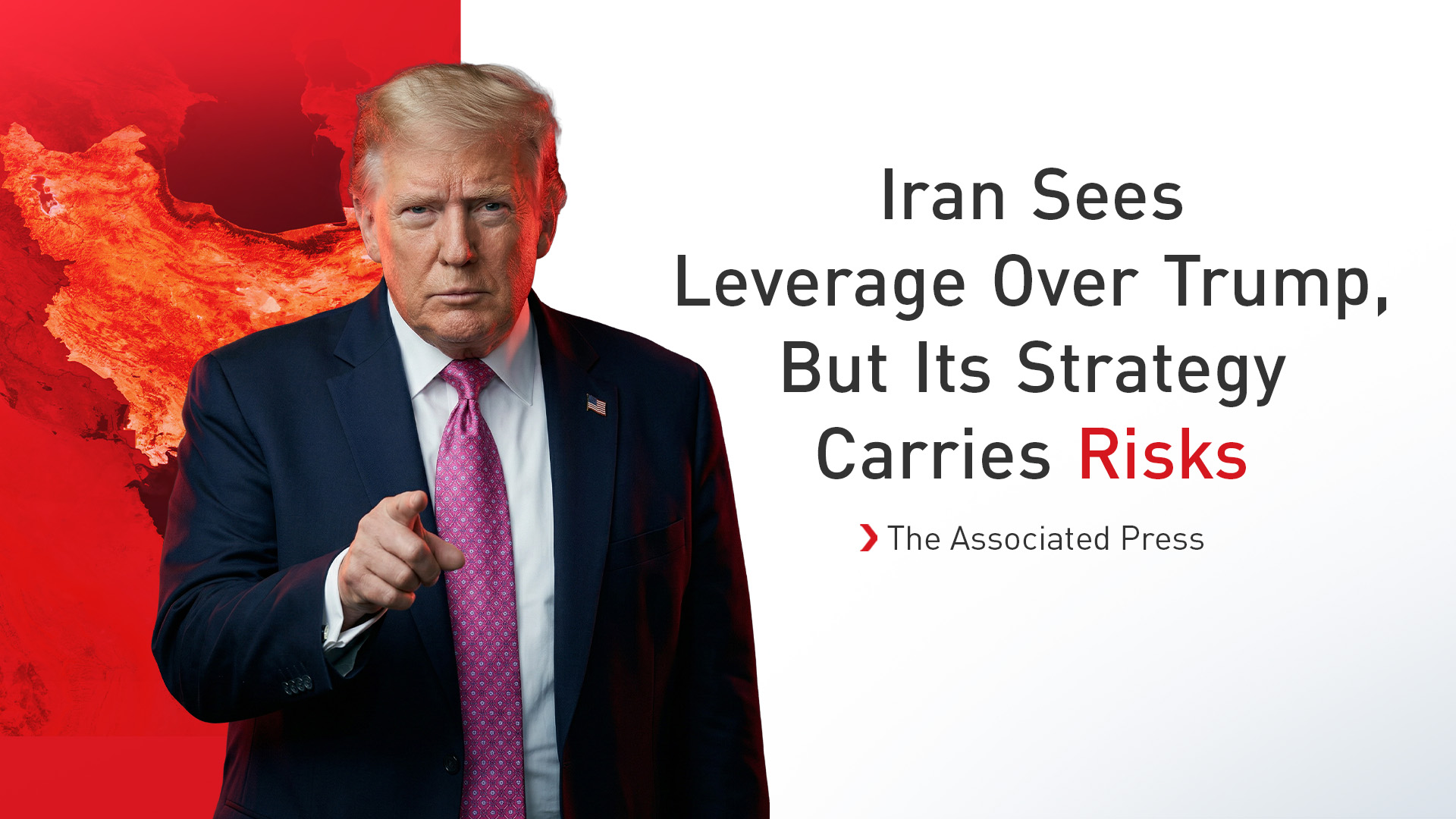
ERBIL (Kurdistan24) - Iran's leadership appears to believe that its ability to restrict traffic through the Strait of Hormuz has given Tehran a powerful bargaining position in its continuing conflict with the United States, but an analysis by The Associated Press warns that the strategy could also expose Iran to growing military, economic and political risks.
In an analysis published by AP, journalists Joseph Krauss and Amir-Hussein Radjy argue that Iranian leaders appear convinced that time is working in their favor.
By keeping pressure on one of the world's most important energy routes, Tehran can impose costs on Washington and its allies while betting that the United States will eventually seek an agreement rather than undertake a costly effort to reopen the waterway by force.
The Strait of Hormuz carries roughly one-fifth of the world's traded oil and gas, giving Iran's ability to disrupt shipping consequences far beyond the Persian Gulf.
Tehran's objective, according to analysts cited by AP, appears to extend beyond gaining economic leverage. Abdolreza Davari, a Tehran-based analyst and former adviser to Mahmoud Ahmadinejad, said Iran wants to establish its "management and sovereignty" over the waterway.
That ambition would have implications well beyond the current conflict, potentially challenging established expectations over freedom of navigation and the security of international trade routes.

Iran bets on pressure through Hormuz
AP's analysis identifies several calculations behind Tehran's strategy. Iranian leaders are aware of pressure on US stocks of some advanced missile-defense interceptors and of political divisions surrounding the war in the United States.
They also appear to calculate that prolonged disruption of Hormuz could keep energy prices elevated and create additional pressure on Washington ahead of congressional elections in November.

At the same time, reopening the waterway militarily could impose significant costs on the United States.
AP reported that such an operation could require a substantial military effort and potentially ground forces. Iran also retains the ability, through its allies in Yemen, to contribute to disruption along another important international shipping route.
From Tehran's perspective, these factors could strengthen its negotiating position and make Washington more willing to accept an agreement on terms favorable to Iran. But that calculation depends on Iran being able to sustain the pressure without suffering costs that eventually outweigh its leverage.

A possible deal could formalize Tehran's gains
Diplomatic discussions involving Oman have emerged as a possible route out of the confrontation. AP reported that Iran has indicated it is close to an arrangement with Oman concerning management of the Strait of Hormuz.
But Tehran has also tied the reopening of the waterway to a series of demands directed at Washington.
These include an end to the war, the lifting of the US naval blockade of Iranian ports, a US military withdrawal from the region, compensation for wartime damage, sanctions relief and the release of frozen Iranian assets.
Those demands are Iranian positions, not agreed terms.

Any arrangement that formally recognized a significant degree of Iranian control over the strait would represent a major strategic gain for Tehran, according to the AP analysis.
It could also raise broader concerns over international freedom of navigation by establishing a precedent in which control over a major commercial chokepoint becomes a bargaining instrument during conflict.
The issue has implications for countries far beyond the immediate region because of Hormuz's importance to global energy supplies.
AP also reported that China, a major buyer of Iranian oil and a country with influence in Tehran, has called for safe and normal passage through the waterway.
The risks behind Iran's gamble
Iran's apparent confidence in its leverage contrasts sharply with the damage it has already suffered during the conflict.
AP reported that US and Israeli strikes have severely damaged parts of Iran's leadership, navy and air force, while the US blockade has placed additional pressure on its oil exports and broader economy. The conflict has also contributed to severe inflation and disruption inside the country.
This creates a central contradiction in Tehran's strategy. The longer Iran keeps the strait under pressure, the greater the costs imposed on its adversaries may become.

But prolonged disruption also threatens to deepen Iran's own economic difficulties, particularly if oil revenues remain constrained and access to international markets is limited.
Iran's leaders therefore face a difficult calculation: continue using Hormuz as a strategic instrument and risk further economic deterioration, or reach an agreement that could provide relief but potentially require concessions on issues Tehran considers important.
The possibility of renewed domestic unrest adds another dimension to that calculation.
Economic pressure tests Tehran's strategy
AP's reporting places the current conflict against the backdrop of major unrest in Iran in recent months.
A currency crisis had previously triggered some of the largest anti-government protests in the history of the Islamic Republic, followed by a severe government crackdown.
Former Iranian Foreign Minister Mohammad Javad Zarif has argued that Iran's position in the conflict has created an opportunity for diplomacy.
In a recent essay, he described an "exceptional window for diplomacy" while warning that delaying an agreement could make economic recovery more difficult and increase the possibility of renewed internal unrest.
His comments illustrate that debate over the war exists within Iran itself.
While some officials and analysts argue that continued resistance can force Washington to make concessions, others warn that economic pressure could eventually become difficult to reverse.
For Tehran, the Strait of Hormuz also intersects with the longer-running nuclear dispute.
AP quoted Iran-based analyst Rahman Ghahremanpour as saying that the conflict over the waterway has temporarily pushed the nuclear issue into the background. If nuclear negotiations resume, control over Hormuz could provide Tehran with an additional source of leverage.

Diplomacy may offer a way out
The central paradox identified by AP is that Iran's resilience may strengthen its negotiating position while simultaneously increasing the risks of continuing the confrontation.
Tehran's ability to disrupt Hormuz gives it a strategic tool that can affect global energy markets and impose pressure on Washington. But maintaining that leverage requires Iran to absorb continued military and economic pressure of its own.
A prolonged conflict could also increase the risk of further US escalation, renewed domestic unrest and a wider regional confrontation involving Iran-aligned groups.
Tehran-based security analyst Mostafa Najafi told AP that Hormuz had become a strategic instrument for deterrence and for reshaping the security balance in the Persian Gulf. Other analysts cited by AP, however, stressed the limits of that strategy.
Rahman Ghahremanpour argued that Iran cannot sustain the current approach indefinitely and will eventually have to reach an agreement with Washington. Davari, by contrast, said Iran was unlikely to retreat from its position despite its economic difficulties.
That disagreement captures the dilemma facing Iran's leadership.
Tehran may currently believe it has enough leverage to wait for Washington to make concessions. But the longer the confrontation continues, the greater the possibility that the same strategy intended to strengthen Iran's bargaining position could instead deepen the pressures facing the country.
The outcome may ultimately depend on whether Tehran can sustain control over its most powerful strategic lever, the Strait of Hormuz, long enough to turn that leverage into a negotiated settlement without allowing the costs of the war to overwhelm it.