Houthis Claim Drone Attack on Aramco Refinery in Southern Saudi Arabia
Fresh strike intensifies Saudi-Houthi confrontation as Red Sea shipping threat converges with Iran's blockade of Strait of Hormuz
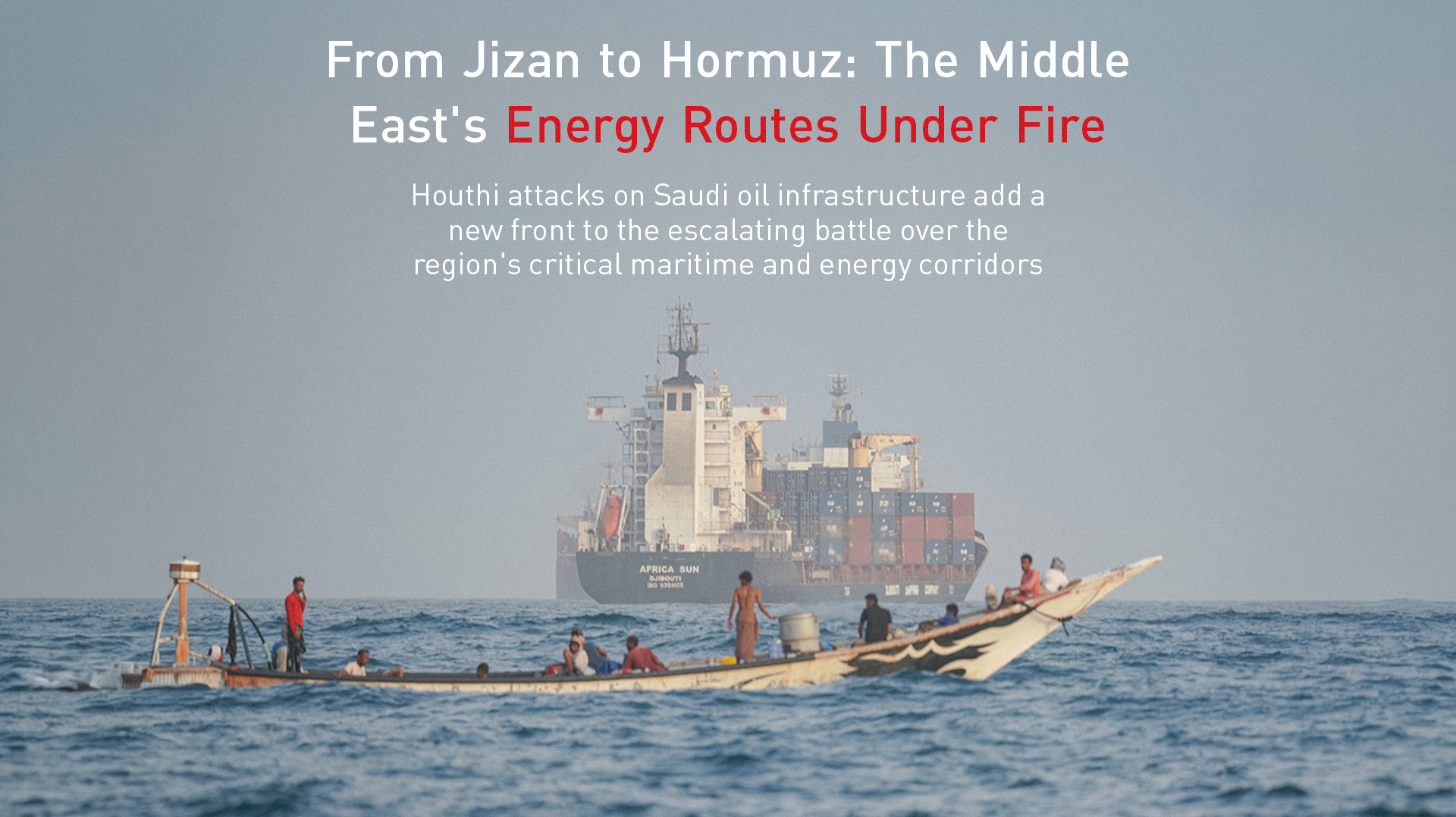
ERBIL (Kurdistan24) — Yemen's Iran-aligned Houthis on Thursday claimed responsibility for a drone attack targeting an Aramco refinery in Saudi Arabia's southern Jizan region, marking another escalation in a confrontation that threatens to widen the regional war into a broader battle over energy infrastructure and maritime trade.
The Houthi-affiliated Saba news agency said two drones targeted the Aramco facility, citing a military source who claimed the attack achieved a "precise hit."
The source said the strike was carried out in response to what the Houthis described as Saudi violations of Yemeni airspace and sovereignty in the northern provinces of Saada and Hajjah.
The group warned that it would "respond decisively" to any further violations of Yemen's sovereignty or attacks against the country.
Saudi authorities had not immediately confirmed the Houthi claim or reported damage from the alleged strike. Reuters reported that the Houthis' claim was made without independent confirmation.
Saudi-Houthi Truce Under Strain
The latest attack comes as a fragile truce between the Houthis and Saudi Arabia has come under severe pressure after largely holding since 2022.
The conflict began in 2014, when the Houthis seized control of Sanaa and large parts of northern Yemen. Saudi Arabia subsequently led a military coalition supporting Yemen's internationally recognized government, turning the conflict into one of the region's most consequential proxy wars involving Iran and Gulf Arab states.
Although the Saudi-Houthi conflict had entered a period of de-escalation, the wider Middle East war has placed the truce under increasing strain.
Fighting and cross-border strikes resumed in July after Saudi-backed Yemeni forces and the Houthis exchanged attacks, raising fears that Yemen could once again become a major battlefield in the regional conflict.
The Houthis have also expanded their pressure on Saudi Arabia's maritime interests. In July, the group announced a naval blockade targeting Saudi-linked shipping in the Red Sea and subsequently claimed attacks against Saudi oil tankers that it said had violated the blockade.
That campaign has raised the prospect of a second major maritime chokepoint being disrupted alongside the Strait of Hormuz.
Energy Routes Under Pressure
The strategic significance of the latest escalation extends beyond the Saudi-Yemeni border.
The Houthis control large parts of northern and western Yemen near the Bab el-Mandeb Strait, the maritime gateway connecting the Red Sea with the Gulf of Aden and a critical route for global shipping.
Their threats against Saudi-linked vessels therefore carry implications for energy exports from the kingdom and for international shipping between the Indian Ocean, Middle East and Europe.
The Houthi campaign has developed in parallel with Iran's efforts to restrict navigation through the Strait of Hormuz, located on the opposite side of the Arabian Peninsula.
The two waterways form critical maritime gateways for Middle Eastern energy exports, meaning simultaneous disruption could place significant pressure on global oil markets and shipping networks.
In July, Reuters described the Houthi blockade of Saudi shipping as potentially creating a second chokepoint for global oil supplies while Iran sought to control traffic through Hormuz.
The convergence of the two crises is particularly significant for Saudi Arabia. While Riyadh has sought to shield its energy exports from the conflict by relying more heavily on Red Sea infrastructure, including the Yanbu export route, Houthi pressure on Red Sea shipping threatens an alternative pathway for moving Saudi crude to international markets.
The Wider Geopolitical Battle
The escalating Houthi-Saudi confrontation also reflects the wider strategic competition between Iran and the United States and its regional partners.
Tehran's support for the Houthis has long provided the group with political, military, and technological backing, while the Houthis have developed an arsenal of drones and missiles capable of threatening targets far beyond Yemen's borders.
For Saudi Arabia, the renewed attacks pose a particularly sensitive security challenge. Riyadh has spent years attempting to move away from the costly Yemen war while pursuing broader regional diplomacy and economic transformation under its Vision 2030 agenda.
A return to sustained Houthi attacks could force the kingdom to balance those priorities against the need to protect its territory, oil infrastructure and maritime routes.
The escalation also comes shortly after Saudi Arabia, Türkiye and Pakistan signed a collective defense pact, adding a new strategic dimension to the security environment surrounding the kingdom.
Any sustained Houthi campaign against Saudi territory could therefore test the depth and practical meaning of Riyadh's expanding defense partnerships.
For Washington, the Houthi attacks present another challenge as it confronts Iran over the Strait of Hormuz. The United States has sought to maintain freedom of navigation and protect commercial shipping, while Tehran has asserted control over the strategic waterway and demanded that vessels obtain permission before passage.
With the Houthis threatening Saudi-linked shipping from the Red Sea and Iran restricting traffic through Hormuz, the conflict is increasingly being fought not only through missiles and drones but also through control of the maritime arteries on which the region's energy economy depends.
A sustained escalation in both theaters could turn the Red Sea and Persian Gulf into interconnected fronts of the wider US-Iran confrontation, increasing risks to commercial shipping, regional energy infrastructure and the global oil supply chain.