Iraq Plans New Oil Pipelines as August Exports Average 2 Million Barrels a Day
Iraq's Oil Minister Bassem Mohammed Khudair says four tankers are exporting Iraqi crude as Baghdad advances plans for Basra-Fishkhabur-Ceyhan and Haditha-Baniyas pipelines.
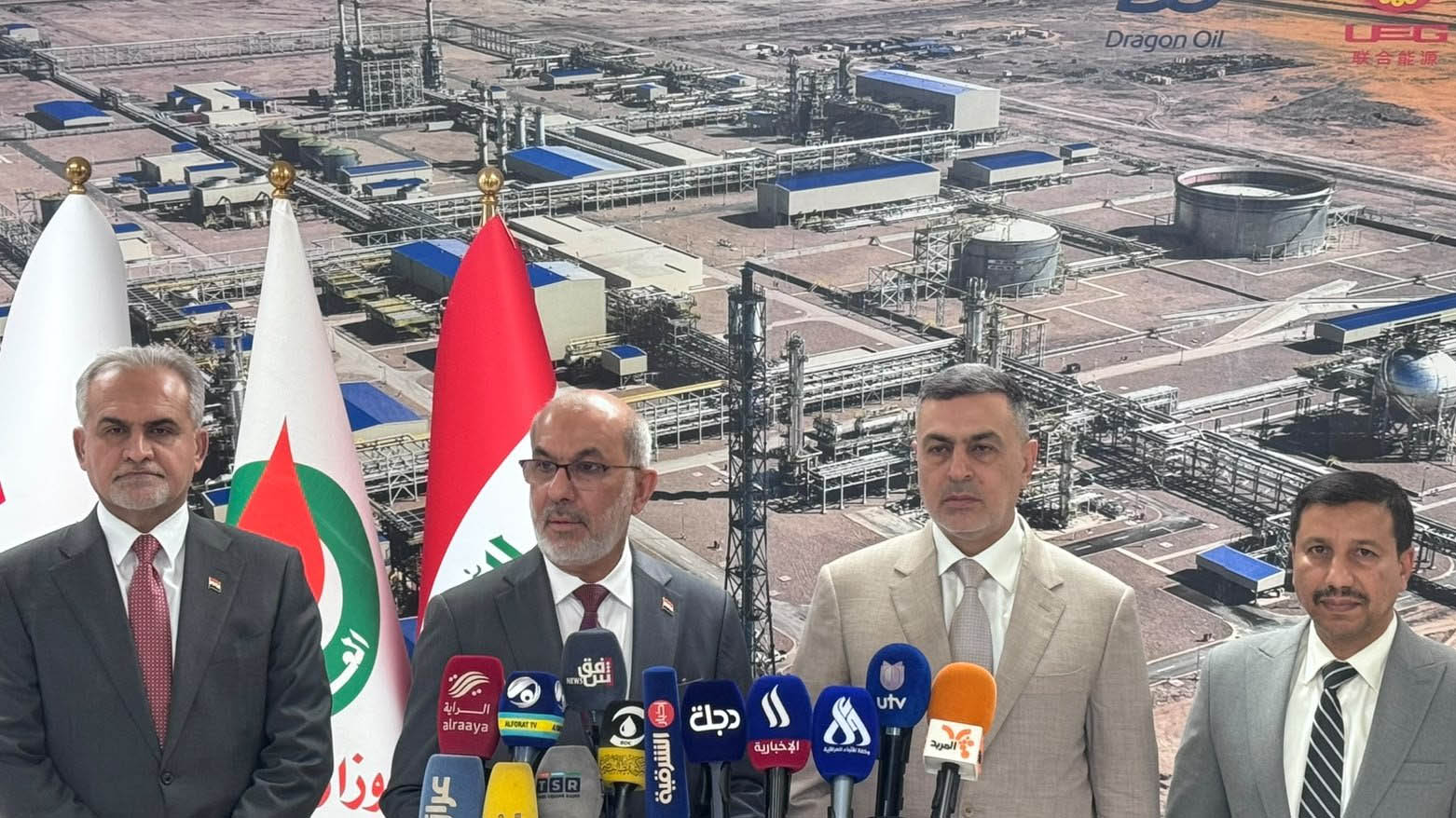
ERBIL (Kurdistan24) - Iraq is preparing to expand its oil export network as four tankers currently carry Iraqi crude and the country's average daily exports in August have reached about 2 million barrels, according to the Iraqi Ministry of Oil.
Oil Minister Bassem Mohammed Khudair said Baghdad is pursuing new pipeline routes to diversify export outlets, including a planned line linking Basra with Fishkhabur and the Turkish port of Ceyhan, as well as another proposed route from Haditha to Baniyas.
The minister made the remarks Friday, Aug. 14, at a joint press conference with Basra Governor Asaad al-Eidani, where he also outlined current export levels, oil-sector investment and the government's policy of linking energy projects with development in producing areas.
New Routes to Ceyhan and Baniyas
The Ministry of Oil said a consortium comprising US energy company Chevron and Qatari company UCC will implement the planned Basra-Fishkhabur pipeline. A separate pipeline is also planned from Haditha to Baniyas, according to the ministry.
The projects are part of what Khudair described as a government strategy to expand Iraq's export outlets. The ministry said the objective is to allow routes through Ceyhan and Baniyas to operate alongside maritime exports through the Gulf, giving Iraq multiple channels for sending crude to international refineries.
The ministry did not provide a timeline for construction or completion of either proposed pipeline. The routes therefore remain planned infrastructure rather than operational export systems.
The emphasis on additional outlets reflects Baghdad's stated aim of avoiding excessive reliance on any single export corridor. Existing exports include the Ceyhan route and maritime shipments, while the proposed pipelines would add further options once implemented.
Exports Reach 2 Million Barrels a Day
Khudair said Iraq's average daily oil exports since the beginning of August have reached approximately 2 million barrels.
“Since the beginning of this month, we have exported an average of two million barrels per day, while total exports for July reached nearly 49 million barrels,” the minister said.
The ministry said four tankers are currently engaged in exporting Iraqi crude. The figures place current export activity at the center of Baghdad's efforts to maintain access to international markets while developing additional infrastructure.
Khudair also stressed the central role of oil in Iraq's public finances, saying more than 85 percent of the country's general budget depends on oil export revenues. The dependence underscores the government's stated interest in maintaining reliable export channels while expanding the infrastructure used to move crude abroad.
Reducing Dependence on a Single Route
The planned pipelines are intended to complement, rather than immediately replace, existing export arrangements.
The Ministry of Oil said Baghdad wants Ceyhan and Baniyas to be used alongside maritime routes through the Gulf so that Iraqi oil can continue reaching global refineries through several outlets. The strategy, as presented by the ministry, is centered on diversification of export infrastructure.
The Basra-Fishkhabur-Ceyhan project would connect Iraq's major southern oil-producing area with an established export destination, while the Haditha-Baniyas proposal would create another potential corridor toward the Mediterranean. Both projects remain plans announced by the ministry, and no implementation timetable was given.
Oil and Gas Investment
Khudair also highlighted developments at the Al-Fayhaa oil field as part of wider investment in Iraq's energy sector.
According to the Ministry of Oil, a central gas-processing facility has opened at Al-Fayhaa with a capacity of 130 million cubic feet per day. The field is also producing 100,000 barrels of oil per day, the ministry said.
The minister said United Energy Group is investing in three areas: Al-Fayhaa, the Siba field and the Fao exploration block. Preliminary indicators at the Fao block have confirmed the presence of oil and gas, according to the ministry.
These developments were presented as part of broader efforts to increase oil and gas production while expanding the infrastructure needed to process and export energy resources.
Jobs and Development
Khudair said the government's approach to oil investment extends beyond extraction and exports. He added that, under directives from Prime Minister Ali Falih al-Zaidi, investment in the oil sector should be accompanied by service and infrastructure projects in oil-producing areas.
The ministry said the policy is intended to create jobs for young people and support development in communities where oil and gas production takes place.
For Baghdad, the immediate priority remains maintaining exports while developing additional routes. With August exports averaging about 2 million barrels per day and oil revenues accounting for more than 85 percent of the general budget, the Ministry of Oil's pipeline plans are aimed at expanding the number of outlets through which Iraq can move its crude to international markets.