Israel Resumes Strikes on Lebanon After More Than a Month
Seven people were killed in renewed Israeli strikes on several areas of southern Lebanon on Saturday, marking the first intensive Israeli attack on the area in more than a month.
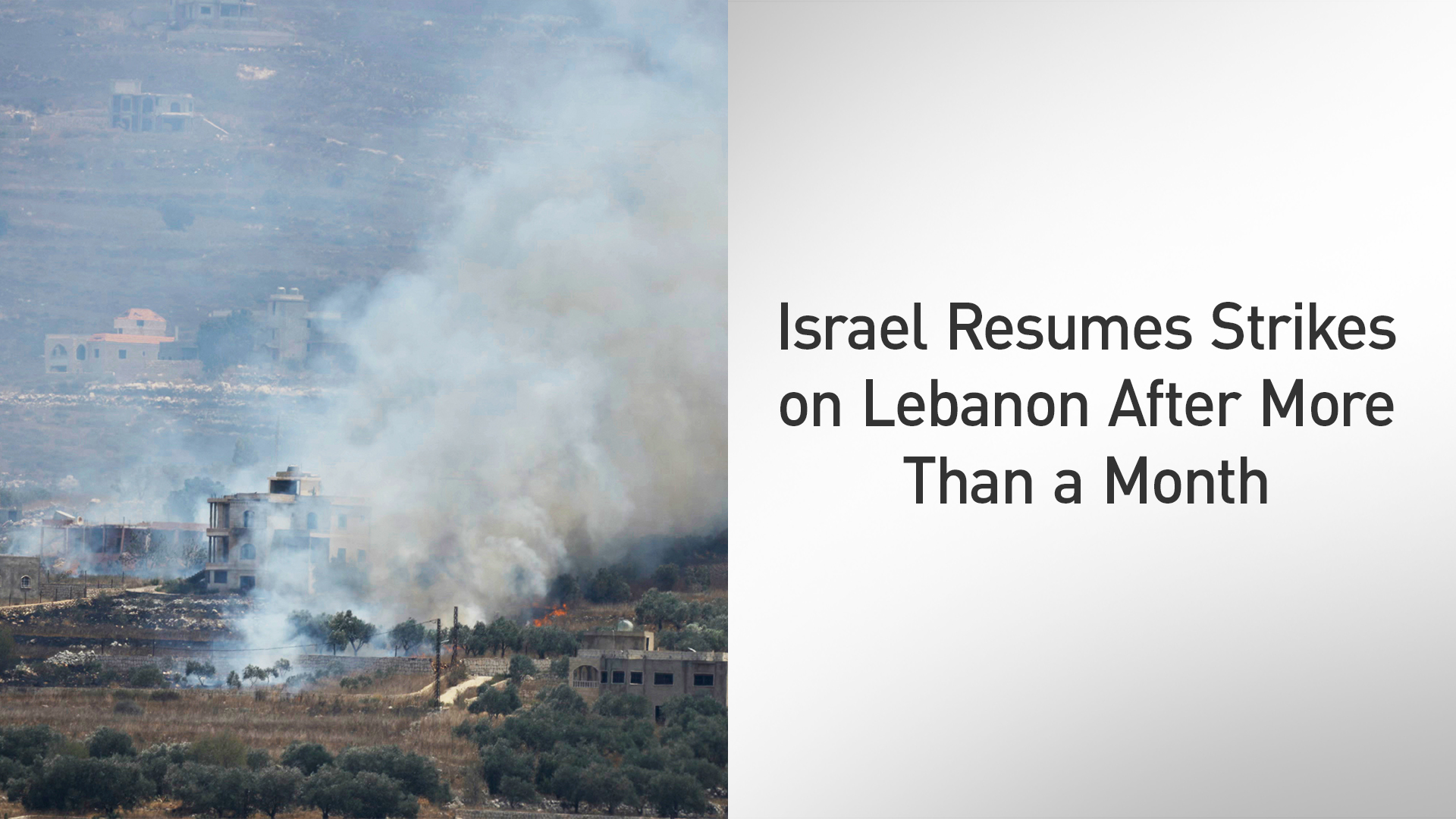
ERBIL (Kurdistan24) - Israeli forces resumed intensive strikes on southern Lebanon early Saturday, killing seven people and targeting several areas in the latest escalation to hit the region.
The strikes targeted the area of Ansari in southern Lebanon, while Lebanese media also reported attacks on Nabatieh and Fouqash.
Lebanese Civil Defense teams confirmed the deaths of six people in the attacks and said the casualty toll was preliminary, with the number of victims potentially rising as rescue teams continued searching for and assisting those affected.
The attack on Ansari targeted a home near the village, according to the Lebanese state-run National News Agency, with rescue teams continuing to search through the rubble.
The renewed Israeli attacks come despite a framework agreement reached between Israel and Lebanon in June 2026 through US mediation, aimed at ending the conflict that had escalated in March.
Under the agreement, Israeli forces are expected to withdraw gradually from southern Lebanon, Hezbollah is to be disarmed, and the Lebanese Armed Forces are to assume security responsibilities in designated areas.
Seven rounds of negotiations have been held, with the latest taking place in Rome earlier this month. However, the agreement has not yet been fully implemented, while Hezbollah has rejected being bound by it.
The latest strikes come four days after Washington announced that the next round of US-facilitated bilateral talks between Israel and Lebanon was expected to take place in Rome in early September.
On August 11, US State Department officials said Washington remained optimistic about the diplomatic process, saying they “feel good about the trajectory” of the talks despite significant domestic political pressures facing both Israel and Lebanon.
Diplomatic contacts were expected to continue before the Rome meeting, with discussions planned in Beirut, Jerusalem and Washington.
The framework agreement had also begun to be implemented, with Israel completing its first withdrawal from a designated pilot zone in southern Lebanon, allowing the Lebanese Armed Forces to assume local security responsibilities.
The sides were also expected to address unresolved land border disputes along the UN-monitored Blue Line, as well as standardizing terminology and operational maps, establishing third-party verification mechanisms for Lebanese clearance operations, and exploring demining efforts involving third countries.