Taliban Celebrate Five Years in Power Amid Rights and Recognition Concerns
Taliban officials highlight security, economic self-reliance and regional ties as Afghanistan marks five years under their rule, while the UN warns of a deepening rights crisis.
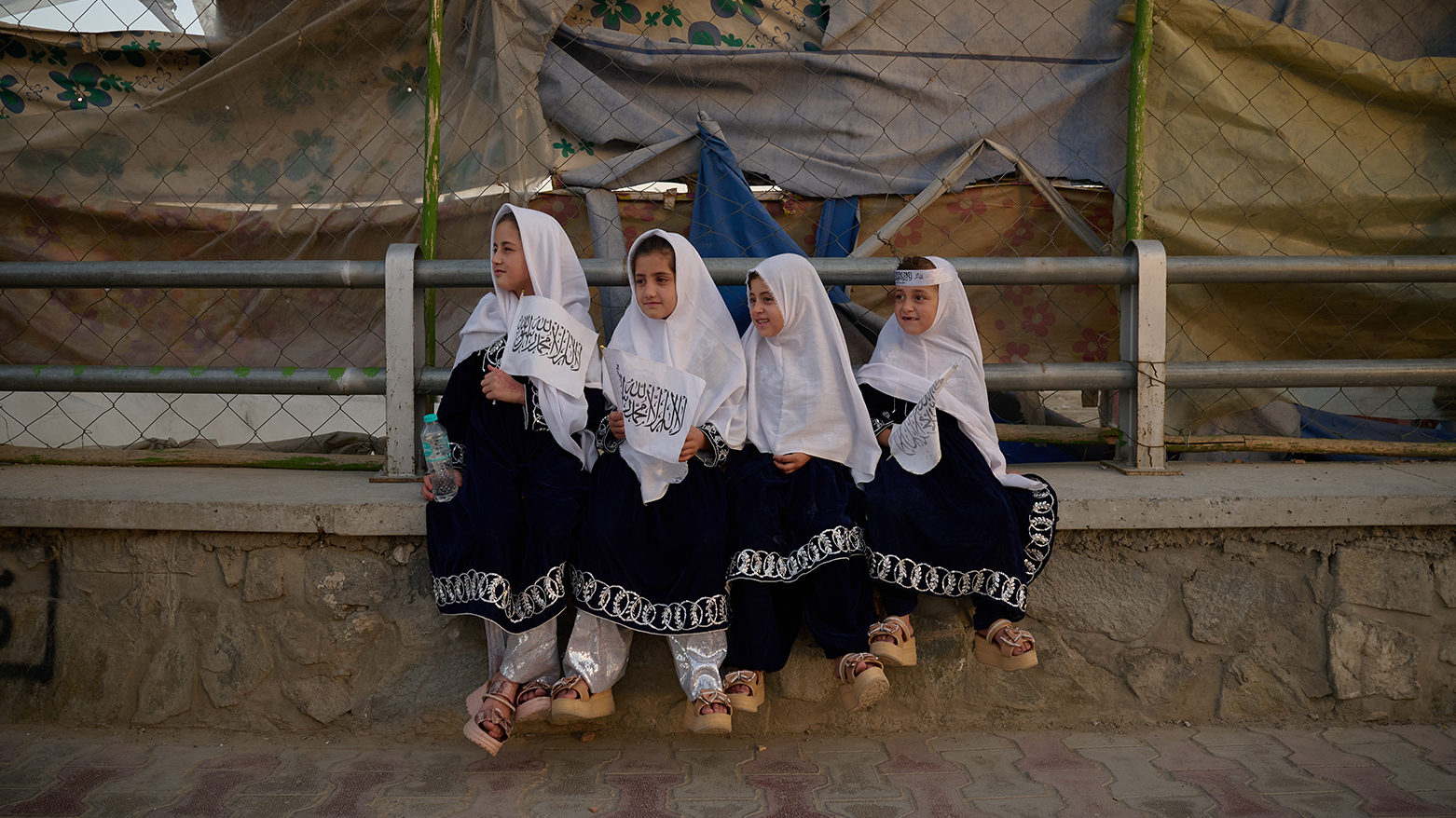
ERBIL (Kurdistan24) - Afghanistan's Taliban authorities marked five years since returning to power on Saturday with a ceremony in Kabul centered on national unity, economic self-reliance, security and stronger relations with neighboring and regional states, while international observers continued to raise concerns over rights and the country's isolation.
Senior officials of the Islamic Emirate used the anniversary to defend the record of the administration established after the Taliban entered Kabul on Aug. 15, 2021, presenting the past five years as a period of greater security and reconstruction after decades of war.
The message from Kabul was largely one of consolidation: preserve the existing system, reduce dependence on foreign powers, expand domestic production and strengthen relations with countries on the basis of what officials described as mutual respect and non-interference.
At the same time, reporting by Agence France-Presse (AFP) and The Associated Press (AP) showed a starkly different picture of the anniversary, highlighting Afghanistan's international isolation and widespread restrictions on women and girls.

Kabul Emphasizes Unity and Self-Reliance
The central anniversary ceremony was held at Kabul's Loya Jirga Hall, where senior Taliban officials delivered speeches emphasizing the consolidation of the political system.
Deputy Prime Minister for Administrative Affairs Abdul Salam Hanafi said the authorities wanted Afghanistan's relations with neighboring states, the wider region and the international community to be based on non-interference, mutual respect and shared interests.
He also said Afghanistan would not allow its territory to be used against other countries.

Hanafi presented economic self-reliance as another priority, highlighting the Qosh Tepa Canal and arguing that its completion could help Afghanistan achieve food self-sufficiency and eventually export agricultural products.
He also pointed to electricity, gas and railway projects as evidence of infrastructure development under the current administration.
Other officials echoed the emphasis on unity. Noorullah Noori, the minister responsible for borders, tribes and tribal affairs, described the level of national unity as "unprecedented" and called for it to be maintained.
A message from Prime Minister Mullah Mohammad Hassan Akhund, read at the ceremony, called on Afghans to defend the current Islamic system and cooperate with the government on security and development.

Taliban Defend Post-2021 Security Gains
Security remains one of the central claims made by the Taliban when defending their rule.
Minister of Hajj and Religious Affairs Noor Mohammad Saqib said Afghanistan had previously been among the world's most insecure countries but had become, in the authorities' characterization, "the most secure country in the world."

AFP reported that the anniversary celebrations included military vehicle convoys, Taliban flags, religious and patriotic music and helicopter flights over Kabul.
The scenes were designed to underscore the authorities' claim that the return of the Taliban ended the large-scale conflict that had defined much of Afghanistan for decades.
AFP correspondent Rosie Scammell reported that large crowds gathered in Kabul, with residents traveling in flag-decorated vehicles and motorcycles while security forces maintained a visible presence.

But AFP also reported that Afghanistan continues to face serious economic challenges, including high unemployment and declining per-capita GDP despite recent economic growth.
One Kabul university student interviewed by AFP, Pirooz Mirzaie, said improved security and infrastructure were visible but that finding work remained a major challenge for young Afghans.

Economic Independence as a Political Goal
The anniversary speeches repeatedly linked sovereignty to economic independence.
Foreign Minister Amir Khan Muttaqi urged Afghanistan to become more self-reliant in the economy, industry and technology sectors and called on countries that have not engaged with the Taliban authorities to reconsider their policies.

Deputy Economy Minister Abdul Latif Nazari criticized the role of foreign governments during the two decades preceding the Taliban takeover, arguing that external powers had exercised excessive influence over Afghanistan's political, social and cultural affairs.
Nazari also claimed that the current administration had increased domestic investment and strengthened national unity despite international sanctions.
The emphasis on economic independence reflects a broader challenge facing Afghanistan: the Taliban authorities seek greater international engagement and investment while resisting political conditions that would require significant changes to their governing system.

International Isolation Remains
Despite establishing relations with a number of governments, Afghanistan's Taliban administration remains internationally isolated.
AFP reported that Russia is the only country to have formally recognized the Taliban government, while several other states have developed working relationships with Kabul without granting full diplomatic recognition.
Relations with neighboring Pakistan have also deteriorated sharply, adding pressure to an already difficult regional environment.

The anniversary therefore comes at a time when Kabul is seeking a balance between international engagement and maintaining a political system that has faced sustained criticism from governments and international organizations.
Taliban officials argue that their foreign policy should be based on sovereignty and mutual interests. Muttaqi called on countries that have not yet engaged with Kabul to reassess their positions.
Women and Girls Remain at the Center of Criticism
The strongest international criticism, however, continues to focus on restrictions imposed on women and girls.
According to AP, thousands gathered at the Loya Jirga ceremony, but no women were present.

The report highlighted restrictions on girls' education beyond the sixth grade, women's access to universities and employment, and their participation in public spaces and activities.
UN Special Rapporteur Richard Bennett warned in a video message that Afghanistan was facing a "deep human rights crisis."
Bennett said that although the era of large-scale war had ended, the human rights situation had deteriorated, particularly for women and girls. He argued that the system had reached the level of what he described as a crime against humanity of gender persecution.

The concerns extend beyond gender restrictions. AP cited UN assessments documenting arbitrary arrests, torture and ill-treatment, extrajudicial killings, restrictions on freedom of expression, attacks on journalists and human rights defenders, and restrictions affecting ethnic and religious components.
UNESCO estimates that approximately 2.4 million girls have been excluded from secondary education under the current restrictions.
UN Women has also warned that restrictions on women's education and employment could damage Afghanistan's long-term economic and social capacity by limiting the country's future pool of teachers, doctors, nurses and other professionals.

A Celebration Under International Scrutiny
The conflicting narratives surrounding the anniversary reveal the difficult position Afghanistan's authorities occupy five years after the Taliban takeover.
Inside Kabul, officials describe a country that has achieved security, strengthened national unity and begun rebuilding through domestic resources and regional partnerships.
International organizations and rights advocates counter that stability cannot be measured solely by the absence of large-scale war, particularly when fundamental rights remain heavily restricted.

The anniversary consequently served two purposes: for the Taliban authorities, it was a celebration of what they portray as independence, security and consolidation; for international observers, it was another opportunity to assess the human and political costs of the system established in 2021.
What Comes Next
The Taliban leadership's emphasis on self-reliance suggests that Kabul intends to continue pursuing economic development and regional engagement without fundamentally changing its governing model.
Hanafi's call for relations based on non-interference and shared interests reflects that approach, while the focus on projects such as the Qosh Tepa Canal signals an attempt to build domestic economic capacity.

But the gap between Afghanistan's desire for broader international recognition and the concerns raised over women's rights, political freedoms and governance remains substantial.
Five years after the Taliban entered Kabul, the country's future will depend not only on whether the authorities can maintain security and expand infrastructure, but also on whether they can overcome the international and domestic tensions surrounding the political system they have built.

