Iraq to Drop Zeros From Its Currency as Dinar Redenomination Returns?
Iraq's Communications Minister Mustafa Sanad says Iraq has decided to remove zeros from the dinar and reprint the currency, but the Central Bank remains the country's monetary authority and has not publicly confirmed a timetable.
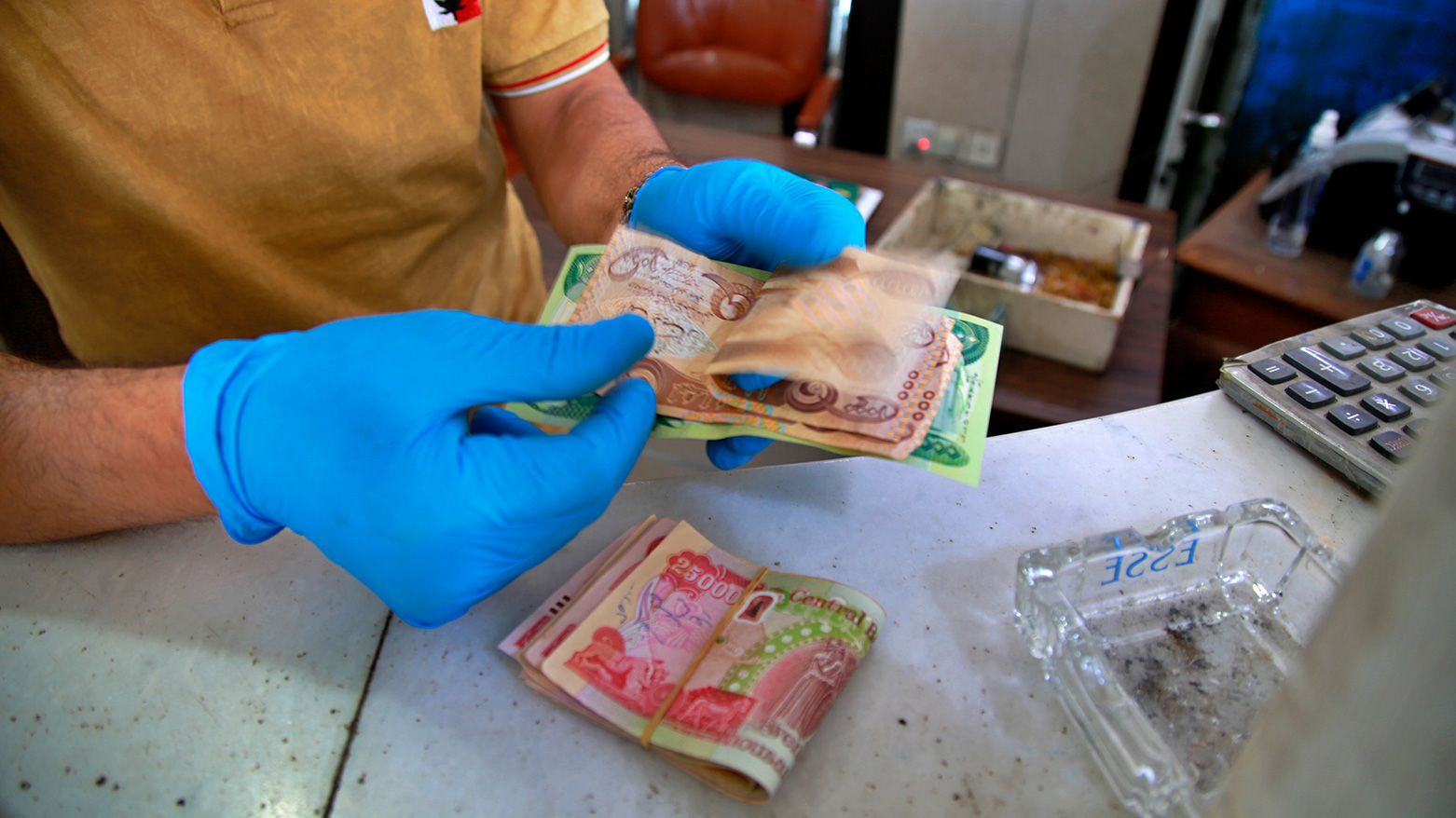
ERBIL (Kurdistan24) - Is Iraq preparing to remove zeros from its currency after years of discussion over a possible dinar redenomination?
The question returned to the forefront Sunday after Communications Minister Mustafa Sanad said the decision had been made and that Iraq's currency would soon undergo changes and be reprinted.
"The decision to remove the zeros from the Iraqi currency has been made; the Iraqi currency will soon undergo changes and be reprinted," Sanad said in an interview with INews Iraq.
The statement would represent a major development in a monetary reform proposal discussed in Iraq for more than a decade.
But it also raises questions over timing and implementation because the Central Bank of Iraq (CBI), rather than the Communications Ministry, is the country's monetary authority.
The CBI has not, in the material reviewed for this report, announced a specific timetable for removing zeros. In June, the bank stressed its commitment to supporting the dinar and maintaining monetary and economic stability, while warning against inaccurate reporting about currency-related measures.
What Would Removing Zeros Mean?
Removing zeros, commonly referred to as redenomination, would change the numerical denominations of Iraq's banknotes without necessarily changing the currency's real purchasing power.
For example, under a hypothetical three-zero adjustment, 1,000 old dinars could become one new dinar, with prices, wages, bank balances, contracts and other financial values adjusted proportionally.
The policy would therefore be fundamentally different from a devaluation or revaluation of the dinar.
Earlier discussions by the Central Bank have presented deleting zeros as a technical and administrative reform intended to simplify accounting, reduce the volume of cash in circulation and make financial transactions more efficient.
The CBI's broader reform agenda has also focused on strengthening the banking sector and expanding international banking relationships.
In July, Prime Minister Ali Falih al-Zaidi said seven Iraqi banks had been prepared to return to international correspondent-banking channels after meeting compliance and governance requirements.
Why Is the Idea Returning Now?
The proposal comes as Iraq attempts to modernize a heavily cash-dependent economy while managing significant fiscal and monetary pressures.
The country remains highly dependent on oil revenues, leaving government finances sensitive to fluctuations in crude prices and production.
At the same time, the amount of currency circulating in the economy has grown substantially, making the physical handling of large-denomination dinar payments increasingly cumbersome.
A redenomination could make everyday accounting and financial reporting more straightforward.
It could also complement efforts to move transactions into the formal banking system, particularly if the replacement of banknotes encourages citizens and businesses to deposit large cash holdings rather than keeping them outside financial institutions.
Not a Shortcut to a Stronger Dinar
A critical distinction is that removing zeros would not automatically make the dinar more valuable.
If the conversion were purely proportional, an item costing 50,000 old dinars could simply be priced at 50 new dinars after three zeros were removed.
Salaries and bank deposits would undergo the same mathematical adjustment.
The reform would therefore simplify the currency rather than instantly increase Iraqis' purchasing power.
The CBI has previously emphasized the importance of monetary stability, and in June it rejected misleading claims surrounding currency and state financing operations.
The bank said its strategy remained focused on supporting the dinar and maintaining financial and economic stability.
A Reform With Political and Practical Risks
Any decision to redenominate the currency would require extensive preparation.
The government and central bank would need to coordinate the printing of new notes, establish a conversion period, adjust accounting and payment systems, update contracts and financial records, and conduct a large public information campaign.
Businesses, banks and government institutions would also need sufficient time to adapt.
The transition could be particularly sensitive in Iraq because of the size of the informal cash economy.
Authorities would need to ensure that counterfeit notes, unregistered wealth and illicit funds do not enter the financial system during the exchange process.
At the same time, political agreement would be needed across Baghdad's fragmented political landscape, including coordination between the Central Bank, Finance Ministry, Parliament and other state institutions.
Banking Reform Moves in Parallel
The currency debate comes as Iraq's financial sector is already undergoing a broader reform process.
The CBI said in February that Iraqi commercial and Islamic banks and branches of foreign banks had completed a major stage of a comprehensive reform program, with institutions choosing among paths including remaining independent, merging or exiting the market.
The bank said further work would focus on addressing identified deficiencies and achieving full compliance.
The bank has also been working to expand the ability of compliant Iraqi banks to conduct international transactions in currencies including the euro, UAE dirham, Chinese yuan and Jordanian dinar.
Those reforms are relevant to a potential redenomination because changing the physical currency without strengthening the banking infrastructure would address only part of the problem.
What Happens Next?
Sanad's statement has revived a proposal that has circulated through Iraqi economic policy debates for years.
But the key question now is whether the statement represents a finalized government decision ready for implementation or a political announcement ahead of formal action by the country's monetary authorities.
The Central Bank will ultimately be central to determining how, and whether, the reform proceeds.
For Iraqis, the practical significance will depend less on the number of zeros printed on a banknote than on what accompanies the change: monetary stability, functioning banks, transparent conversion rules and confidence that the new currency will retain its purchasing power.
Until those elements are established, the prospect remains best framed as a major policy signal rather than an immediate change in the value of the Iraqi dinar.