Iraq Turns to Non-Oil Revenue as Strait of Hormuz Crisis Deepens
Finance Minister Falih Sari says Baghdad is strengthening non-oil revenues and introducing a performance-based budget as the Strait of Hormuz closure disrupts trade and oil earnings.
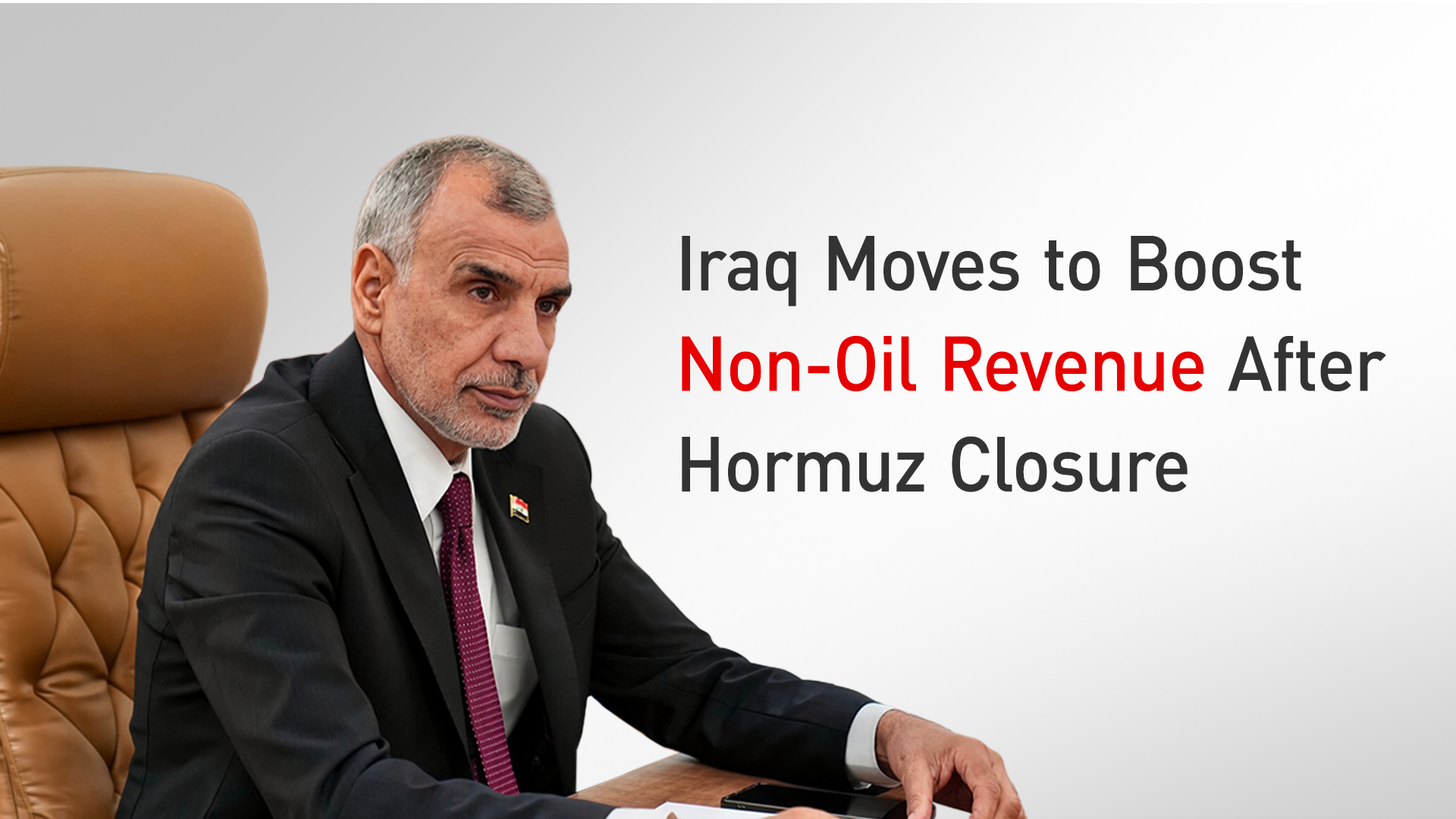
ERBIL (Kurdistan24) - Iraq is seeking to increase non-oil revenues and overhaul public spending as the closure of the Strait of Hormuz continues to weigh on the country's economy, Finance Minister Falih Sari said.
Speaking during a meeting with the British ambassador in Baghdad, Sari said the Finance Ministry was taking measures to limit the economic impact of the regional crisis while advancing a new budget model designed to link government spending to measurable outcomes.
"The closure of the Strait of Hormuz has directly impacted our economy," Sari said, pointing to the effects on trade, exports and oil sales.
Baghdad Seeks More Non-Oil Revenue
Sari said the government is working to strengthen and expand non-oil sources of revenue, while improving financial management and continuing economic reforms across state institutions.
The effort reflects a longstanding challenge for Iraq, whose public finances remain heavily dependent on oil revenues.
The Finance Ministry is also preparing what Sari described as Iraq's first Performance and Program-Based Budget, a system intended to connect government expenditures to specific programs, objectives and results rather than relying primarily on traditional expenditure allocations.
The minister said the new approach would provide greater oversight of public spending and help improve the efficiency of state institutions.
Hormuz Closure Hits Oil-Dependent Economy
The remarks come as the continuing closure of the Strait of Hormuz has disrupted one of the world's most important energy and shipping routes.
According to the supplied economic assessment, more than 90% of Iraq's oil exports normally pass through the waterway, making the country particularly exposed to prolonged disruptions.
The crisis has sharply reduced Iraq's oil earnings. Monthly oil revenue has reportedly fallen from around $7 billion to approximately $1 billion following the disruption.
For an economy where oil provides the overwhelming share of export earnings and a substantial portion of government revenue, the decline has placed additional pressure on Baghdad's finances.
Reform Becomes More Urgent
The government of Prime Minister Ali al-Zaidi has increasingly emphasized economic diversification as it confronts the consequences of the regional crisis.
Sari said the Finance Ministry would continue developing financial management mechanisms and pursuing reforms aimed at reducing vulnerabilities within the state budget.
The move toward program-based budgeting could also give the government a framework for evaluating whether spending produces measurable economic or social results.
Such reforms face significant challenges, however, particularly in an economy where oil revenues remain central to financing public-sector salaries, services and government projects.
Iraq Looks Beyond Oil
The Finance Ministry's emphasis on non-oil revenues suggests that the Hormuz crisis is being treated not only as a temporary financial shock but also as a warning about the risks of continued dependence on a single source of income.
The government is therefore seeking to increase revenue from other sectors while improving tax and customs collection and strengthening financial administration.
The strategy is intended to provide Baghdad with greater fiscal room when oil revenues decline or regional disruptions affect exports.
Sari's comments indicate that the Finance Ministry sees the current crisis as a reason to accelerate rather than postpone structural reform.
For Iraq, however, the effectiveness of that strategy will depend on whether the government can convert its new budget framework and non-oil revenue plans into sustained improvements in public finances.
With the Strait of Hormuz still affecting regional trade and energy flows, the pressure to do so is growing.