Syrian Foreign Minister Says Perpetrators of Chemical Weapons Massacres Will Be Brought to Trial as Stockpile Destruction Begins
Damascus signals a decisive break with the Assad era's chemical weapons legacy as OPCW-verified destruction operations commence and accountability processes are launched in coordination with international bodies
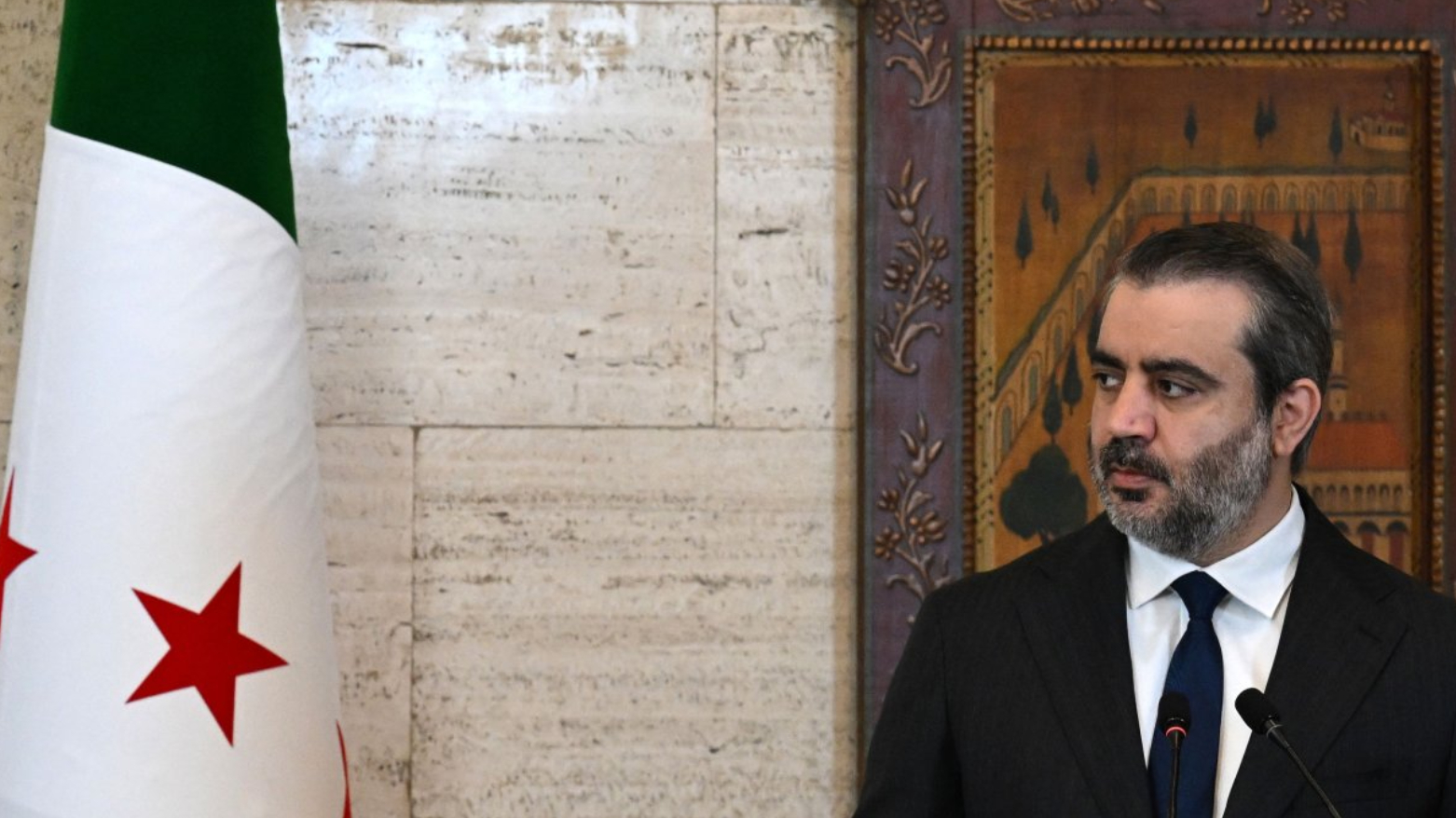
ERBIL (Kurdistan 24) - Syrian Foreign Minister Asaad al-Shaibani announced that Syria is actively working to identify those responsible for chemical weapons massacres committed under the Assad regime and bring them to trial, while simultaneously confirming that technical operations to destroy the country's chemical weapons stockpiles have begun, in a statement that represents one of the most concrete accountability commitments made by the new Syrian government since Assad's fall in December 2024.
"We are continuing our work to identify those behind the chemical weapons massacres and bring them to trial," al-Shaibani said. "Technical operations to destroy chemical weapons stockpiles have begun."
The dual announcement addresses both dimensions of Syria's chemical weapons legacy simultaneously, pursuing the destruction of remaining stockpiles and accountability for their use against civilians, a combination that international observers, human rights organizations, and the UN Security Council have consistently demanded as the minimum conditions for genuine transitional justice on the chemical weapons file.
An OPCW Partnership Producing Unprecedented Results
The Foreign Minister's statement is backed by a documented and accelerating process of international cooperation. As UN Under-Secretary-General for Disarmament Affairs Izumi Nakamitsu told the UN Security Council on June 4, 2026, an OPCW team deployed to Syria in May discovered a significant amount of undeclared chemical weapons, related materials, and documentation, including evidence of previously undeclared chemical munitions and rockets of the same type used in the 2013 sarin gas attack in Ghouta that killed an estimated 1,400 people. "These findings are a momentous discovery, not just for Syria, but for international security and the global disarmament regime," Nakamitsu said.
The OPCW re-established a continuous presence in Syria in November 2025 to facilitate inventory, destruction, and verification activities, as the OPCW confirmed on its official website on January 8, 2026. As the Arms Control Association reported in July 2026, Syria's ambassador to the OPCW, Mohamad Katoub, described accountability as "a measure of nonrecurrence," saying: "The Syrian people suffered from those chemical weapons, and it is important to confirm and take accountability for these stockpiles."
Cooperation at the Justice Ministry Level
As the OPCW confirmed on May 20, 2026, Syrian Justice Minister Mazhar al-Wais met with OPCW Director-General Ambassador Fernando Arias at the organization's headquarters in The Hague, where al-Wais stated: "The new Syria has become an active and constructive member of the Organisation, working diligently to strengthen cooperation with the OPCW and its Member States to overcome the legacy of that dark chapter, identify and destroy the remnants of the Assad regime's chemical weapons programme, support the global non-proliferation regime, and ensure justice for victims through national accountability processes and the preservation of truth."
Director-General Arias responded that the OPCW is actively working with the Syrian government on the comprehensive identification, declaration, and destruction of all components of the Syrian chemical weapons programme, while acknowledging that "establishing a full inventory of the components of the Assad chemical weapons programme will be a difficult task."
The Kurdish Experience of Chemical Weapons in Syrian Kurdistan
For Kurdish communities in Rojava, the accountability process announced by the Syrian Foreign Minister carries a significance that goes beyond the broader Syrian civilian experience. As Human Rights Watch documented in a report published on April 13, 2018, Syrian government forces carried out a chemical weapons attack on the Kurdish-majority town of Afrin using what witnesses and medical personnel described as a chlorine-based agent, causing respiratory distress and injuries among civilian residents. The Democratic Autonomous Administration of North and East Syria documented multiple incidents of chemical weapons use in Kurdish areas in northern Syria, including in and around Kobani, where Syrian government forces and affiliated militias deployed toxic agents against civilian and armed targets throughout the conflict.
The OPCW's Investigation and Identification Team, established in 2019 specifically to attribute responsibility for chemical weapons use in Syria, has documented multiple attacks in areas with significant Kurdish populations and attributed responsibility to Syrian government forces in several cases. The Syrian Network for Human Rights recorded more than 300 chemical weapons incidents across Syria between 2013 and 2019, a substantial number of which occurred in northern Syria where Kurdish communities were concentrated. For the people of Rojava, al-Shaibani's commitment to identifying and prosecuting perpetrators of chemical weapons massacres is a test of whether the new Syrian government's accountability pledges extend equally and without distinction to all communities across Syrian territory, including those in the northeast whose political relationship with Damascus remains unresolved.
International Support and the Road Ahead
The United Kingdom has contributed more than $3.8 million to the effort to eliminate Assad's remnant chemical weapons programme since December 2024, as the UN Security Council confirmed. Secretary of State Marco Rubio said in May 2025 that the Syrian government asked for US assistance to identify sites and remove weapons of mass destruction from the country, and that Washington was "willing to provide it," as the Congressional Research Service confirmed.
As the OPCW's fifth report on identifying perpetrators of chemical weapons use in Syria confirmed in January 2026, there are reasonable grounds to believe the Syrian Arab Air Force dropped pressurized cylinders in chemical weapons attacks during the Assad era, providing the evidentiary foundation for the accountability process al-Shaibani described as ongoing.
The Foreign Minister's statement, placed alongside the documented OPCW cooperation, the June discoveries of undeclared stockpiles, and the formal destruction operations now underway, signals that Syria's new government under President Ahmad al-Sharaa is translating its pledges of chemical weapons accountability into verifiable action, in ways that the Assad government consistently refused across more than a decade of international pressure.