Syria Expects Israel Talks to Resume Despite Broken Trust
Damascus says communications were severed after Israel's August 18 attack on Abu al-Duhur Air Base, calls on Jerusalem to seize a historic diplomatic opportunity and abandon its failed strategy of brute force
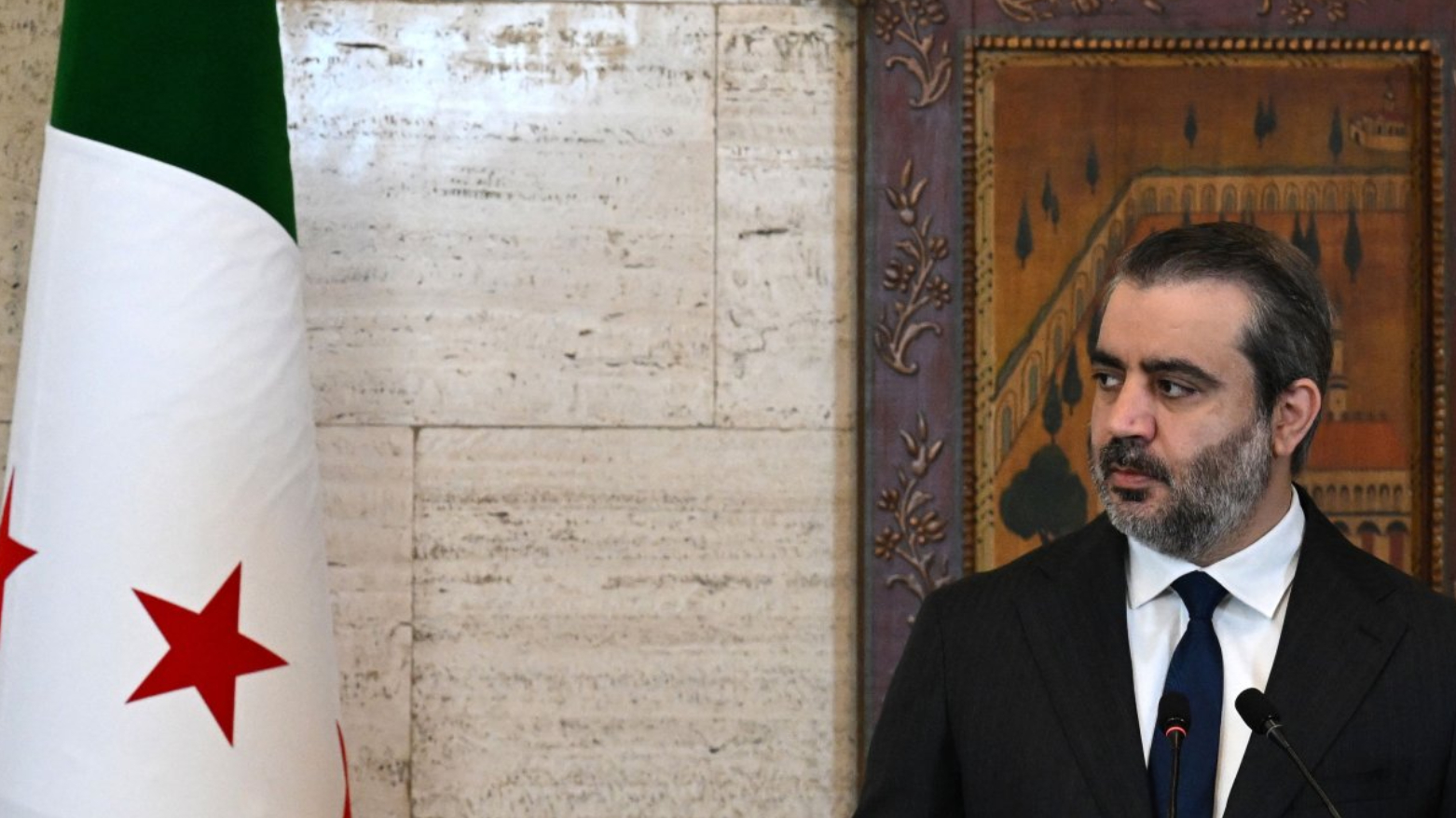
ERBIL (Kurdistan 24) - Syrian Foreign Minister Asaad al-Shaibani told Reuters on Monday that Syria expects negotiations with Israel regarding a security agreement to resume soon, even as he acknowledged that communications between the two sides were cut off following Israel's attack on Abu al-Duhur Air Base on August 18, and that Syria currently does not trust Israel.
"We expect that negotiations with Israel regarding a security agreement will resume soon," al-Shaibani told Reuters. "Communications with Israel were cut off after it attacked the Abu al-Duhur Air Base on August 18th."
The foreign minister was direct about the state of the bilateral relationship. "Syria currently does not trust Israel, and the priority is to stop its attacks on our territory," he said, framing the restoration of a ceasefire from Israeli strikes as a precondition for meaningful diplomatic progress rather than a subject of negotiation itself.
Despite the rupture in communications and the declared trust deficit, al-Shaibani extended an explicit diplomatic overture to Jerusalem. "Syria is extending a hand to diplomacy, and Israel should seize this historic opportunity," he said. He added a pointed assessment of Israel's broader strategic record: "Israel has tried to maintain its security through brute force and has failed everywhere."
The Israeli attack on Abu al-Duhur Air Base on August 18 was one of the incidents that US Special Presidential Envoy Tom Barrack addressed in his wide-ranging interview on Saturday, in which he disclosed that Israeli jets had come within 80 kilometers of the Turkish border during strikes on Syrian military airports without warning. Barrack presented three possible explanations for the strikes, including faulty intelligence, a sudden Israeli decision triggered by suspicious movement, and a communication failure through secret channels, even though the head of Mossad and Syria's foreign minister had held lengthy discussions just days before.
Barrack confirmed on the same occasion that the United States has supervised five formal rounds of negotiations between the new Syrian government under President Ahmad al-Sharaa and Israel, producing a decision to establish a joint coordination room in Amman, Jordan, to monitor border lines and the buffer zone dating to the 1974 disengagement agreement. Twelve foreign ministers, including those of Türkiye, Saudi Arabia, Pakistan, and Indonesia, issued a joint statement on Friday, condemning Israel's strikes on Syria.
Al-Shaibani's statement to Reuters places Syria's diplomatic posture in sharp contrast with its security reality. Damascus is simultaneously pursuing negotiated security arrangements with Israel through American mediation, absorbing Israeli airstrikes on its military infrastructure, managing the integration of Kurdish SDF forces into the Syrian national army, hosting the remnants of nearly 9,400 ISIS detainees without a formal legal process, and navigating the broader regional volatility of the US-Iran conflict, all at a moment when the new Syrian government is barely nine months old and still consolidating its institutional foundations.
His call on Israel to "seize this historic opportunity" reflects an awareness in Damascus that the regional order being reshaped by the Iran war, the weakening of Hezbollah, the fall of Assad, and the new Syrian government's international rehabilitation represents a genuinely unusual window for a different kind of Israeli-Syrian relationship, one that Israel's continued strikes on Syrian territory are making progressively harder to construct.