Saudi Arabia Welcomes Integration of SDF Forces Into Syria's Military Institutions
Riyadh expresses support for the incorporation of Kurdish-led forces into the Syrian Arab Republic's armed forces, calling it a path to security and stability for Syria and its people
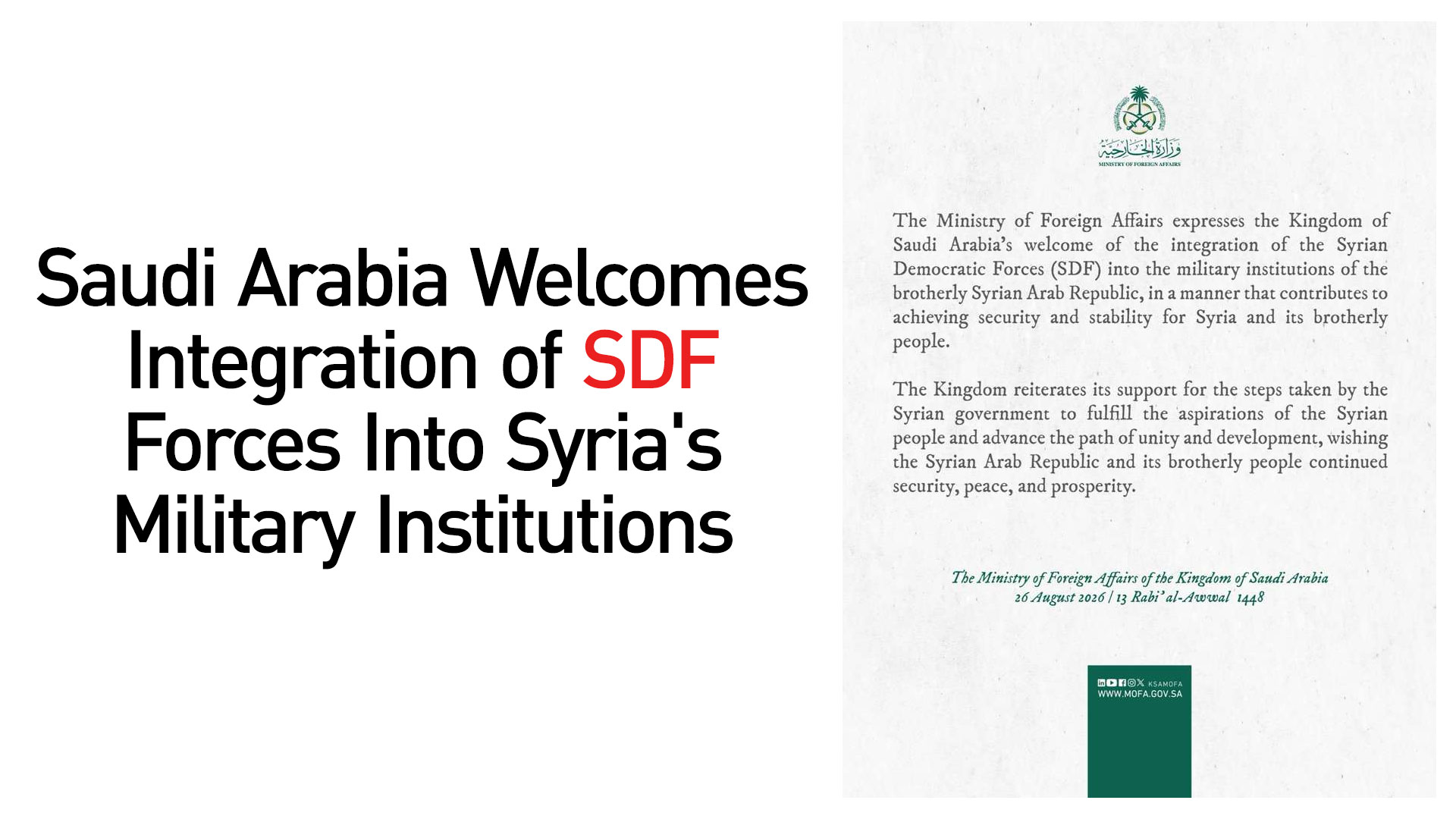
ERBIL (Kurdistan 24) - Saudi Arabia's Ministry of Foreign Affairs stated on Wednesday welcoming the integration of Syrian Democratic Forces into the military institutions of the Syrian Arab Republic, describing the process as one that achieves security and stability for Syria and its people.
"The Ministry of Foreign Affairs expresses the Kingdom of Saudi Arabia's welcome to the integration of SDF forces into the military institutions of the fraternal Syrian Arab Republic, in a manner that achieves security and stability for Syria and its fraternal people," the statement read.
The Saudi endorsement of the SDF integration process represents a significant alignment of Riyadh's position with the framework that Washington has been actively promoting throughout Syria's post-Assad transition. US Special Presidential Envoy Tom Barrack confirmed on Saturday, August 22, 2026, that the process of dissolving the SDF and integrating its fighters into Syria's national army on a military basis has begun, based on statements from SDF Commander General Mazloum Abdi himself, while negotiations on Kurdish political and educational rights in Syria continue in parallel.
The integration process has been one of the most sensitive dimensions of Syria's post-Assad political transition, involving the reconciliation of a Kurdish-led force that fought effectively against ISIS with a new Syrian government that must manage the competing demands of Türkiye, which views the SDF's parent organization the YPG as a terrorist extension of the PKK, and the Kurdish communities of northeastern Syria who seek political and cultural recognition within the new Syrian state.
Saudi Arabia's public endorsement of the integration process carries diplomatic weight at a moment when the new Syrian government under President Ahmad al-Sharaa is navigating relationships with multiple regional powers simultaneously. Riyadh's support, expressed in the language of achieving security and stability for Syria and its people, provides the Damascus government with Gulf backing for a process that Türkiye has also broadly welcomed, as President Erdogan said in February 2026 that he was pleased to see alignment between the SDF and the new Damascus government and that Ankara was closely monitoring the process.
Syrian Foreign Minister Asaad al-Shaibani told Reuters on Monday that Syria expects negotiations with Israel regarding a security agreement to resume soon, framing Syria's diplomatic posture as one of active engagement with all regional partners despite ongoing Israeli airstrikes on Syrian territory. The Saudi welcome of the SDF integration adds another layer of regional legitimacy to a Syrian government that is simultaneously managing its relationship with Israel, Türkiye, the Kurdish communities of the northeast, and the broader Arab world.
The SDF integration process also carries direct implications for the fight against ISIS. The SDF currently administers detention facilities holding approximately 9,400 ISIS prisoners without formal legal process, as Barrack warned on Saturday, along with camps housing more than 75,000 family members of ISIS fighters in dire humanitarian conditions. The integration of SDF forces into Syria's national army will affect the governance and security arrangements around those facilities, making its successful completion a matter of regional security significance well beyond Syria's internal political dynamics.