Nepal Appeals for Aid as Floods Devastate Communities and Infrastructure
At least 633 people are dead and nearly 3,000 missing after catastrophic floods in Nepal and Tibet, as Kathmandu appeals for aid and begins a difficult recovery.
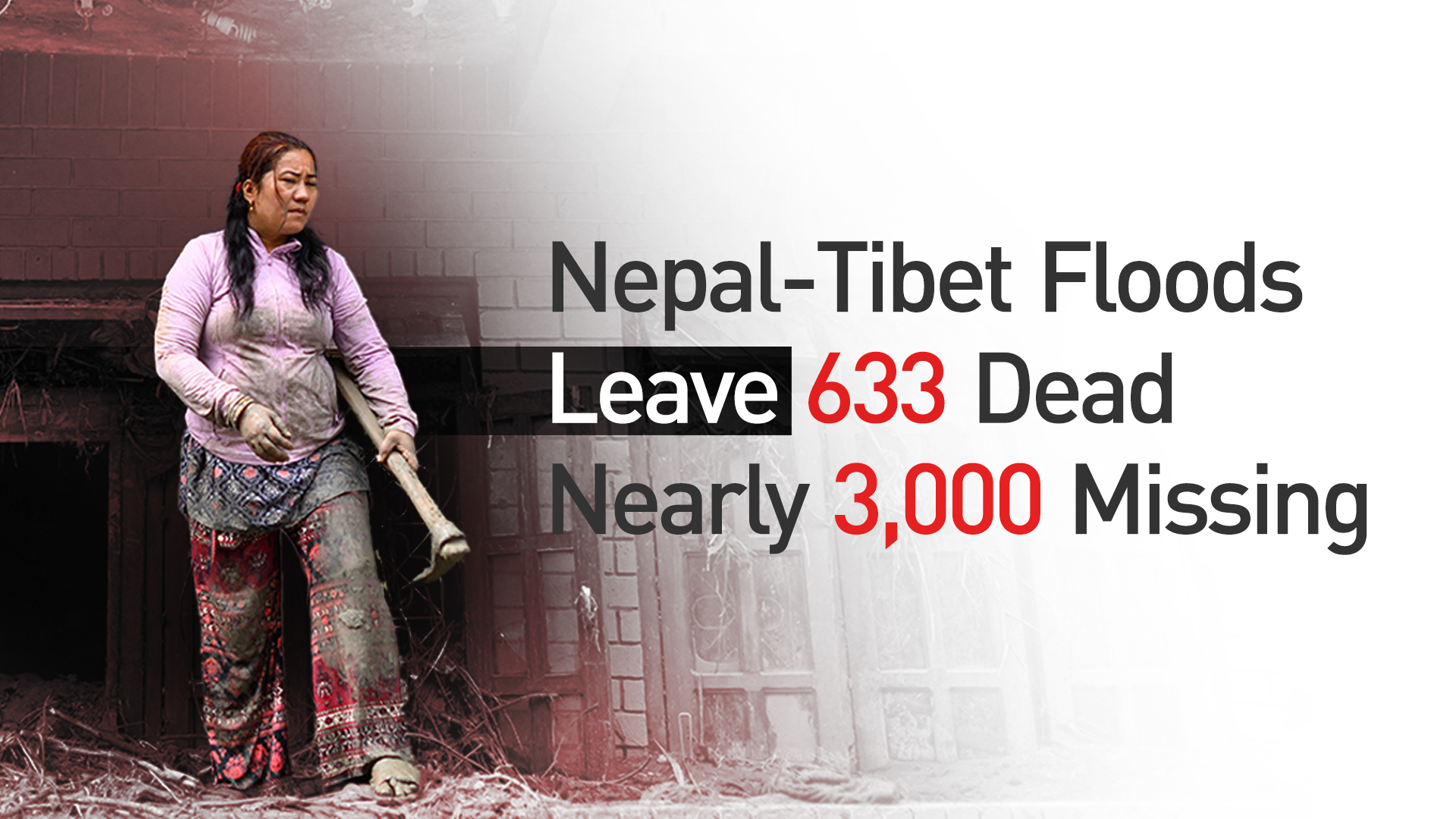
ERBIL (Kurdistan24) - Nepal is confronting an immense humanitarian and reconstruction challenge after catastrophic Himalayan floods left at least 633 people dead across Nepal and Tibet and nearly 3,000 missing, while damaged roads, bridges, hospitals and power plants continue to hamper rescue and relief efforts.
Nepal's disaster agency said Saturday that 626 people had been confirmed dead and 2,426 remained missing inside the country.
Chinese state news agency Xinhua reported seven deaths and 554 missing in Tibet, bringing the combined confirmed toll to at least 633 dead and 2,980 unaccounted for.
The figures remain subject to change as rescue teams reach isolated communities and authorities reconcile overlapping lists of missing residents, workers, tourists and pilgrims.
AFP reported Saturday that Nepal's government has appealed for financial assistance, citing what authorities described as extensive loss of life and property.
The Red Cross estimates that as many as 93,000 people may have been affected by Wednesday's floods in Nepal, a country of roughly 30 million people.
Entire communities were swept away or buried beneath mud and debris, while washed-out bridges and damaged roads have left some of the hardest-hit areas difficult to reach.
Rescue operation enters fourth day
Associated Press journalists Victoria Milko and Shristi Kafle reported from Nepal that helicopters resumed rescue flights in Nuwakot on Saturday after poor weather temporarily disrupted operations.
Aircraft carried food, clothing and other relief supplies into flood-hit communities before returning with survivors, including elderly people and children.
More than 3,700 people have been rescued in Nepal so far, according to AP.
At the Upper Trishuli-1 Hydropower Project in Rasuwa district, emergency teams are attempting to reach more than 100 people believed trapped inside a tunnel filled with thick mud.
Nepali Army spokesperson Brig. Gen. Raja Ram Basnet told AP that rescuers were using ropes and baskets in difficult conditions, with mud reaching between 1.2 and 1.5 meters in places.
Search teams have also had to contend with the continuing threat of further flooding.
A new lake formed in the mountains after the glacier collapse that triggered Wednesday's disaster, raising fears that another sudden release of water could sweep through already devastated valleys.
Chinese monitoring cited by AP indicated Friday that the lake's level had fallen substantially from its earlier peak, but authorities continue to maintain heightened alert.
Families wait for answers
The scale of the missing-person crisis is becoming one of the defining features of the disaster.
AFP reported that 517 foreign nationals were still listed as missing in Nepal on Friday, while Chinese authorities had previously said 260 foreigners were among those unaccounted for in Tibet.
Missing foreigners include citizens of India, the United States, Ukraine, Malaysia, Australia, Britain, Canada and numerous other countries.
Many had been trekking, working on infrastructure projects or traveling through the region for pilgrimage.
Milko and Kafle reported that families gathered at hospitals and relief centers Saturday carrying photographs of missing relatives and searching lists of survivors, unidentified bodies and people still unaccounted for.
At Kathmandu's main government hospital, around 1,600 missing-person reports had been registered through a help desk, according to a security official cited by AP.
Infrastructure losses compound crisis
The devastation extends well beyond the immediate casualty toll.
AFP reported that at least 18 schools have been destroyed and another 20 damaged, affecting about 10,000 school-age children, according to UNICEF.
Health infrastructure has also suffered.
The World Health Organization said three health posts were destroyed, one hospital was partially damaged and access to two additional hospitals was disrupted.
WHO warned that displacement, overcrowded shelters, damaged sanitation systems and reduced access to medical care could increase the threat of communicable diseases.
Power generation has taken a major hit as well.
The Nepal Electricity Authority said 11 hydropower plants and one solar facility had stopped operating, removing a combined 431.1 megawatts of generation capacity, about 10% of Nepal's installed electricity capacity.
Another 15 hydropower projects under construction, representing 470 megawatts of planned capacity, were also damaged.
More than 900 hydropower workers are missing, according to AFP.
Economic strain ahead
The disaster has struck a country with limited fiscal room for large-scale reconstruction.
AFP cited World Bank figures showing that approximately 82% of Nepal's workforce is employed informally, while gross domestic product per capita stood at $1,447 in 2024.
Remittances account for as much as one-third of the economy, while tourism contributes approximately 6.4% of GDP and supports around 15% of employment.
Damage to roads, trekking routes and northern pilgrimage corridors therefore risks prolonging the economic impact well beyond the immediate emergency.
The crisis also presents an early major test for Prime Minister Balendra Shah, the former Kathmandu mayor who came to national power after March elections following last year's mass anti-corruption protests.
His government must now manage simultaneous rescue, humanitarian relief and reconstruction efforts while the final scale of the disaster remains uncertain.
For now, attention remains focused on reaching isolated communities and finding survivors.
With nearly 3,000 people still missing across Nepal and Tibet, the human toll is expected to remain fluid, while the destruction of essential infrastructure means the consequences of the floods are likely to endure long after the search operations end.