CENTCOM Says Iranian Tanker M/T Kylo Sinks in Gulf of Oman
CENTCOM says the Iranian tanker M/T Kylo sank in the Gulf of Oman after U.S. forces struck it during retaliatory attacks on three IRGC-linked oil carriers.
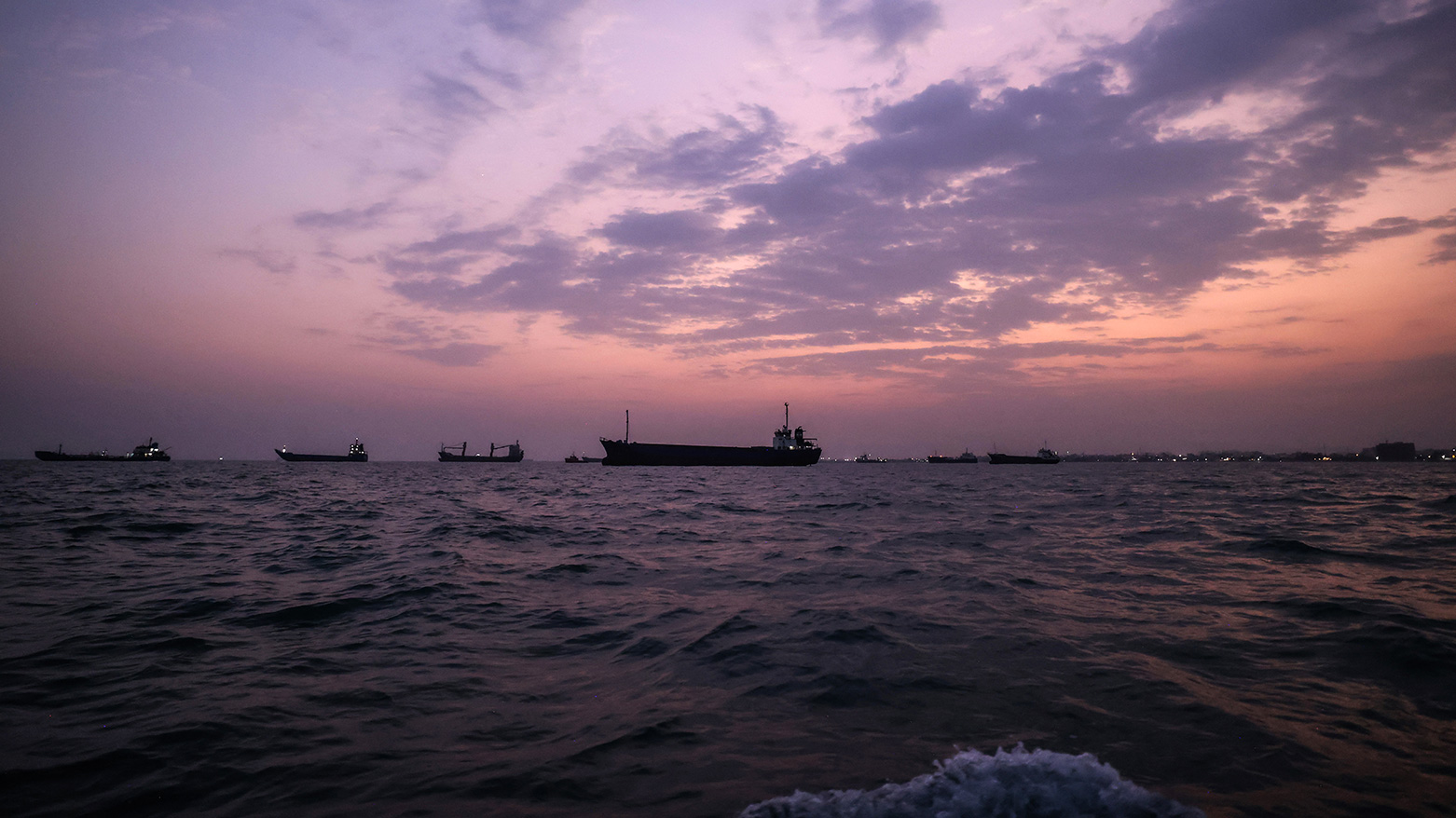
ERBIL (Kurdistan24) - U.S. Central Command said Sunday that the M/T Kylo, an Iranian crude carrier struck by American forces a day earlier, had sunk in the Gulf of Oman, as maritime fighting between the United States and Iran intensified around the Strait of Hormuz.
"Thanks to the precision and professionalism of American service members, the M/T Kylo sank in the Gulf of Oman today," CENTCOM said in a post on X, adding that the vessel had "joined Iran's navy at the bottom of the sea."
The sinking follows U.S. strikes Saturday against three tankers that CENTCOM said were linked to Iran's Islamic Revolutionary Guard Corps and formed part of a network financing the IRGC and its regional allies.
CENTCOM said American forces had "permanently disabled" the M/T Downy off Kharg Island and the M/T Stark 1 near Jask, while the unladen M/T Kylo was struck repeatedly in the Gulf of Oman after its crew was instructed to abandon ship.
The U.S. military said the action followed attempted Iranian attacks against an American aircraft carrier and a destroyer. According to CENTCOM, both warships evaded the attacks and no U.S. personnel were hurt.
Adm. Brad Cooper, commander of CENTCOM, presented the tanker strikes as retaliation.
"If you shoot at two of our ships, we will impose an even higher economic cost, taking out three of yours," Cooper said Saturday.
Iran's Foreign Ministry condemned the strikes as illegal and aggressive, while Iranian military officials warned of a stronger response if U.S. attacks continued.
Iran said Sunday that it attacked an American unmanned surface vessel attempting to enter the Strait of Hormuz, according to an IRGC statement carried by Iranian state television.
The United States had not immediately confirmed the purported attack, Associated Press reporters Samy Magdy and Julia Frankel reported Sunday.
Hours earlier, the IRGC said its naval forces targeted three oil tankers traveling along what Tehran described as an unauthorized route through Hormuz, as well as three vessels it characterized as affiliated with the United States elsewhere.
Iran warned vessels against using routes it had not approved.
AFP teams in Tehran, Washington and Dubai reported that the latest exchanges form part of a renewed flare-up that began with U.S. strikes last week following months of intermittent fighting in the six-month conflict.
The two sides are now contesting both military access and commercial shipping around Hormuz.
Iran has sought to control passage through the strait, while Washington has maintained a counter-blockade of Iranian ports and has been assisting some vessels navigating the waterway.
Before the war, roughly one-fifth of global oil supplies moved through Hormuz, making sustained disruption there a significant risk to international energy markets.
Iranian authorities also claimed Saturday that two U.S. warships had been forced to retreat after suffering damage.
CENTCOM rejected that account, saying the ships successfully evaded Iranian attacks.
Claims by either side concerning damage to opposing military assets have not been independently verified in the source material.
Associated Press reporters Amir Vahdat, Toqa Ezzidin and Cara Anna described Saturday's U.S. attacks on the three tankers as a significant escalation, particularly because previous Iranian maritime attacks had largely focused on commercial shipping rather than direct attacks against major U.S. naval assets.
Iranian state television reported that four U.S. missiles struck a tanker about 10 kilometers from Kharg Island, where a major terminal handles much of Iran's crude exports.
CENTCOM identified that vessel as the M/T Downy. It said the M/T Stark 1 was struck near Jask and the M/T Kylo in the Gulf of Oman.
Iranian state media said the crews of the affected tankers evacuated safely, while a correspondent on Kharg Island reported no casualties there.
CENTCOM said the Kylo was unladen at the time of the attack and that its crew had been instructed to leave before American forces struck multiple critical locations to render the vessel inoperable.
Sunday's announcement establishes that the ship subsequently sank, although CENTCOM provided no further details about the precise time or circumstances.
The attacks fit into a broader U.S. strategy combining military pressure with sanctions and efforts to restrict Iran's oil revenue.
Washington has intensified action against financial institutions accused of handling Iranian funds while striking maritime and military assets it says threaten U.S. forces and commercial navigation.
Iran, meanwhile, has increasingly relied on the Strait of Hormuz as leverage after negotiations over its nuclear program collapsed.
The conflict began with U.S. and Israeli attacks on Iran on Feb. 28. A ceasefire announced in June failed to produce a lasting settlement, and intermittent fighting continued before the latest escalation.
Vice President JD Vance has said Washington will not resume negotiations while Tehran continues attacking commercial shipping. Iranian President Masoud Pezeshkian's government has publicly supported a negotiated end to the conflict.
The sinking of the M/T Kylo adds an economic dimension to an already dangerous military confrontation.
For Washington, disabling tankers it links to the IRGC is intended both to retaliate for attacks on U.S. naval forces and to reduce Iran's ability to generate oil revenue.
For Tehran, attacks on shipping and efforts to contest access through Hormuz preserve leverage over one of the world's most important energy corridors.
With both sides increasingly targeting assets connected directly to maritime and economic power, the confrontation risks expanding beyond individual military exchanges into a broader struggle over shipping, oil infrastructure and control of Gulf trade routes.