Nepal Holds Day of Mourning as Flood Toll Surpasses 1,300
Nepal observed a national day of mourning as the death toll from the Aug. 26 floods surpassed 1,300 and rescuers continued searching for thousands still missing.
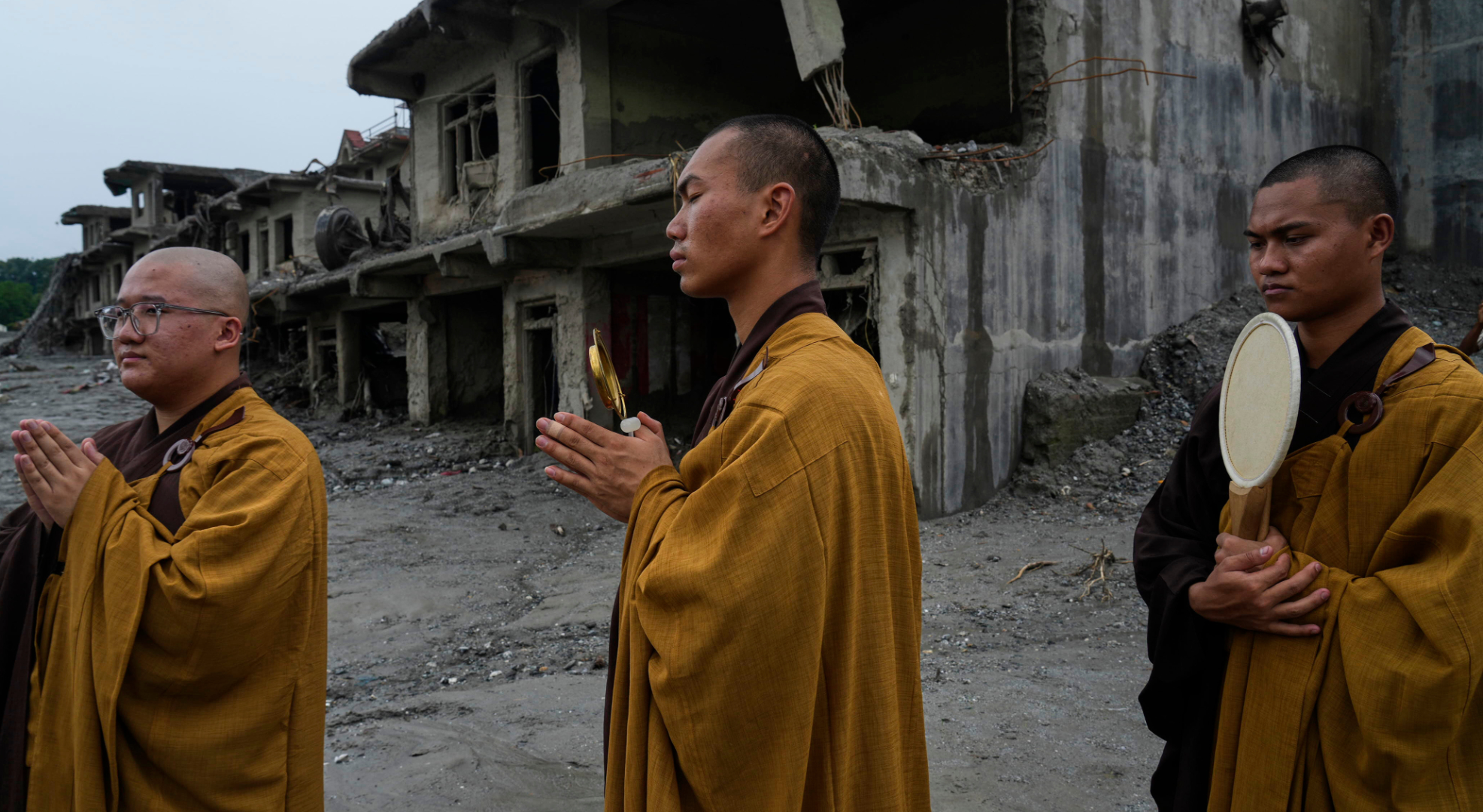
ERBIL (Kurdistan24) - Nepal observed a national day of mourning on Monday for victims of the devastating Aug. 26 floods, as rescue teams continued searching for thousands of people still missing across Nepal and Tibet, including hundreds of workers at damaged hydropower projects.
Government offices across Nepal lowered flags to half-staff, while families concluded traditional mourning rituals on the 13th day since the disaster, according to the Associated Press.
More than 1,300 people have been killed in Nepal and Tibet, while thousands remain unaccounted for.
Agence France-Presse reported Monday that the confirmed death toll across the two countries had reached at least 1,385, with more than 5,500 people missing following the glacial and mountain collapse along the China-Nepal border.
Nepal's disaster management authorities have continued search-and-rescue operations despite the national mourning period.
In predominantly Hindu Nepal, close relatives traditionally observe a 13-day mourning period following a death. On the final day, families hold ceremonies and prayers for the departed.
For families whose relatives remain missing, some have performed symbolic funeral rites even without recovering their loved ones' bodies, AP reported.
In Kathmandu, relatives of missing workers gathered near government offices, including the prime minister's office and key ministries, calling on authorities to accelerate the search.
Particular concern centers on workers at hydropower projects along the Bhotekoshi River, where floodwaters and debris swept through construction sites and tunnel systems.
Authorities have increasingly concentrated rescue operations on 12 hydropower projects, where around 900 workers are missing and approximately 500 are believed to be trapped inside tunnels, according to AP.
The difficult underground operations have drawn international rescue specialists from India, China, South Korea and the United States.
Nepal Army spokesman Raja Ram Basnet told AFP that rescue operations were continuing at the same intensity as on the first day.
"Our focus is on search and rescue at three levels — on ground, by air, and in the tunnels," he said.
Three successful rescues in recent days have renewed hopes that more people may still be found alive.
Two Nepali workers were pulled from a hydropower tunnel on Friday, followed by the rescue of a Chinese man from another plant on Saturday.
Australian tunnel-rescue specialist Arnold Dix described the disaster as unlike anything he had previously encountered.
Dix, president of the International Tunnelling and Underground Space Association, said rescue teams were dealing not with a single underground emergency but with several simultaneous operations, each involving different dangers and uncertainties.
"We are facing something I have never faced before," Dix said in remarks cited by AFP.
He said rescuers must continue treating survival as possible even in exceptionally difficult circumstances.
Dix previously served as a key adviser during the 2023 rescue of 41 workers who were trapped for 17 days inside the collapsed Silkyara tunnel in India's Uttarakhand state.
The Aug. 26 disaster was triggered by a glacial and mountain collapse near the China-Nepal border, sending destructive floodwaters through valleys and infrastructure below.
The scale of the destruction has complicated access to affected areas and created particular hazards inside damaged hydropower facilities, where debris, unstable structures and water have obstructed rescue teams.
Monday's mourning ceremonies marked an important cultural moment for families across Nepal, but they did not bring the emergency phase to an end.
With thousands still missing and hundreds feared trapped underground, authorities and international rescue teams remain focused on locating survivors and recovering those who died.
For families still awaiting news, the official mourning day therefore carries two meanings: remembrance for those confirmed dead and continuing hope for those who have yet to be found.