KRG Says Mawaran Tunnel Project Running Three Months Ahead
KRG Deputy Construction Minister Agrin Abdullah says the Mawaran Tunnel and Kore-Shaqlawa-Qandil project will be completed three months ahead of schedule, with the road opening in October.
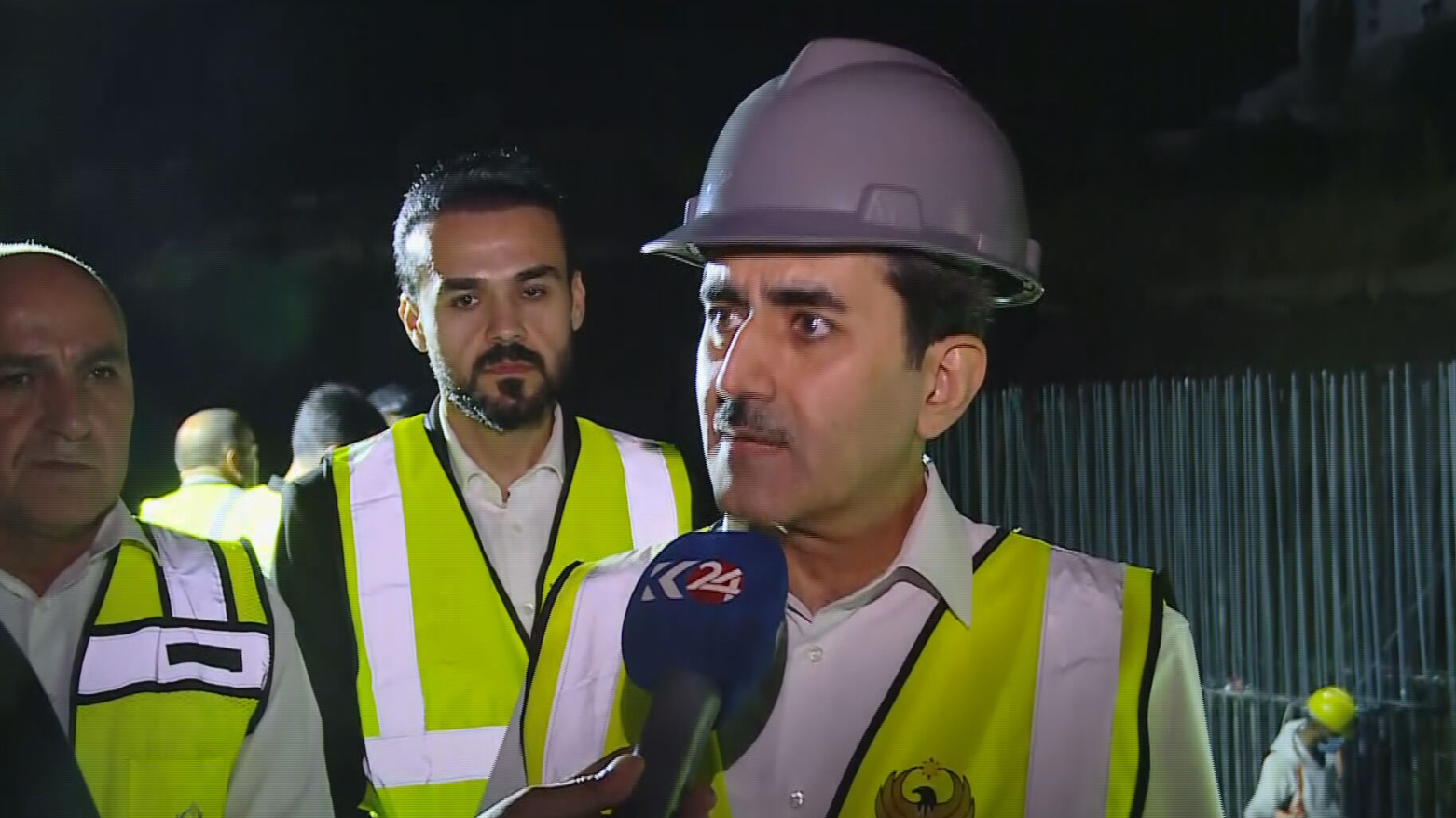
ERBIL (Kurdistan24) - The Mawaran Tunnel and Kore-Shaqlawa-Qandil road project are progressing faster than planned and are expected to be completed three months ahead of schedule, a senior Kurdistan Regional Government official said, as construction enters its final phase.
Agrin Abdullah, deputy minister of construction and housing, told Kurdistan24 on Monday that the project is one of the Kurdistan Region's most important strategic transport developments and described the corridor as a "vital artery" linking Erbil with the Soran Independent Administration and areas farther east.
"This project, which completes the Kore-Shaqlawa-Qandil road, is considered a vital artery for the Kurdistan Region," Abdullah said.
She said crews were working around the clock and that Ministry of Construction and Housing officials had conducted a field visit to assess construction progress and engineering standards.
"The entire project, including the tunnel, will be completed by the end of this year, three months ahead of its previously scheduled deadline," Abdullah said.
The road section itself is expected to open to motorists in October.
The wider project has reached around 70% completion and includes the Mawaran and Mirawa tunnels as well as a new dual carriageway designed to improve safety and reduce travel times along the mountainous route.
Strategic Corridor Between Erbil and Soran
The 10-kilometer Kore-Shaqlawa-Qandil project is intended to improve one of the Kurdistan Region's most important transport corridors.
It includes two tunnels and three intersections and forms part of the main route connecting Erbil with Shaqlawa, Soran and ultimately the Haji Omeran border area.
Once operational, the road is expected to shorten the journey between Erbil and the Soran Independent Administration by more than 30 minutes.
The new route is also intended to provide motorists with a safer alternative through mountainous terrain where winter weather, snowfall and difficult road conditions can disrupt travel.
The Ministry of Construction and Housing has continued on-site monitoring as the project approaches completion, with officials emphasizing engineering quality and the need to ensure that tunnels, road surfaces and associated infrastructure meet required standards before entering service.
The Mirawa and Mawaran tunnels are central to the project because they allow traffic to bypass difficult sections of the existing mountain road.
Their completion is also expected to improve commercial movement along the corridor and strengthen access to tourist destinations across Shaqlawa, Rawanduz and the wider Soran area.
The road forms part of a broader transport network that links Erbil with the Haji Omeran international border crossing, making the project important not only for local motorists but also for trade and cross-border movement.
Part of the KRG's Wider Road-Building Strategy
The Mawaran Tunnel is one element of a much larger road and infrastructure program pursued by the KRG's Ninth Cabinet.
Kurdistan24 reporting has frequently described the policy as the KRG's "Road Revolution," reflecting a shift from isolated road repairs toward the construction of a more integrated regional transport network.
According to the latest figures from the KRG Department of Media and Information, 810 intercity road projects covering 3,055 kilometers have been completed under the Ninth Cabinet at a cost of approximately 1.057 trillion Iraqi dinars.
Another 461 projects spanning 2,885 kilometers remain under implementation.
Together, the program comprises 1,271 road projects covering nearly 5,940 kilometers, with an overall value exceeding 5.3 trillion dinars.
The strategy includes highways, tunnels, bridges, dual carriageways, urban roads and traffic-safety infrastructure.
The government has presented the program as an economic development policy as much as a construction initiative.
Improved transport links are intended to reduce travel times, connect producers with markets, facilitate trade and tourism and improve access between cities, towns and rural areas.
Several major projects illustrate that approach.
The Erbil-Koya highway is being upgraded into a modern multi-lane corridor incorporating bridges, overpasses, underpasses and drainage systems.
In Duhok, improvements to the Duhok-Zakho corridor are intended to strengthen access to the Ibrahim Khalil International Border Crossing and trade routes toward Türkiye.
The Haji Omeran corridor plays a comparable role eastward, strengthening connections between the Kurdistan Region and Iran.
The Kore-Shaqlawa-Qandil project fits directly into that network by improving a route that serves residents, tourists and commercial traffic traveling northeast from Erbil.
Safety and Connectivity at the Center
Road safety has also become an important part of the KRG's transport program.
Government statistics record thousands of kilometers of road markings, more than 21,000 traffic signs and a range of pedestrian crossings, speed-control measures and pedestrian overpasses and underpasses.
Those measures are designed to complement new road construction by reducing accidents and improving traffic management.
Funding for the broader program has come from the KRG investment budget, the Ministry of Construction and Housing's regular allocations and a portion of revenues generated by vehicle weigh stations.
Under the current system, 30% of weigh-station revenues are allocated to road rehabilitation and maintenance.
That funding model is intended to support both the construction of new infrastructure and the continued upkeep of existing roads.
The approaching completion of the Mawaran Tunnel therefore carries significance beyond the individual project.
It represents another step in the KRG's effort to create a more interconnected regional transport system capable of supporting population movement, trade, industry and tourism.
For motorists, the most immediate benefit will be a shorter and safer journey between Erbil and Soran.
For the wider economy, however, the project is intended to strengthen an important east-west corridor linking the Kurdistan Region's capital with mountain communities, tourism centers and international trade routes.
With the road section scheduled to open in October and the full project expected to be completed by the end of 2026, three months earlier than originally planned, the Mawaran Tunnel is set to become one of the latest major additions to the Region's expanding transport network.