Iraq Still Has Mud-Brick Schools as Building Shortage Persists
Eco Iraq says Iraq needs thousands of new schools to end overcrowding, while mud-brick and caravan classrooms remain in Salahuddin and Dhi Qar.
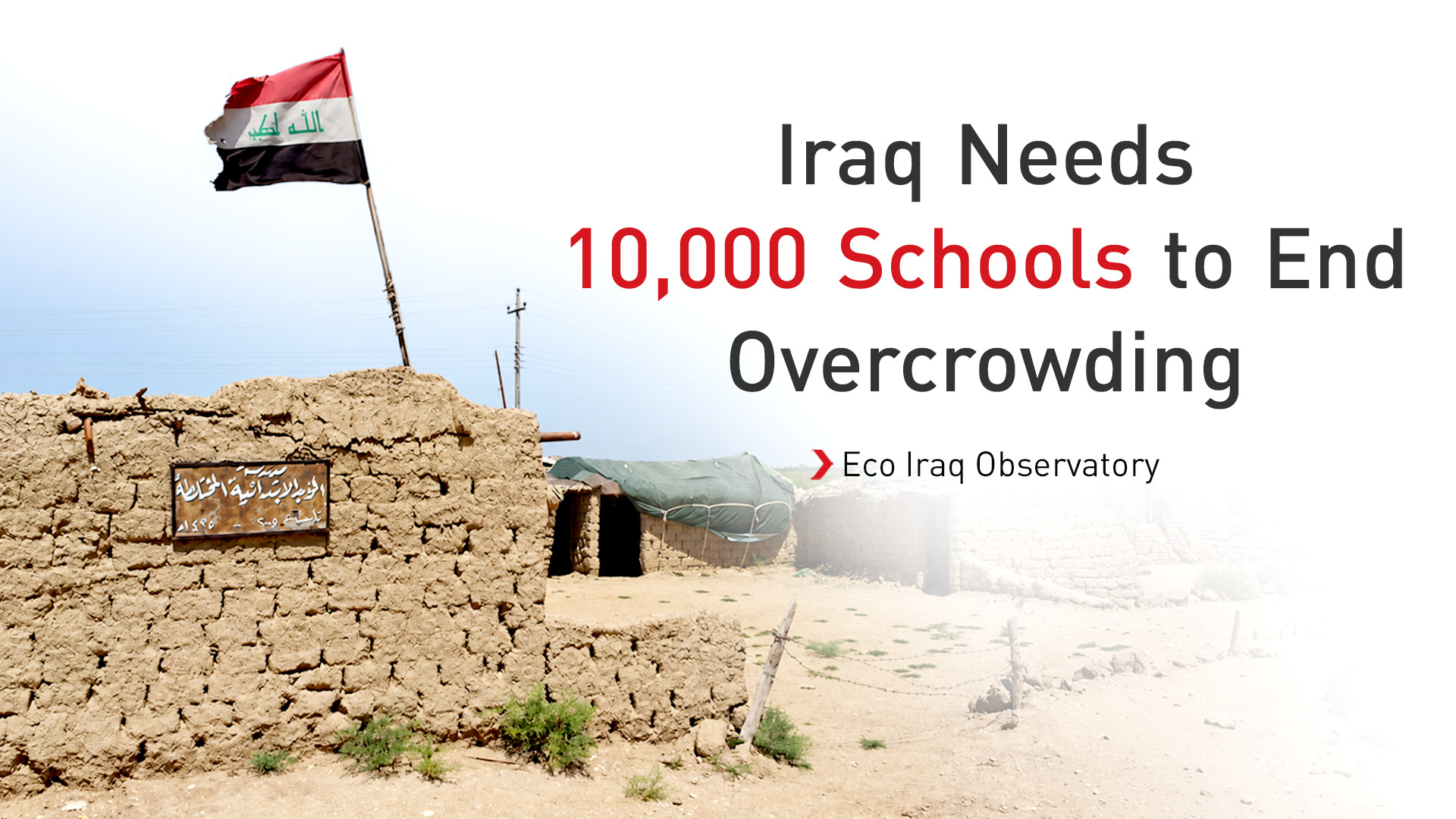
ERBIL (Kurdistan24) - Nearly 200 mud-brick schools and 800 schools operating from caravans remain in Salahuddin and Dhi Qar provinces, as Iraq continues to face a shortage of suitable school buildings, according to the Eco Iraq Observatory.
The organization said Iraq has more than 40,000 schools but still requires substantial additional construction to accommodate students in independent buildings and reduce overcrowding.
According to the observatory, roughly 8,000 new schools would be required to establish a single-shift system and give each school its own building, while more than 10,000 would be needed to eliminate overcrowded classrooms.
It identified Baghdad, Mosul, Basra and Dhi Qar among the areas facing the greatest pressure because of population density.
The persistence of mud-brick and caravan schools illustrates a broader infrastructure problem confronting an education system serving millions of children, even as the federal government has expanded school-construction programs.
Federal institutions use somewhat different estimates of the shortage, reflecting differences in how schools, buildings and shifts are counted.
In January 2026, Iraqi Education Ministry spokesperson Karim al-Sayyid told the Iraqi News Agency that the ministry needed about 7,000 additional schools to address overcrowding. He said the education system served approximately 13 million students.
The Iraq Fund for Development, meanwhile, places the nationwide requirement at 8,578 new schools across all educational levels. Its Eduba investment program says around 10 million students are accommodated in roughly 16,000 school buildings, including 1,560 considered dilapidated. The program's first phase is designed to build 400 public schools through private investment.
Those figures should not be read as directly contradicting Eco Iraq's estimate of more than 40,000 schools: official datasets can distinguish between educational institutions, physical buildings and multiple schools or shifts operating inside a single structure.
The scale of the problem was also acknowledged in June during a meeting between First Deputy Parliament Speaker Adnan Faihan and Education Minister Abdul Karim Abtan al-Jubouri. Parliament said more than 12.2 million students and 1.1 million education employees were connected to the sector, while officials specifically identified mud schools, caravan classrooms and multiple-shift teaching as priorities requiring action.
Government agencies are building schools through several programs.
The Planning Ministry said in June that it was monitoring construction of 25 schools in Diyala as part of a wider 93-school project designed to reduce double shifts and overcrowding.
In Najaf, education authorities said 45 new schools entered service during 2025 but acknowledged that additional projects were still needed because population growth and long-delayed construction had kept double and triple shifts in place.
The Eco Iraq report therefore points to a problem that government agencies themselves acknowledge: Iraq is adding school buildings, but construction has yet to catch up with student numbers, deteriorating facilities and areas where several schools must share the same building.
Until that gap is closed, some Iraqi children will continue entering classrooms far removed from the standard educational environment the government says it is working to provide.