Saudi FM: Hormuz must return to pre-war status without tolls, Iran attacked us unjustly
Saudi foreign minister delivers comprehensive regional security vision at UNGA covering Iran, Hormuz, Houthis, Yemen, Palestine, Syria, Sudan, and Iraq's sovereignty in one of the most sweeping Gulf statements of the conflict
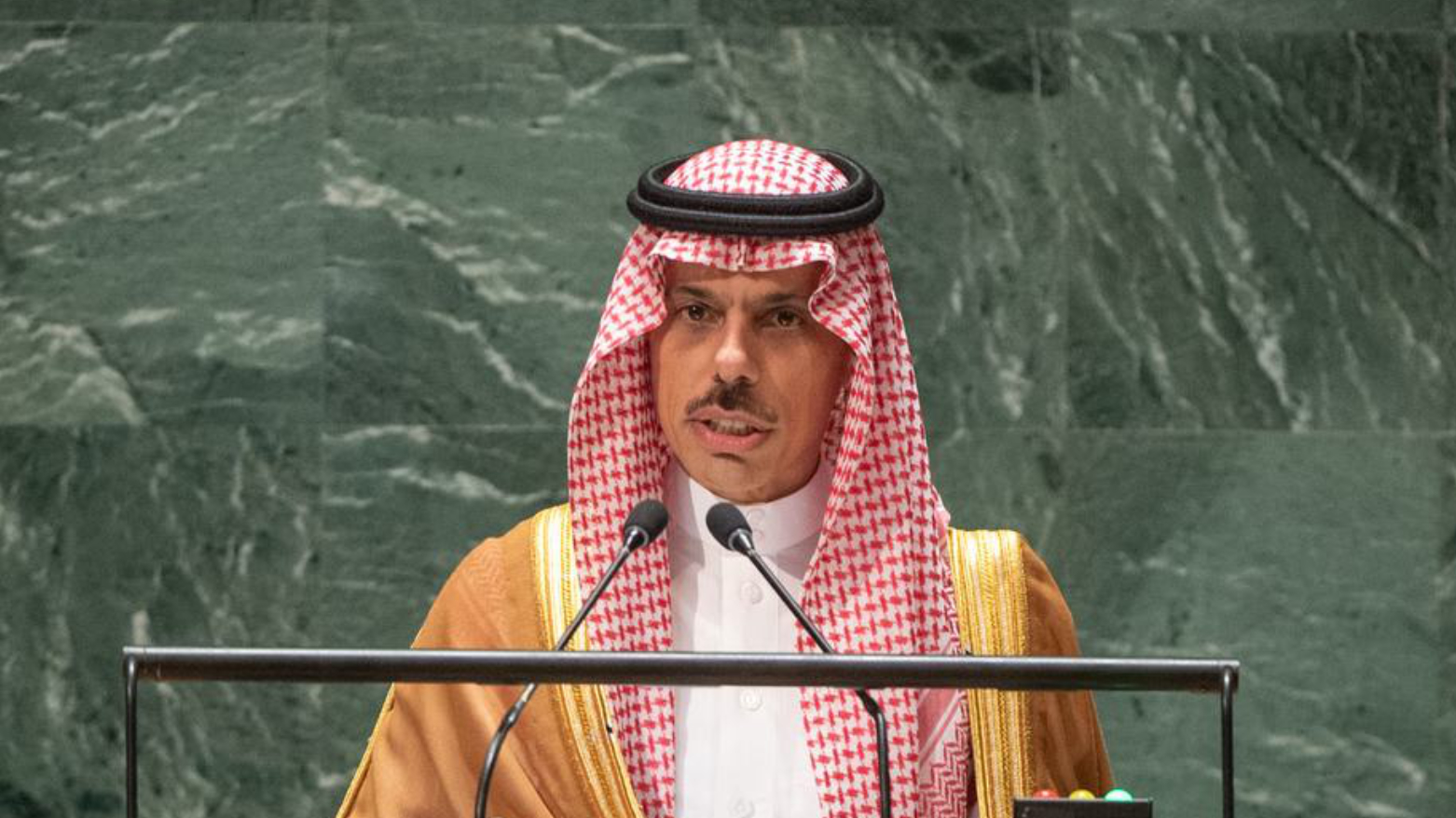
ERBIL (Kurdistan 24) - Saudi Arabia's Foreign Minister delivered a comprehensive regional security address at the United Nations General Assembly on Saturday declaring that the Strait of Hormuz must return to its pre-war status without the imposition of tolls, condemning Iran's attacks on Saudi Arabia and regional countries as unjust, calling for a region free of weapons of mass destruction, demanding international rejection of Houthi actions in the Red Sea and Bab al-Mandeb, and affirming Saudi Arabia's full right to protect its security and sovereignty.
"We and the countries of the region have been subjected to unjust Iranian attacks," the Foreign Minister said. "The security of the Gulf region is an inseparable part of regional and global security. Restoring global supply chains is a shared responsibility."
On Hormuz, the minister delivered Saudi Arabia's clearest position yet on the terms of any settlement. "The Strait of Hormuz must return to its pre-war status without the imposition of tolls," he said, directly rejecting Iran's demand that ships seek permission and pay fees to transit the waterway under an Iranian-approved shipping route, a position consistent with the US negotiators' message to Iranian FM Araghchi at the UNGA indirect talks that Iran does not control the strait and cannot make demands about it.
The minister stressed that efforts to restore security to the region cannot be based on domination and the exercise of influence, a formulation directed at Iran's regional posture, and emphasized the importance of any regional security arrangements being comprehensive and sustainable rather than temporary or partial.
On the nuclear dimension, the minister called for the region to be free of weapons of mass destruction and for all peaceful nuclear facilities to be placed under international supervision, an implicit demand that encompasses both Iran's nuclear programme and Israel's undeclared nuclear arsenal within a single regional disarmament framework.
On Yemen, the minister emphasized the necessity of stability and the protection of civilians, while calling on the international community to reject Houthi actions in the Red Sea and Bab al-Mandeb Strait. Saudi Arabia welcomed the UN Security Council statement condemning Houthi attacks on the kingdom and on commercial shipping.
On Iraq, the Foreign Minister expressed support for Iraqi sovereignty and security, stressing that Iraqi territory must not become a launching pad for aggression against neighboring countries, a direct reference to the drone strikes on Saudi Arabia's East-West pipeline launched from Iraqi territory on September 10, 2026. Saudi Arabia supported the efforts of de-escalation led by Qatar and Pakistan.
On Syria, the minister welcomed the United States' decision to remove Syria from the list of state sponsors of terrorism and rejected any aggression that undermines Syria's security and stability.
On Palestine, the minister reaffirmed that a just and lasting peace cannot be achieved without implementing the two-state solution and establishing a Palestinian state, described continued Israeli settlement construction as a serious violation of international and humanitarian law, expressed opposition to any forced displacement or change of the existing situation in Palestinian territories, and condemned the continued suffering of Palestinians and obstruction of aid to Gaza as a violation of international law.
Saudi Arabia also called for the crisis in Sudan to be resolved internally to strengthen the security and stability of the Sudanese people, and stressed that threats to international shipping can affect the global economy and that freedom of navigation in all international waterways must be guaranteed.