Kirkuk oil exports via Kurdistan Region pipeline surge to 250,000 barrels per day
Kurdistan 24's Kirkuk correspondent reveals a 40,000 to 50,000 barrel daily increase from today, with 180,000 barrels of Kirkuk oil and 70,000 barrels of Kurdistan Region oil flowing through the Ceyhan pipeline to Turkey for SOMO marketing
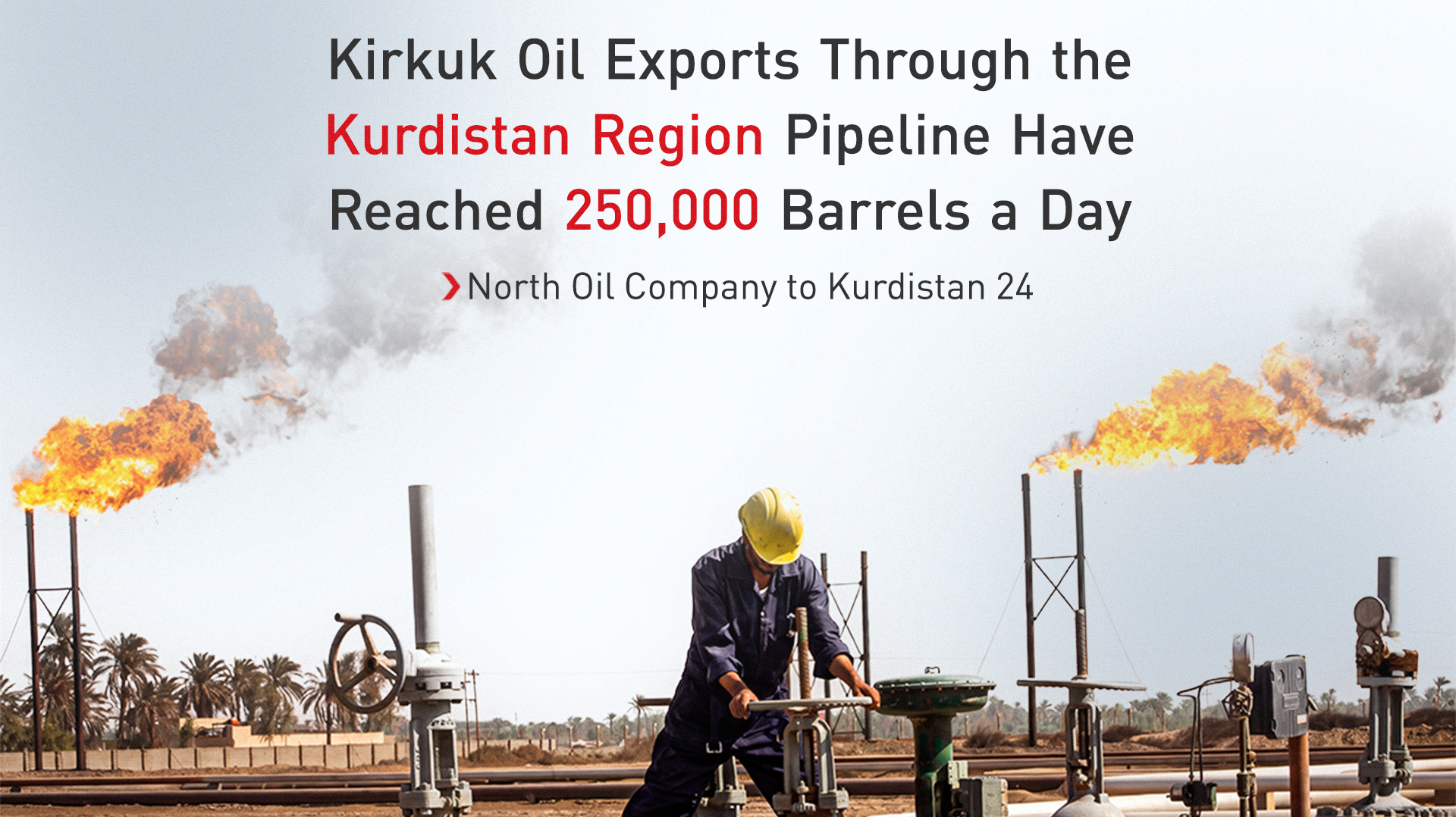
ERBIL (Kurdistan 24) - Kirkuk oil exports through the Kurdistan Region pipeline have surged to 250,000 barrels per day from Monday an increase of 40,000 to 50,000 barrels per day from previous levels, Kurdistan 24's Kirkuk correspondent Soran Kamaran confirmed through exclusive information, with a source at the North Oil Company telling Kurdistan 24 the increase is linked to a rise in Basra oil shipments by tanker to Kirkuk.
Kirkuk oil exports through the Kurdistan Region pipeline have risen and from today have reached 250,000 barrels per day.
a source at the North Oil Company told Kurdistan 24 exclusively
The source clarified that the increase in Kirkuk oil export volumes is connected to an increase in Basra oil shipments being transported by tanker to Kirkuk, which are then combined with Kurdistan Region oil and exported together through the Ceyhan pipeline to Turkey's Ceyhan port, where Iraq's State Oil Marketing Organization, known as SOMO, sells them on global markets.
According to Kurdistan 24's information, of the total 250,000 barrels being exported, 180,000 barrels per day are Kirkuk crude oil and 70,000 barrels per day are Kurdistan Region oil, all flowing through the Ceyhan pipeline to Turkey and marketed internationally by SOMO.
The surge in Kirkuk exports through the Kurdistan Region pipeline represents one of the most significant single-day volume increases in the pipeline's recent history and comes as Iraq's oil export infrastructure has been under acute strain throughout the seven-month US-Iran conflict, with the Strait of Hormuz disruption forcing alternative export routes to absorb higher volumes. The Kirkuk-Ceyhan pipeline, which runs from northern Iraq through the Kurdistan Region to Turkey's Mediterranean coast, has become increasingly critical as Gulf export routes face continued disruption.
The combination of Kirkuk crude and Basra oil being transported northward by tanker before joint export through the Ceyhan pipeline reflects an innovative logistical solution to the southern export route constraints created by the war, allowing Iraq to maintain and increase its overall oil export volumes through a northern Mediterranean corridor that bypasses both the Strait of Hormuz and the Bab al-Mandeb entirely.