Kataib Hezbollah Threatens Iraqi Government as Sept. 30 Deadline Nears
A Kataib Hezbollah official has threatened Iraq's Zaidi government over restrictions on Iran as the Sept. 30 coalition withdrawal intensifies debate over weapons and sovereignty.
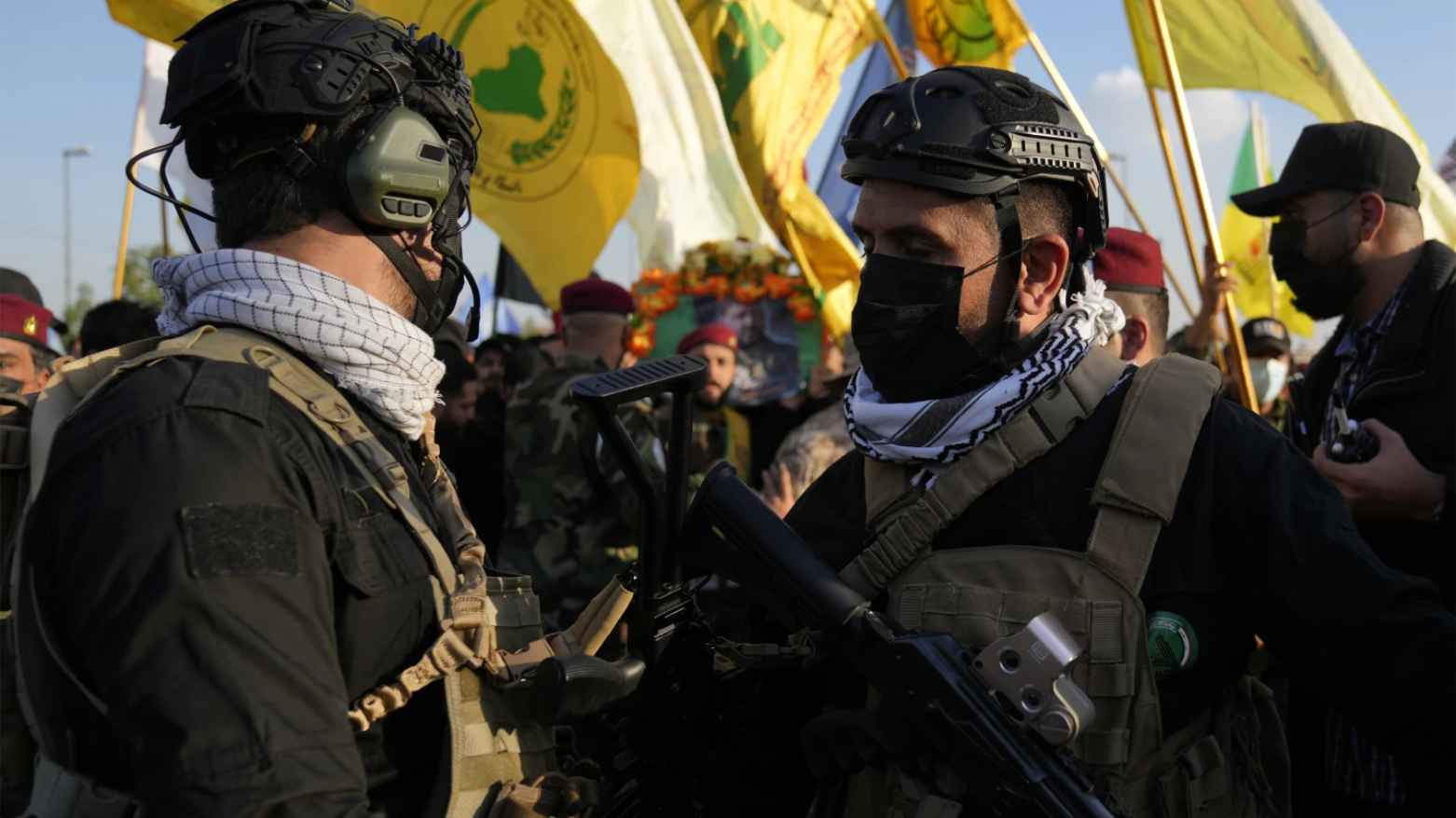
ERBIL (Kurdistan24) - A senior Kataib Hezbollah official has threatened to work to bring down Iraqi Prime Minister Ali Faleh Zaidi's government if it does not oppose restrictions on Iranian aviation after Oct. 1, while also warning of action against aircraft the group considers to be violating Iraqi airspace.
Abu Mujahid Assaf, a senior security official with Kataib Hezbollah Iraq, issued the warning on Monday, Sept. 28, two days before the scheduled end of the U.S.-led coalition's current military mission in Iraq.
Assaf described Sept. 30 as a milestone for Iraqi sovereignty and said Iraqis would celebrate the departure of U.S. and NATO forces.
In his account, the withdrawal should mark the beginning of greater independence in Iraq's political and economic decision-making.
But his statement also directly challenged the authority of the federal government.
Assaf accused the government of operating according to a political plan devised by unnamed allies and said Kataib Hezbollah was prepared to move from what he described as activity "behind closed doors" to open resistance.
"The people know who is hiding behind government decisions," he said.
He warned Prime Minister Zaidi and the political forces supporting his government that the group would seek to bring the government down "by all means" if Baghdad failed to take a position against what Assaf called the air blockade on Iran.
The supplied statement did not include a response from the prime minister's office to those threats or allegations.
Assaf also warned that if restrictions on Iranian aviation remain in place after Oct. 1, the response could extend to attempts to close border crossings belonging to countries participating in what he described as the blockade of the Iranian people.
His remarks went further on Iraqi airspace.
Assaf said the "Islamic Resistance" would monitor the skies for U.S. aircraft after the coalition transition. He threatened that an aircraft deemed to be violating Iraqi airspace would first receive a warning and could subsequently be shot down.
He also called on the prime minister's office not to tolerate what the group regards as violations after Oct. 1.
The threats illustrate one of the unresolved questions surrounding the Sept. 30 transition: whether the end of the coalition mission will strengthen the Iraqi state's monopoly over security decisions or intensify competition between state institutions and armed factions over who determines the country's foreign and security policy.
A sharply different interpretation came from Sunni lawmaker Kamil Nawaf Ghariri.
Speaking to Kurdistan24, Ghariri said the National Political Council supports the departure of all foreign forces, but only alongside continued security and political stability and the consolidation of weapons under state authority.
He said armed groups should surrender their weapons and argued that Iraq must achieve independence not only from Western military involvement but also from the influence of neighboring states, singling out Iran.
Ghariri said responsibility for the consequences following the U.S. withdrawal would rest with Prime Minister Zaidi and Shiite political forces because, according to him, they had committed themselves to resolving the weapons issue.
His comments reflect a different definition of sovereignty from the one presented by Assaf.
While the Kataib Hezbollah official focused on the end of the U.S. military presence and opposition to pressure on Iran, Ghariri said sovereignty also required armed factions to relinquish weapons and Iraq to reduce external Iranian influence.
The federal government, meanwhile, has sought to present Iraqi security institutions as increasingly capable of operating without direct coalition support.
Lt. Gen. Khalid al-Tamimi, Commander of the Iraqi Air Force, said this week that Iraqi air missions inside the country are now conducted independently and that no coalition force has carried out a mission inside Iraqi territory since the beginning of 2026.
Al-Tamimi also said Iraqi engineers maintain the country's F-16 fleet and that Baghdad is building greater domestic technical capacity while pursuing new capabilities, including possible Rafale fighter purchases and locally produced drones.
At the same time, he acknowledged that ISIS has not disappeared completely, with sleeper cells remaining in difficult terrain.
That continuing threat has been central to concerns raised in the Kurdistan Region over the coalition withdrawal.
President Masoud Barzani warned in a recent televised interview that the departure of U.S. forces could risk recreating some of the conditions that preceded the rise of ISIS after the 2011 American withdrawal.
"I am afraid of the same scenario," President Barzani said, while acknowledging that Iraq's circumstances today are different.
He recalled that after ISIS seized large areas of Iraq in 2014, Baghdad requested military assistance from the United States, NATO countries and other international partners.
President Barzani has simultaneously supported bringing weapons under state control.
He said armed factions should use force only under orders from Iraq's highest constitutional military and political authorities and urged that the issue be resolved peacefully rather than through internal confrontation.
"If this issue is resolved, it will be a victory for all of Iraq," he said.
The positions highlight the competing pressures facing Baghdad as Sept. 30 approaches.
Iraqi security institutions say they have developed greater independent capacity. Kurdish leaders support stronger state authority but remain concerned about the possibility of a security gap and an ISIS resurgence. Sunni political figures argue that the departure of foreign troops must be accompanied by an end to armed groups operating outside state control and reduced foreign influence.
Kataib Hezbollah, by contrast, is signaling that the coalition withdrawal does not end its armed role.
Assaf's threat to challenge the government, intervene over restrictions affecting Iran and independently monitor Iraqi airspace raises the question of where authority over security policy will rest after the foreign military transition.
With Sept. 30 presented by Baghdad as a step toward greater sovereignty, the immediate dispute is increasingly over what that sovereignty will mean in practice, and whether decisions on weapons, airspace and Iraq's regional relationships will be made exclusively by the state.