Iraq Resistance Front Says It Will Not Accept Any Deadline To Surrender Weapons
The Islamic Resistance in Iraq says it will not commit to any government or political deadline for handing over or controlling its weapons, as the International Coalition completes its military mission in Iraq.
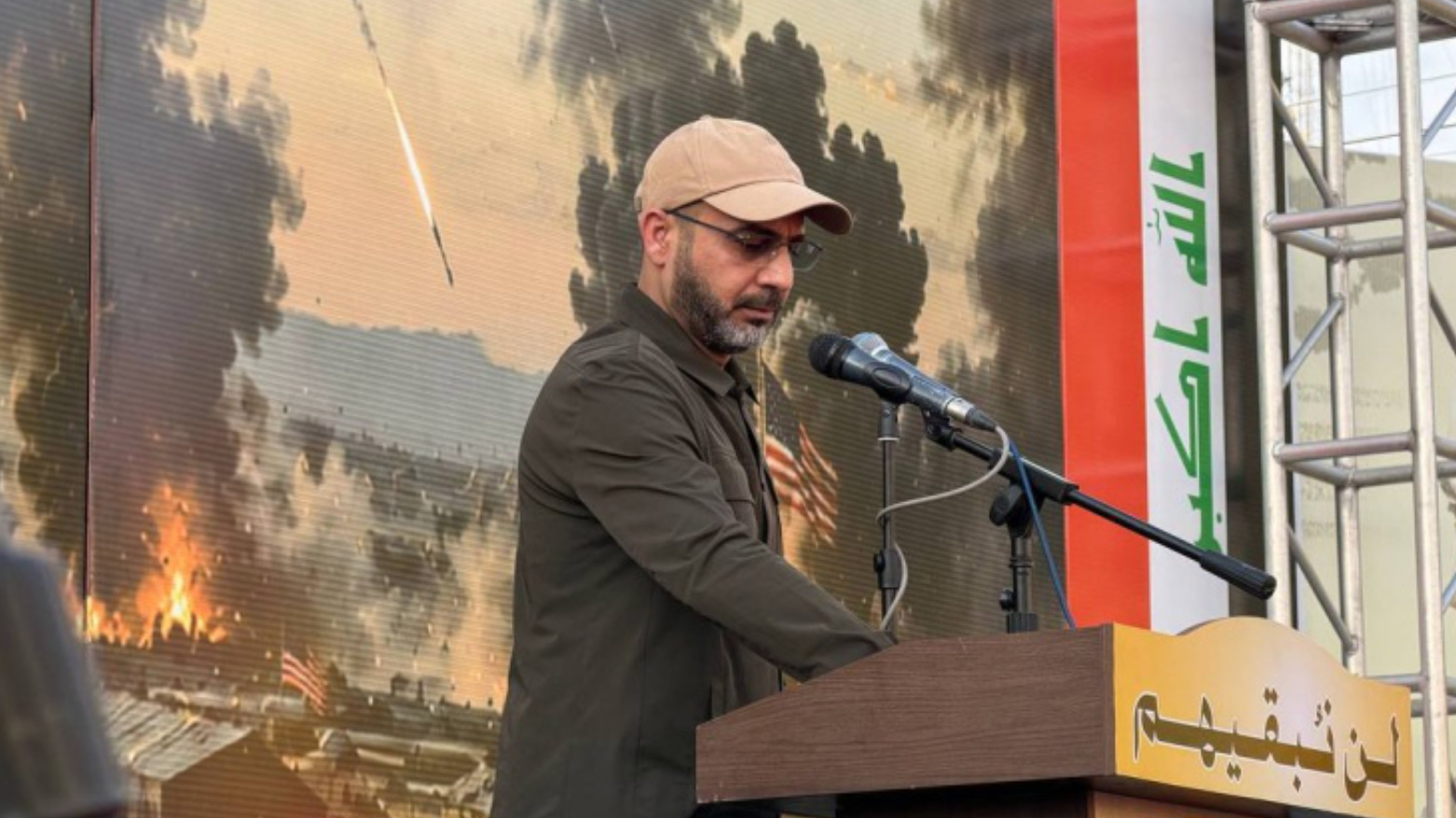
ERBIL (Kurdistan24) - The Islamic Resistance in Iraq said Wednesday, that its forces would not commit to any deadline or agreement set by a government or political party regarding the surrender or control of their weapons, rejecting a key demand emerging as Iraq enters a new security phase following the withdrawal of International Coalition forces.
Jaafar al-Husseini, spokesperson for the Iraqi Resistance Front, said the Islamic Resistance had been engaged for more than 40 days in negotiations through a four-member committee formed by the Coordination Framework and in coordination with the Iraqi government to discuss the organization of the Resistance Front’s weapons.
According to al-Husseini, those discussions have taken place in exchange for guarantees of Iraq’s complete and comprehensive sovereignty through the withdrawal of US and NATO forces and all forms of foreign military presence from Iraq by land, air, and sea.
He said the discussions also included preserving what he described as the Resistance Front’s right to respond directly to any US or Israeli violation of Iraqi territory.
Al-Husseini said that although a draft agreement had formally been signed by the four-member committee representing the Coordination Framework and the four factions of the Resistance, the government had not yet provided an official response.
“Despite the fact that the draft agreement was formally signed by the four-member committee of the Coordination Framework and the four factions of the Resistance, we have not received the official response of the Iraqi government until this moment,” al-Husseini said.
He said the Resistance Front would not consider itself bound by any deadline imposed by a government or political side regarding its weapons.
The statement comes as Iraq marks the conclusion of the International Coalition’s military mission and the completion of its organized withdrawal from the country.
Al-Husseini said the Resistance’s weapons would remain in the hands of its fighters, describing them as a trust and saying they would remain directed toward what he characterized as any enemy that targets Iraq and its people.
“The weapons of the Resistance will remain as a trust in the hands of the fighters,” al-Husseini said, adding that they would remain directed against any enemy that targets Iraq and its people.
He also said the group’s door remained open to negotiations aimed at securing Iraq’s sovereignty and ending what he described as US influence in the country.
The position comes after International Coalition commander Rear Admiral Liam M. Hulin said the Coalition had completed its organized withdrawal from Erbil, which he described as its last base in Iraq, following the conclusion of its mission against ISIS.
Hulin said the transition should support Prime Minister Ali Zaidi’s efforts to disarm armed militias operating outside state control.
“The time has come for Iraq to take the initiative. This transitional phase supports the Prime Minister's efforts to disarm armed militias operating outside state control; there is no longer any justification for the existence of armed groups outside the authority of the state,” Hulin said.
Hulin also said the United States and the Coalition would continue supporting Iraq as a member of the Global Coalition to Defeat ISIS, while the security relationship among Coalition militaries transitions into new bilateral frameworks.
“The security relationship among Coalition militaries is transitioning into new bilateral frameworks, but the Coalition will continue to support the Prime Minister, his government, and the Iraqi people on their journey toward a brighter future,” he said.
The contrasting positions highlight a central issue facing Iraq during the transition: the government's efforts to consolidate weapons under state authority, alongside the Resistance Front's insistence that its weapons remain outside that framework under the conditions it outlined.