Flydubai Attack Raises Questions Over Co-Pilot Vetting
The Flydubai co-pilot accused of attacking a captain on a Tel Aviv-bound flight had previously been barred from flying in Oman over extremism concerns, AP reports.
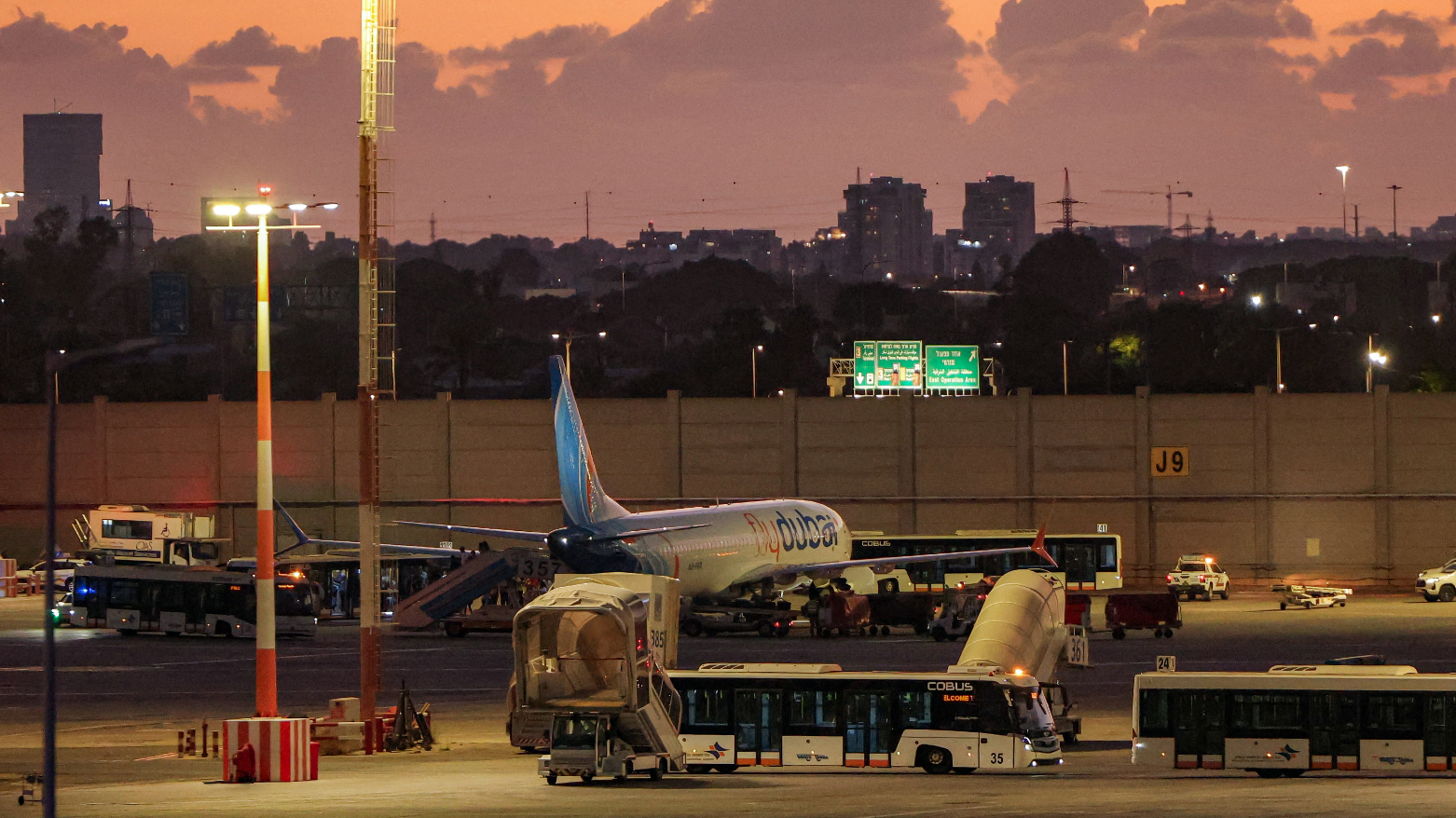
ERBIL (Kurdistan24) - The Flydubai co-pilot accused of attacking the captain and nearly bringing down a Tel Aviv-bound aircraft had previously been barred from flying in his native Oman over concerns that he had adopted extremist views, according to a person familiar with the continuing investigation.
The new information raises questions over how the co-pilot was subsequently hired by the United Arab Emirates-based airline and what information was available during the vetting process before he was allowed to operate flights.
Associated Press reporters Sam Mednick and Aamer Madhani reported that the source spoke on condition of anonymity because the investigation remains underway. The Wall Street Journal first reported Oman's decision to bar the co-pilot from flying.
It remains unclear how extensively he was screened when Flydubai hired him in the UAE.
The disclosure follows Wednesday's incident aboard Flight FZ1073, which was traveling from Dubai to Tel Aviv with 182 people aboard, including eight crew members.

Officials say the co-pilot attacked captain Smit Machchhar inside the cockpit before the Boeing 737 went into a steep descent.
Passengers and other crew members eventually intervened, restrained the co-pilot and enabled another crew to take control. The aircraft landed safely in Tabuk, Saudi Arabia.
The incident has prompted a regional investigation led by the UAE, with Israeli authorities participating.
An Israeli official cited by AP said investigators are still trying to determine whether the co-pilot acted alone or had connections to others. The official said there was currently no evidence connecting the attack to Iran.
U.S. President Donald Trump had earlier said preliminary information reaching him suggested a possible Iranian link and warned that Tehran would face a severe response if such involvement were proven. No evidence supporting Iranian responsibility has been publicly presented.
Israeli Prime Minister Benjamin Netanyahu has separately said the co-pilot had undergone "Islamist radicalization," but has not publicly presented evidence supporting that assertion.
"We are now investigating whether he was sent," Netanyahu said Friday, adding that whoever was responsible would face consequences.
The latest information from Oman adds another line of inquiry: whether concerns about the co-pilot's views had been identified before he joined Flydubai and whether those concerns were communicated outside Oman.
The UAE has built a reputation around strict security measures and efforts to limit extremist activity, making the question of how the co-pilot passed employment and aviation checks particularly sensitive.
UAE senior diplomatic adviser Anwar Gargash described the incident as a "dangerous terrorist act" while praising the captain for helping prevent a catastrophe.
The precise motive, however, remains under investigation.
Details of what happened inside the cockpit have continued to emerge.
Machchhar, who was wounded in the attack, has been recovering at a hospital in Abu Dhabi after being transferred from Saudi Arabia to the UAE.
During a televised conversation with Indian Prime Minister Narendra Modi, the captain described struggling to survive after being attacked.
He said he had suffered multiple wounds and at one point realized that unless he managed to get back up, the lives of the passengers were at risk.
Passengers seated near the front also described hearing a struggle shortly before the aircraft suddenly lost altitude.
Flight-tracking data showed the plane falling to about 16,600 feet before briefly climbing again and later descending to roughly 15,000 feet, where it remained until the emergency landing.

Passenger Daniel Schlichter described children screaming as the aircraft plunged.
Machchhar eventually managed to open the cockpit door, allowing passengers to enter and overpower the co-pilot.
According to passenger accounts cited by AP, the suspect was pulled into the cabin and restrained, with his hands bound using headphones.
The wounded captain was treated by a dentist who happened to be aboard.
Schlichter and dentist Dr. Shota Musayev both said they did not see a knife or other weapon at the front of the aircraft, leaving investigators still to determine what object was used in the attack.
The incident has also disrupted air travel between the UAE and Israel.
Flydubai suspended its Tel Aviv services at the request of authorities while the investigation continues.
Ghaith Al Ghaith, Flydubai's chief executive, said the airline's teams were assisting affected passengers and stressed that a comprehensive investigation was underway into the circumstances and motives behind the incident.
Israeli carriers have since begun operating repatriation flights from Dubai.
According to Dubai Airports data, an Arkia Airlines flight departed Dubai for Ben Gurion Airport on Friday evening, the first such flight following the Flydubai incident.
AP reported that Israel and the UAE had arranged additional repatriation services, with Arkia and Israir scheduled to operate flights and El Al expected to bring additional passengers home.
Commercial Flydubai services to Israel, however, remain suspended.
The investigation now extends beyond what happened aboard Flight FZ1073 to how the co-pilot was permitted to fly in the first place.
Oman's reported decision to ground him over extremism concerns will likely place particular attention on information-sharing between aviation authorities, airlines and security agencies.
For investigators, the central questions remain whether the attack was planned, whether the co-pilot acted alone, whether anyone directed or assisted him, and whether warnings identified earlier in his aviation career should have prevented him from entering another airline's cockpit.