KRG: Over 80% of Road Project Workforce Is Local, Federal Budget Delays Slow Projects
Regarding roads in the Kurdistan Region, Abdullah said projects currently under implementation are being developed to modern standards, with the KRG cooperating with international companies to benefit from advanced technologies.
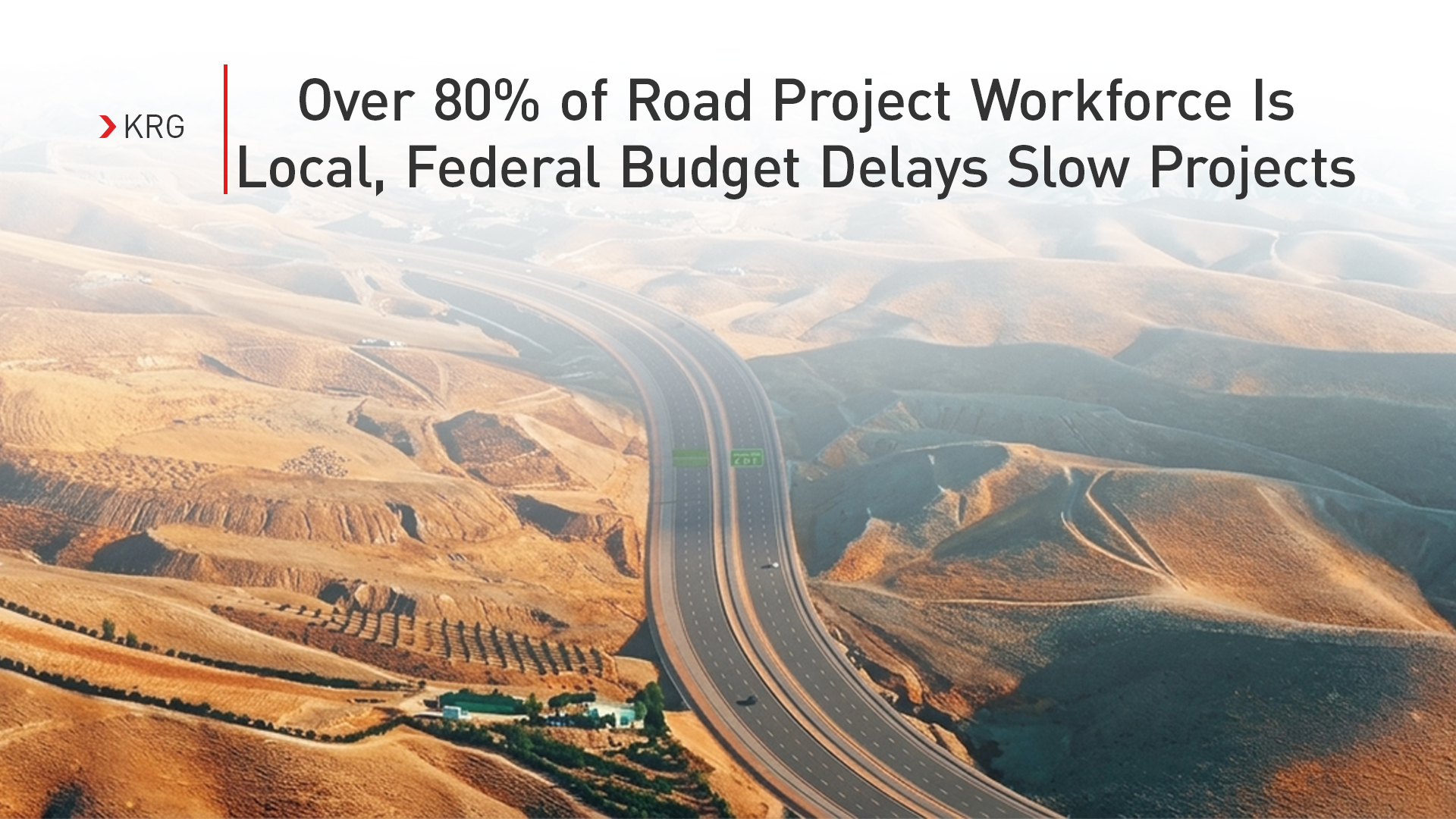
ERBIL (Kurdistan24) — More than 80 percent of employees and companies involved in road construction projects in the Kurdistan Region are local, while delays in federal budget allocations remain a major obstacle to completing projects on schedule, the Kurdistan Regional Government’s (KRG) Deputy Minister of Reconstruction and Housing said.
Agreen Abdullah Aziz made the remarks during the participation of a senior KRG Ministry of Reconstruction and Housing delegation in the fourth International Road Federation (IRF) Europe and Central Asia Regional Congress and Exhibition.
The three-day conference brought together representatives from more than 35 countries and focused on new road construction technologies, traffic safety, project management, and the development of international road networks.
Abdullah said the KRG delegation attended the conference to exchange expertise and learn from the experiences of developed countries, including the United States, European countries, and Asian nations, particularly in road construction, project management, and the use of modern materials and technologies.
He said no agreements were signed during the conference, but the delegation participated in meetings and panel discussions to follow the latest international developments. Information on technologies, equipment, and practices presented at the event will be compiled in a detailed report for the minister's review.
Regarding roads in the Kurdistan Region, Abdullah said projects currently under implementation are being developed to modern standards, with the KRG cooperating with international companies to benefit from advanced technologies.
On artificial intelligence (AI), he said its use in road projects remains limited globally, with applications largely focused on areas such as data collection and traffic management. AI has not yet been deployed in road projects in the Kurdistan Region, he added, although the ministry is considering its future use.
Abdullah emphasized that local companies and workers constitute the majority of the workforce in the region's road sector. He said between 80 and 90 percent of employees—including engineers, specialists, managers, accountants, and workers—are local residents.
He also highlighted the National Road Master Plan, which aims to scientifically connect the Kurdistan Region's major cities and border crossings. The plan was presented by the ministry at a workshop, and its approval process is nearing completion, according to the deputy minister.
Abdullah said it was difficult to set definitive completion dates for road projects because their progress depends directly on the timely allocation of funds.
“When the budget is not available on time, projects are also delayed,” he said, pointing to what he described as repeated obstacles by the Iraqi federal government in providing the necessary budgets and financial allocations.
On the first day of the IRF conference, the Kurdistan Region delegation delivered the ministry's official presentation and took part in an international session on Performance-Based Contracts (PBC), focusing on ways to assess the impact of road projects.