Wright: Rising Hormuz Supplies Should Ease Fuel Prices
U.S. Energy Secretary Chris Wright expects gasoline and diesel prices to fall despite Iran-related risks, citing rising Gulf supplies and a major G7 fuel release.
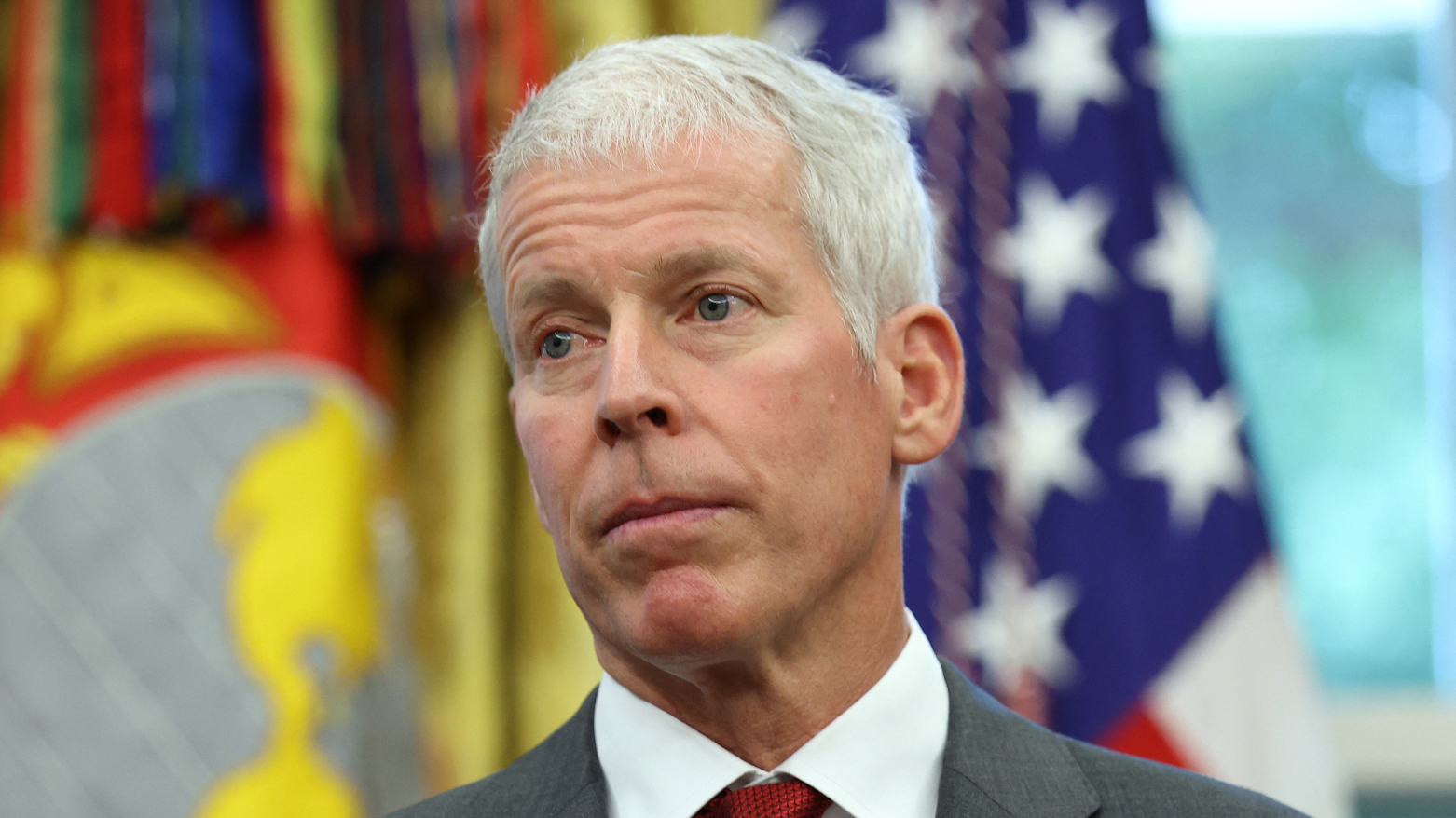
ERBIL (Kurdistan24) - U.S. Energy Secretary Chris Wright said gasoline and diesel prices should continue falling in the weeks ahead despite continuing risks from the conflict with Iran, while acknowledging that further disruption in the Persian Gulf could still upset those expectations.
Speaking Sunday on CBS News' "Face the Nation with Margaret Brennan," Wright pointed to increasing energy supplies moving through the Strait of Hormuz, record U.S. gasoline production and declining demand after the summer driving season as reasons for expecting lower prices.
Asked directly whether Americans could expect prices to fall over the next four weeks, Wright replied: "Absolutely."
He said both gasoline and diesel prices had already begun declining and that he expected the trend to continue.
The prediction comes amid continuing uncertainty surrounding Iran and Gulf energy infrastructure, an issue CBS moderator Margaret Brennan repeatedly pressed Wright on during the interview.
Brennan noted ongoing Iranian attacks on ships and raised the possibility of further disruption to energy facilities in the Gulf before the U.S. midterm elections.
Wright acknowledged the uncertainty.
"There's no guarantees in conflict," he said, while arguing that the administration's efforts are aimed at expanding gasoline and diesel supplies and strengthening U.S. production and refining capacity.
Wright said the administration also continues to pursue both diplomatic pressure and preparations for possible military action regarding Iran.
He reiterated President Donald Trump's position that Iran must not obtain nuclear weapons and said Washington is examining economic and military options toward that objective.
Asked whether Trump had decided to escalate military action after the elections, Wright declined to discuss the president's plans.
He said Trump continues to keep both diplomatic and military pressure available while preparing for different contingencies.
Brennan also challenged Wright on the apparent tension between the administration's energy-price promises and the risk that additional military escalation could again restrict Gulf energy flows.
Wright said Trump had been aware that confronting Iran could increase energy prices in the short term but considered preventing a nuclear-armed Iran a greater long-term priority.
He argued that such an outcome would pose not only a security threat but also a lasting danger to global energy markets.
The interview also focused heavily on diesel, which has been under pressure from disruptions in international supply.
Wright pointed to reduced Russian diesel exports, China's decision not to export additional diesel or gasoline and lower flows from the Gulf as factors tightening the market.
He also blamed recent refinery closures in California and what he described as years of Democratic policies reducing U.S. hydrocarbon and refining capacity. Those comments reflect the administration's political assessment of U.S. energy policy.
A major part of Washington's effort to bring diesel prices down now involves coordinated releases by other developed economies.
Brennan said the G7 had agreed to release 100 million barrels of fuel over four months, with a significant quantity of diesel expected to enter the market during the first 20 days.
Wright described the decision as significant.
He said European countries hold large diesel reserves and argued that current market conditions are precisely the kind of situation for which those inventories are maintained.
The additional supply, he said, should reduce diesel prices in the United States, Europe and elsewhere.
Wright predicted that diesel prices would continue declining through the winter and possibly into next spring as more refining capacity comes online and Gulf supplies recover.
Asked whether U.S. diesel could fall below $6 per gallon, Wright said yes, although he declined to give a precise date.
He said diesel had already fallen by slightly more than 20 cents and should move below $6 "before too long."
The administration has also considered more direct measures to reduce domestic prices.
Trump has previously raised the possibility of restricting U.S. diesel exports, an approach Wright has publicly opposed.
Asked whether the president had now completely ruled out an export ban, Wright did not say that he had.
Instead, he described an ongoing internal discussion in which Trump considers different policy options for lowering gasoline, diesel, electricity and heating costs.
Wright suggested that Trump's public consideration of an export restriction may itself have helped encourage international partners to agree to the coordinated fuel release.
Another unresolved issue is possible U.S. action against major purchasers of Russian energy.
Brennan said legislation associated with Sen. Lindsey Graham requires Trump to make a decision by Oct. 18 on possible tariffs targeting major buyers of Russian fuel, including China and India.
Wright declined to predict what Trump would do.
He said the president tends to evaluate trade-offs before making final decisions and is weighing both efforts to maintain relations with China and pressure aimed at ending the Russia-Ukraine war.
Wright also declined to say whether he personally supported tariffs against China or India.
The exchange highlighted the difficult balance confronting the administration: measures intended to exert geopolitical pressure on Iran or Russia can also affect the energy prices Trump has promised to lower at home.
Brennan noted that such decisions come only weeks before the U.S. midterm elections.
Wright rejected the suggestion that Trump's approach was being driven primarily by electoral considerations, arguing that the president had already accepted the political risk associated with higher short-term energy prices when confronting Iran.
For consumers, Wright's message was nevertheless one of cautious confidence.
He expects expanding supply from the Strait of Hormuz, high U.S. gasoline production, declining seasonal demand and the G7 fuel release to push prices downward.
But when pressed on whether Washington could ensure that another regional escalation would not reverse those gains, Wright acknowledged the limit of any forecast in wartime: there are no guarantees.