Dollar Exchange Rate Reaches 173,000 Dinars in Kurdistan Region Markets
Iraq’s Central Bank sets official dollar selling rate at 1,520 dinars as new exchange-rate structure takes effect
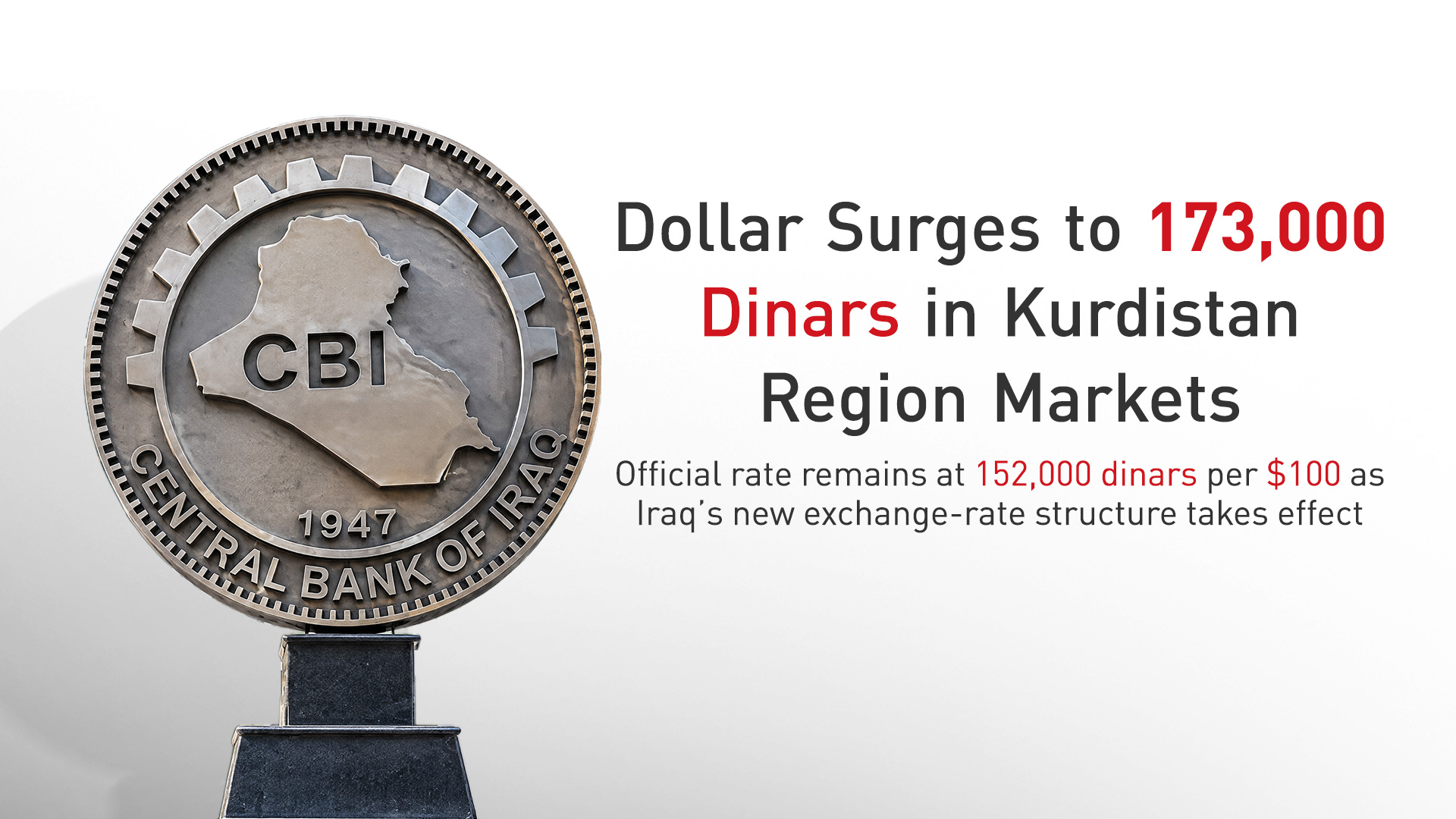
ERBIL (Kurdistan24) — The US dollar exchange rate rose to 173,000 Iraqi dinars per $100 in markets across the Kurdistan Region on Wednesday, following Iraq’s new official exchange-rate structure, under which banks and non-bank financial institutions sell the dollar to end beneficiaries at 1,520 dinars.
The market rate represents a significant gap with the official exchange rate, with the dollar trading at around 173,000 dinars for every $100 in Kurdistan Region markets.
The Central Bank of Iraq set its official selling price at 1,520 dinars per dollar, following a decision by Iraq’s Council of Ministers to introduce changes to the dollar’s exchange rate against the Iraqi dinar.
The Council of Ministers approved the new exchange-rate structure during its 22nd regular session, based on proposals presented by the Minister of Finance and the Governor of the Central Bank of Iraq during the meeting.
Under the new structure, the government set the dollar’s purchase price by the Ministry of Finance at 1,500 dinars.
The selling price of the dollar to banks was set at 1,510 dinars, while non-bank financial institutions will sell the dollar to final beneficiaries at 1,520 dinars.
Hamed Naim Ghazi, secretary-general of the Council of Ministers, said implementation of the decision would begin on Oct. 7, 2026.
The new official rates come as the Kurdistan Region’s currency markets continue to trade the US dollar at a substantially higher rate, highlighting the persistent disparity between Iraq’s official exchange rate and the market rate.
The exchange-rate gap can affect prices of imported goods and services, household purchasing power, and broader economic activity across the Kurdistan Region, where the US dollar remains widely used in commercial transactions.