Navi Pillay Wins Nobel Peace Prize for International Justice Work
South African jurist and former UN rights chief Navi Pillay has won the 2026 Nobel Peace Prize for her work in international justice and human rights.
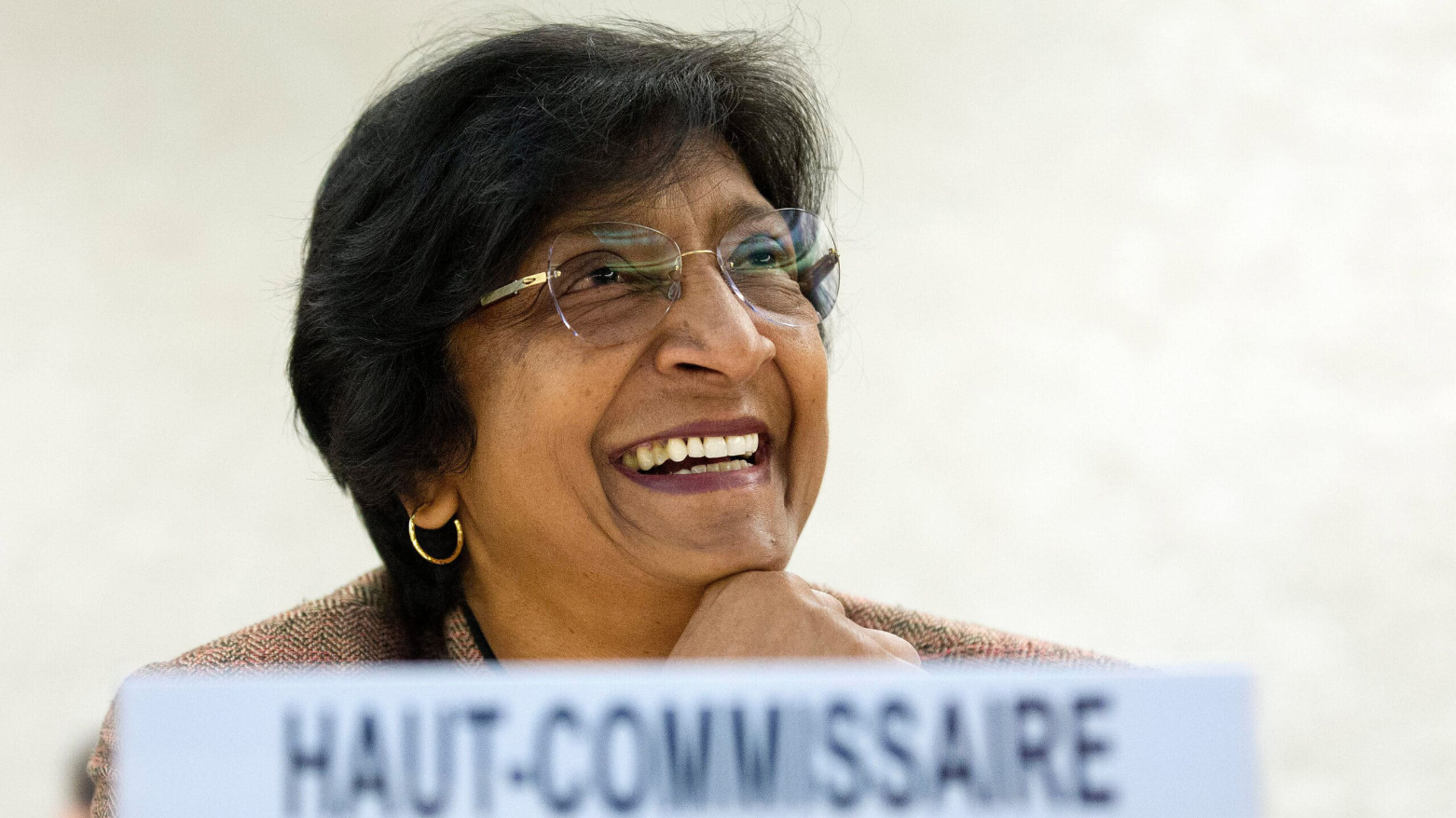
ERBIL (Kurdistan24) - South African-born jurist and former UN human rights chief Navi Pillay won the 2026 Nobel Peace Prize on Friday for her decades-long work in international justice, human rights and accountability, an award that has also renewed debate over her role in a UN investigation that accused Israel of genocide in Gaza.
The Norwegian Nobel Committee announced the award in Oslo, saying Pillay's career had helped strengthen international law at a time when legal institutions and the rules-based international system are under growing pressure.
Jørgen Watne Frydnes, chair of the committee, said Pillay's work was a source of "hope and inspiration" for those seeking a more peaceful world.
Pillay, 85, received news of the award while attending a forum in Nuremberg, Germany, a city closely associated with the post-World War II trials that helped shape modern international criminal law.
Speaking after the announcement, she said political leaders had a legal obligation to protect human rights and avoid war.
The award was reported by Associated Press journalists Stefanie Dazio, Jamey Keaten and Kostya Manenkov.
Pillay's career has spanned several of the world's most prominent human rights and international justice institutions.
She served as UN High Commissioner for Human Rights from 2008 to 2014, was a judge at the International Criminal Court between 2003 and 2008, and previously headed the International Criminal Tribunal for Rwanda.
She is currently serving as an ad hoc judge at the International Court of Justice in the genocide case brought by Gambia against Myanmar over its treatment of the Rohingya minority.
Her legal career began in apartheid-era South Africa, where she worked to secure rights for political prisoners on Robben Island, including Nelson Mandela.
After apartheid ended, Mandela appointed Pillay as South Africa's first non-white woman High Court judge.
Gaza Commission Draws Praise and Condemnation
Pillay has more recently drawn international attention as chair of the UN-backed "Commission of Inquiry on the Occupied Palestinian Territory and Israel".
The commission concluded last year that Israel had committed genocide in Gaza and said Israeli leaders had incited the commission of genocide.
Israel has strongly rejected those findings and has refused to cooperate with the commission since its establishment in 2021.
Pillay reiterated her position on Gaza after receiving the Nobel, saying in Germany: "What's happening there is genocide."
The commission has also issued findings accusing Hamas of war crimes and violations of international humanitarian law during the Oct. 7, 2023, attack on Israel.
According to AP, that attack killed about 1,200 people and triggered the war in Gaza. More than 74,000 Palestinians have since been killed, according to figures cited in the report.
Israel's Foreign Ministry reacted sharply to Friday's Nobel announcement, accusing the committee of using the award to legitimize what it called anti-Israel prejudice.
The ministry rejected Pillay's work and the commission's conclusions in particularly strong language.
Hamas official Bassem Naim, by contrast, welcomed the award and described it as a message of hope for Palestinians, especially those in Gaza.
International Reaction
South African President Cyril Ramaphosa praised Pillay's selection, calling the award a tribute to her courage, integrity and lifelong commitment to justice.
He said the honor recognized her contribution to peace, human dignity and accountability in South Africa and internationally.
Pillay is the fifth South African to receive the Nobel Peace Prize, following Albert Luthuli, Desmond Tutu, Nelson Mandela and F.W. de Klerk.
European Commission President Ursula von der Leyen also congratulated Pillay, praising her work on behalf of persecuted and vulnerable people.
UN High Commissioner for Human Rights Volker Türk said the award reaffirmed the importance of human rights, the rule of law, justice and accountability to peace and security.
International Criminal Court President Tomoko Akane said the recognition carried particular significance at a time when the international legal order is facing serious challenges.
Spotlight on International Courts
The Nobel also comes amid growing political pressure on international courts.
Pillay previously served at the ICC, which has faced sanctions from the Trump administration.
According to AP, the administration has sanctioned 13 ICC staff members, including prosecutors and nine judges, among them Akane.
U.S. President Donald Trump also criticized the court during his address to the UN General Assembly last month, calling it an "out of control institution" and urging countries to withdraw.
The Nobel Committee said Pillay's selection was intended in part to defend the international legal framework against efforts to weaken institutions created to address war crimes, crimes against humanity and other serious violations.
The decision also follows years in which Pillay has faced criticism from governments and political groups affected by the investigations and legal processes in which she has participated.
Her supporters, however, view that resistance as evidence of the difficult nature of her work.
For Pillay, the award closes another chapter in a career that began under apartheid and later moved through South Africa's judiciary, UN human rights institutions and the world's two leading international courts.
This year's Nobel Peace Prize carries 12 million Swedish kronor, roughly $1.2 million.
The Nobel Memorial Prize in Economic Sciences, the final award in this year's series, is due to be announced Monday.