Abdi Says Kurdish Is Now Official in Syrian Education
Mazloum Abdi says Kurdish is now an official language in Syria's education sector and that integration of the former SDF into state institutions is nearing completion.
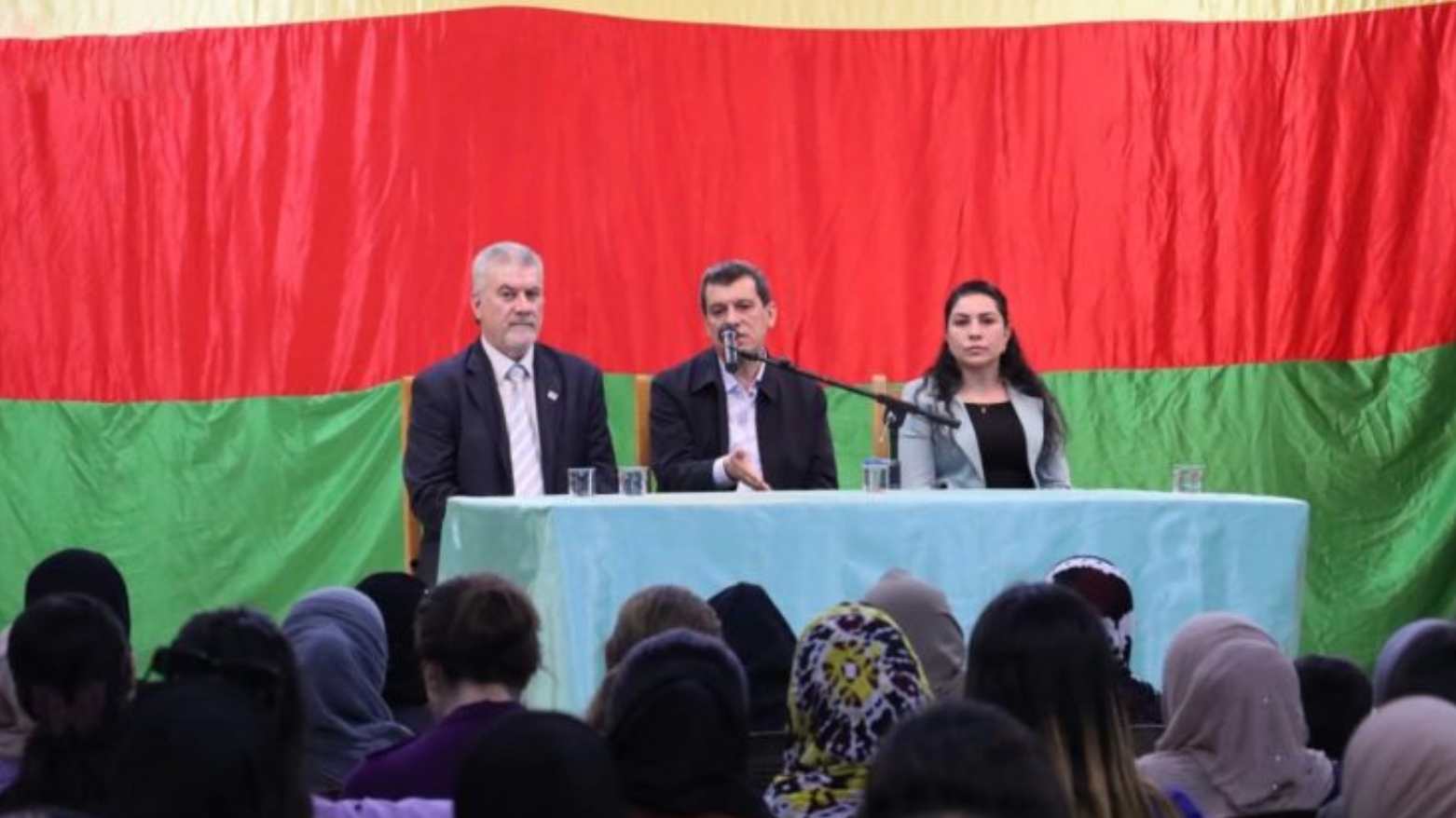
ERBIL (Kurdistan24) - Mazloum Abdi, adviser to the Syrian presidency, said Friday that Kurdish has become an official language in the education sector and has been incorporated into the government curriculum, while the process of integrating the former Syrian Democratic Forces into Syrian state institutions has reached its final stages.
Abdi made the remarks during a meeting with residents and prominent local figures in Tel Tamr, in the Hasakah countryside, Western Kurdistan, where representatives from different communities gathered to discuss political, security and social developments affecting the area.
Addressing the integration process, Abdi said significant progress had been made and that the remaining steps were nearing completion.
He attributed the progress to confidence in the course that had been followed, while acknowledging that some parties continued trying to obstruct or derail the process.
Abdi did not provide further details on the remaining stages of integration or a timetable for their completion.
On language rights, he said Kurdish had gained official status within the education sector and that the right of people to study in their mother tongue would continue to be guaranteed.
He encouraged families to ensure that their children learn Kurdish alongside Arabic, presenting mother-tongue education as an important part of preserving cultural identity.
Abdi described Kurdish as "a fundamental part of Syria's identity and culture" and said the language had also been incorporated into the government's official education curriculum.
His remarks placed language rights alongside the broader political and institutional changes taking place in the area.
The Syrian presidential adviser also announced the creation of a specialized committee tasked with addressing the issue of missing persons.
According to Abdi, the committee will closely follow individual cases and work toward resolving the issue permanently.
No additional details were provided regarding the committee's composition, mandate or the number of missing-person cases it is expected to review.
Abdi also emphasized the importance of protecting social peace and strengthening coexistence among the different communities living in the region.
His comments came as local authorities and communities continue to navigate political and security changes affecting Hasakah and its surrounding areas.
"We will not take a single step backward, and we will not allow any form of sedition or unrest," Abdi said.
He added that efforts would be made to prevent any party from creating divisions among the area's communities.
"We have complete faith in peace and are working to achieve it," he said.
The Tel Tamr meeting therefore focused on several interconnected issues: the institutional integration of the former Syrian Democratic Forces, the status of Kurdish-language education, the unresolved issue of missing persons and the need to maintain communal stability.
Abdi's remarks suggest that language policy is being treated as part of the wider process of political and institutional change.
By encouraging Kurdish families to preserve their mother tongue while also learning Arabic, he framed multilingual education as compatible with a broader Syrian identity rather than in conflict with it.
At the same time, his comments on integration and coexistence stressed that the coming phase would depend on maintaining confidence between institutions and communities and preventing political or social tensions from undermining the process.