Iran War, Hormuz Disruption Keep Energy Security in Focus
U.S. Energy Secretary Chris Wright defended the Iran war despite fuel-price pressures, arguing that preventing a nuclear-armed Tehran outweighs energy costs.
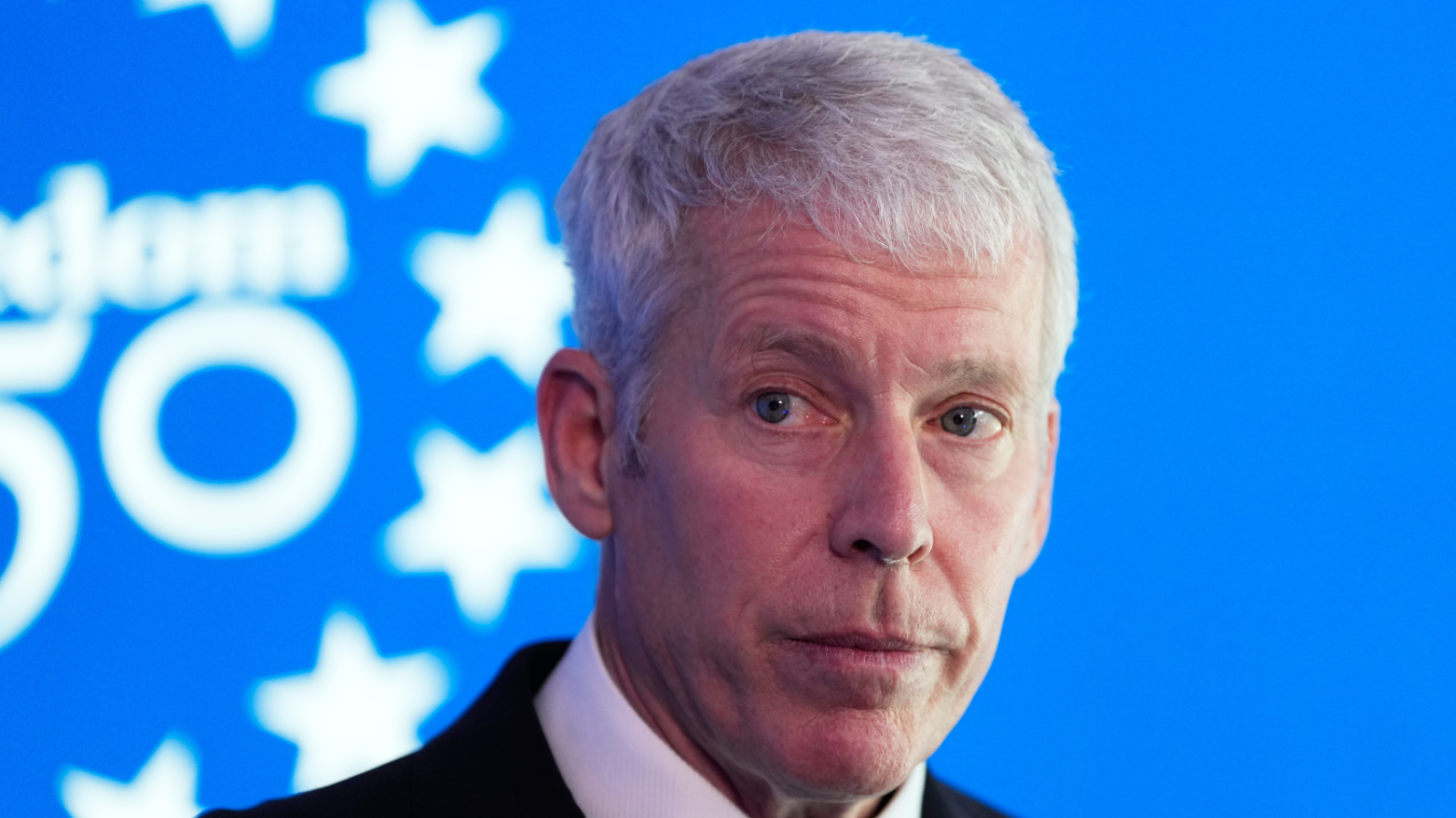
ERBIL (Kurdistan24) - U.S. Energy Secretary Chris Wright defended the Trump administration's confrontation with Iran despite pressure on gasoline and diesel prices, arguing that preventing Tehran from acquiring nuclear weapons capability carries greater weight than the economic costs generated by the conflict.
Speaking on CNN's State of the Union on Sunday, Wright acknowledged that he was not comfortable with current fuel prices but said both gasoline and diesel had fallen in recent weeks and predicted further declines.
"Gasoline prices did come down; they never got remotely close to $5 a gallon," Wright said.
Asked directly whether he was comfortable with current prices, he responded: "No, of course I'm not comfortable, but I'm happy they're coming down."
Wright linked the energy-market disruption to a wider security argument over Iran.
He claimed that the Iranian government had killed between 30,000 and 40,000 of its own citizens in January before the current conflict and asked whether the alternative should be accepting a nuclear-armed Iranian government.
"I don't think anyone is comfortable with that," Wright said.
The energy secretary's comments come as Washington searches for additional fuel supplies while disruption around the Strait of Hormuz continues to affect one of the world's most important energy corridors.
Wright said the administration is pursuing several measures aimed at increasing diesel availability, including cooperation with refiners and allies and a temporary waiver allowing Russia to export diesel.
He portrayed the Russian measure as a narrowly targeted effort to increase global diesel supply rather than a broader removal of energy sanctions.
The administration's effort to ease fuel costs comes against the backdrop of continued danger to shipping through Hormuz.
Iran's Revolutionary Guards said Monday that an oil tanker caught fire after hitting a naval mine south of the strait.
According to the Guards, the vessel was traveling through what Iran considers an unauthorized southern route and had turned off its positioning and navigation systems.
The claim could not be independently established from the supplied material.
The incident followed two other tanker fires a day earlier that the Guards also attributed to mines.
Iran has required vessels to seek authorization before passing through the Strait of Hormuz since taking control of the waterway following the outbreak of war with the United States and Israel in late February.
Before the conflict, roughly one-fifth of globally traded oil normally passed through the strait.
The Guards' naval commander, Admiral Ali Ozmaei, has warned that ships deactivating their navigation systems would be treated as hostile.
Washington, meanwhile, has imposed what has been described as a naval counter-blockade targeting Iranian oil exports in response to Tehran's restrictions on shipping.
The military and economic confrontation is unfolding alongside renewed political rhetoric between Washington, Tehran and Israel.
Iranian Foreign Minister Abbas Araghchi responded sharply after U.S. President Donald Trump referred to the prospect of "finishing the job" against Iran.
"Last time you wanted to 'finish the job', Iran emerged even stronger," Araghchi wrote on X. "Want to try your luck again? Be our guest."
He also accused Israeli Prime Minister Benjamin Netanyahu of seeking to draw Washington into another war in order to avoid imprisonment over his domestic legal troubles.
That allegation was Araghchi's characterization and was not established as fact in the material.
His comments followed Trump's public endorsement of Netanyahu ahead of Israel's Oct. 27 parliamentary election.
Trump described Netanyahu as a strong U.S. partner and urged Israeli voters to return him to office, while warning that Washington might otherwise have to deal more directly with Iran.
Netanyahu welcomed the endorsement and said the two leaders had already accomplished significant objectives together but still had "a mission to complete."
According to AFP, Netanyahu has presented continued cooperation with Trump as central to confronting Iran, saying his re-election would allow the two governments to work toward eliminating what he described as the Iranian threat.
Trump and Netanyahu worked together during the U.S.-Israeli attacks on Iran beginning in late February, before Trump agreed to a ceasefire in April.
Their approaches have not always been identical. AFP reported that Trump has shown greater interest in a negotiated end to the conflict, while Netanyahu has argued that a diplomatic agreement with Iran's current leadership is not viable.
That tension remains visible as Washington simultaneously maintains military and economic pressure and considers diplomatic options.
Araghchi has warned against renewed U.S. military action, while Iranian officials continue to insist that Tehran will respond to further attacks.
For the Trump administration, Wright's comments placed energy prices within that wider security calculation.
He did not dismiss the impact of higher fuel costs on American consumers. Instead, he argued that the administration was trying to increase supplies while pursuing objectives it considers more important to long-term security.
The strain on energy markets also illustrates the economic reach of the war.
Disruption in Hormuz has affected oil and fuel supplies far beyond Iran and the Gulf, while Washington's decision to temporarily facilitate Russian diesel exports shows how the administration is looking outside the region for ways to relieve pressure.
Wright said President Trump was focused daily on increasing energy supplies and lowering prices.
Whether those efforts can substantially ease costs will depend in part on developments well beyond U.S. domestic energy policy, particularly the security of shipping through Hormuz and the course of the conflict with Iran.
For now, Washington is making clear that it does not view higher energy prices as sufficient reason to abandon its position toward Tehran.
Wright's argument was straightforward: fuel costs matter, but the administration believes the consequences of allowing Iran to acquire nuclear weapons capability would be greater.