Netanyahu Warns Iran Against Attack Ahead of Israeli Election
Benjamin Netanyahu warned Iran against attacking Israel ahead of the Oct. 27 election and asked voters for another mandate to continue confronting Tehran.
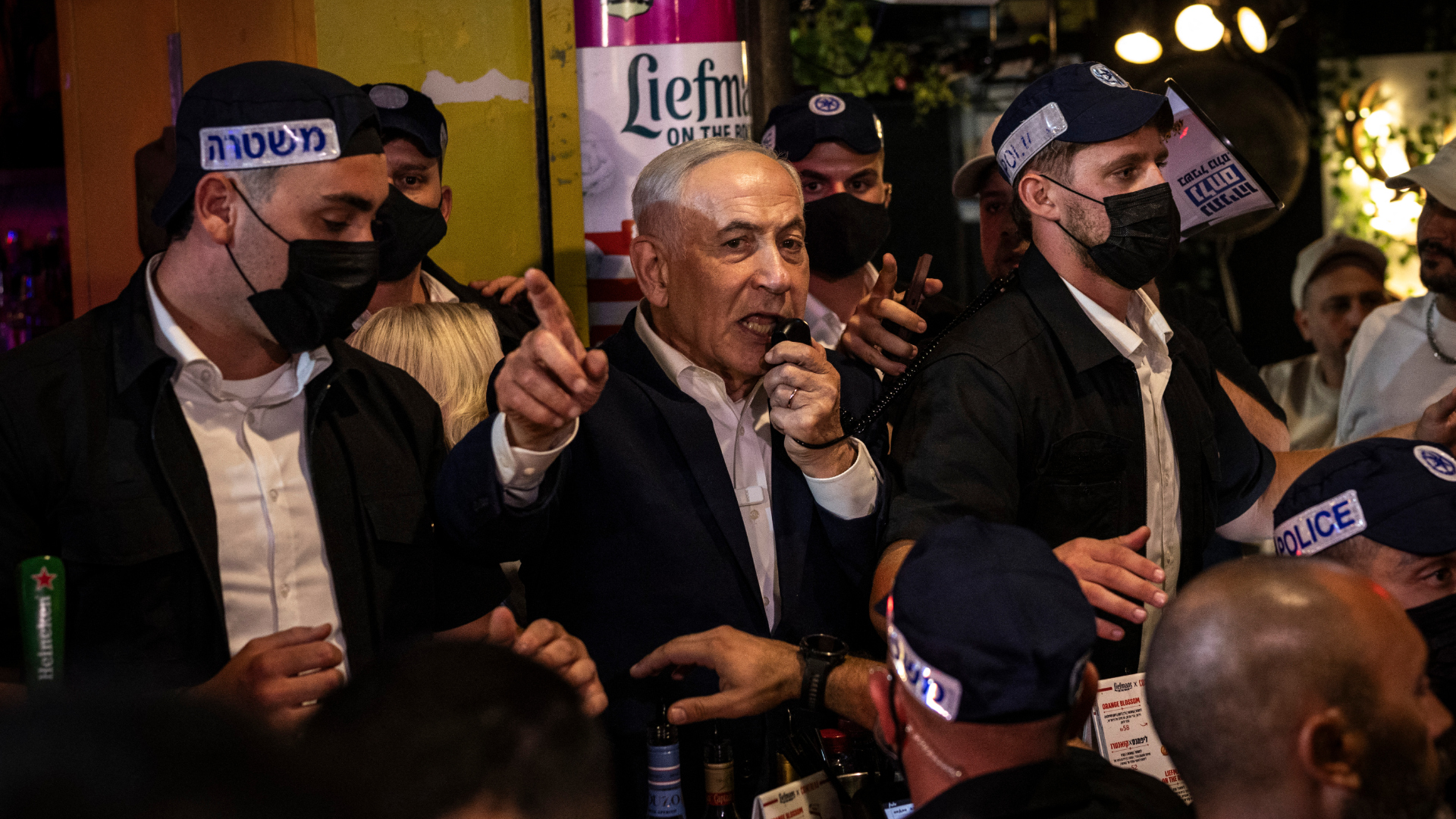
ERBIL (Kurdistan24) - Israeli Prime Minister Benjamin Netanyahu has warned Iran against launching missiles, drones or other attacks ahead of Israel's Oct. 27 parliamentary election, saying any attempt to interfere with the vote would draw a response of a scale Tehran could not anticipate.
In an extensive interview with The Jerusalem Post on Thursday, conducted by Zvika Klein and Amichai Stein, Netanyahu placed Iran at the center of his re-election campaign, arguing that voters should give him another mandate to complete what he described as his decades-long effort to remove the strategic threat posed by Tehran.
Netanyahu said Israeli military intelligence and Mossad had provided what he described as clear warnings that Iran and its regional allies were considering ways to influence the election.
He suggested that Tehran could attempt to use missiles or drones to undermine Israeli public confidence in the results of previous military operations.
If that happened, Netanyahu warned, Israel would respond with "force and might they can't even imagine."
The Israeli prime minister did not provide details of the intelligence assessments or evidence of a specific Iranian plan in the interview.
Netanyahu argued that previous Israeli military operations had severely weakened Iran and its regional allies but had not permanently removed the threat.
He claimed Tehran had been close to producing several nuclear weapons before Israeli military action and said Iran would attempt to rebuild both its nuclear infrastructure and ballistic missile capabilities if its current leadership remained in power.
Those assessments were presented by Netanyahu as part of his case to voters.
"As long as this regime stays," he said, Iran would try to "reconstitute themselves."
He portrayed the issue as central to the choice facing Israelis next Tuesday, repeatedly returning to the argument that his political career had been defined by confronting Iran since the 1979 Islamic Revolution.
Netanyahu said his goal was not simply to weaken Iran militarily but ultimately to remove what he called the threat posed by the Iranian government while expanding Israel's diplomatic relationships in the region.
Toward the end of the interview, he described his political mission as breaking Iran's current regime, eliminating the threat to Israel and securing additional peace agreements.
The interview came days after U.S. President Donald Trump publicly endorsed Netanyahu in the Israeli election.
Netanyahu said Trump's endorsement surprised him but argued that their shared position on Iran reflected overlapping U.S. and Israeli security interests.
According to Netanyahu, Trump recognizes the potential danger to the United States if Iran were eventually able to combine nuclear warheads with intercontinental ballistic missiles.
Netanyahu repeatedly referred to Trump's call to "finish the job" against Iran and used the endorsement to argue that he remained uniquely positioned to work with the U.S. president during the remaining years of Trump's administration.
He also outlined a wider strategy for Israel's international relations.
Netanyahu said Israel must strengthen its existing base of support in the United States, improve its international messaging and expand partnerships with other countries.
He pointed to India, countries in South America and potential new Arab partners as areas where Israel could deepen relations.
Without identifying specific governments, Netanyahu said more than two Arab countries could potentially enter new agreements with Israel.
He linked that possibility to the Abraham Accords, arguing that shared concerns over Iran had helped create the conditions for Israel's previous normalization agreements with Arab states.
The prime minister also made Iran a dividing line between himself and his political opponents.
He argued that a government led by his main rivals would be less willing to confront Tehran militarily and more susceptible to external pressure over Israeli security policy.
These were campaign claims made by Netanyahu; the interview did not include responses from his electoral opponents.
Netanyahu also outlined several principles he said would guide another government under his leadership, including opposition to the establishment of a Palestinian state, continued emphasis on Israel as the nation-state of the Jewish people, an activist security doctrine, free-market economic policies and further regional normalization agreements.
He said he hoped to form another government with his current coalition partners but stressed that his Likud party would determine its main policies.
Iran, however, remained the dominant theme of the interview.
Netanyahu portrayed earlier Israeli military operations as having significantly damaged Tehran's military capabilities, including its missile and nuclear infrastructure, while arguing that the gains could be temporary unless further action was taken.
He said Iran still retained substantial capabilities and alleged that Tehran had previously sought to build an arsenal of as many as 20,000 ballistic missiles.
The transcript does not independently substantiate that figure.
Netanyahu also left open the possibility of additional Israeli military action, although he did not identify potential targets or provide a timetable.
Asked whether Israel and the Trump administration agreed on what might be targeted in another operation, Netanyahu said the two governments shared an understanding of the broader strategic threat but did not disclose operational details.
His remarks place national security, and particularly Iran, at the heart of his closing argument to Israeli voters.
Rather than presenting the Oct. 27 election primarily as a contest over domestic policy, Netanyahu described it as a decision over who should lead the next stage of Israel's confrontation with Tehran.
For the Israeli prime minister, that task remains unfinished, and he is asking voters to give him another term to complete it.