Maysan Warns of Separation Steps Unless al-Shib Reopens
Maysan officials give Baghdad three days to reopen al-Shib with Iran, threatening boycott and escalation as disputes grow over the crossing's closure.
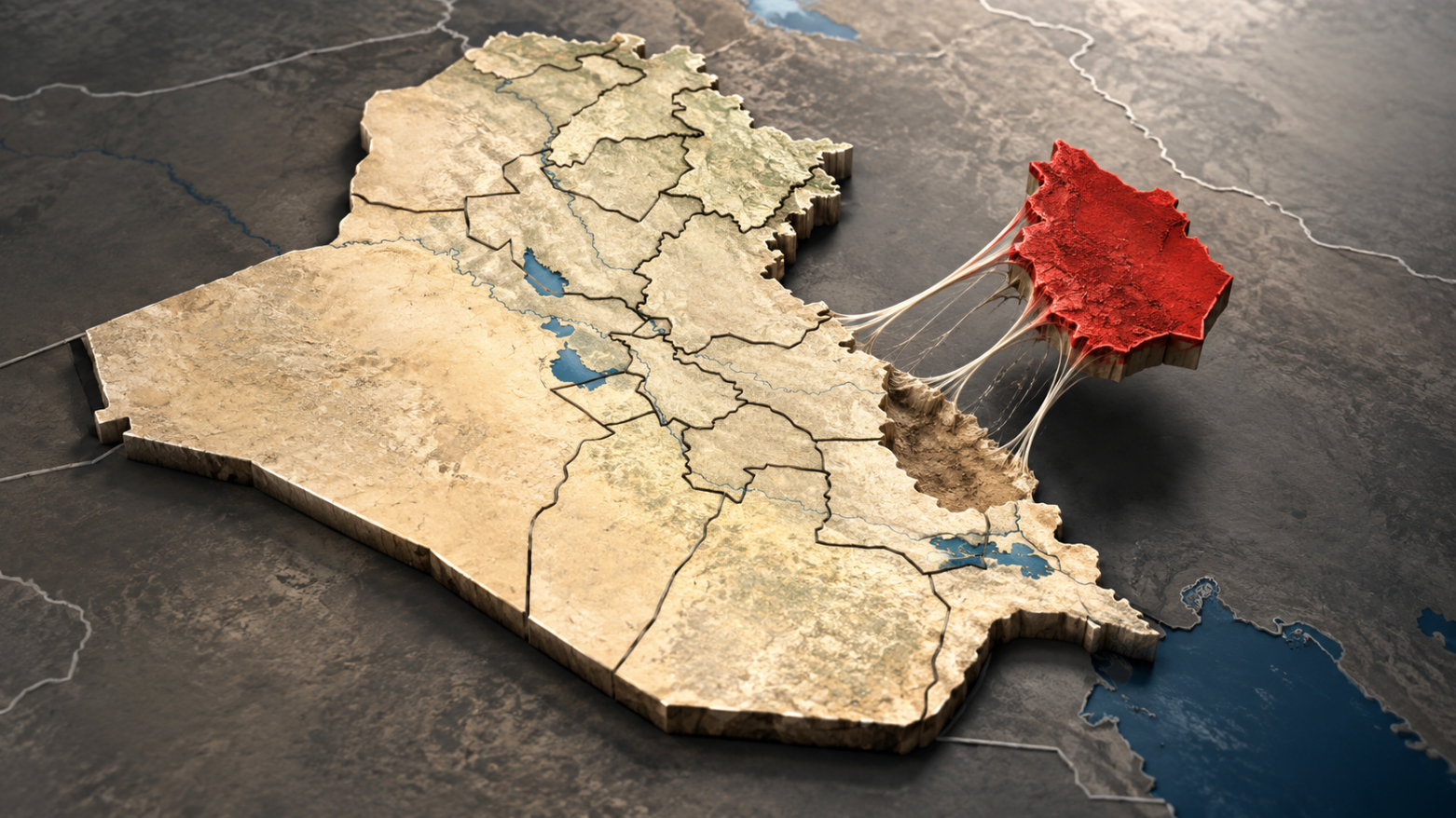
ERBIL (Kurdistan24) - The head of the Maysan Provincial Council on Sunday gave Iraq's federal government three days to reopen the al-Shib border crossing with Iran, warning that the governorate could escalate to a civil boycott, road closures and steps toward separating itself from Baghdad's authority if the demand is ignored.
Mustafa Da'ir issued the ultimatum during a press conference near the crossing on Oct. 25, five days after the federal government ordered al-Shib closed until further notice. He said the council wanted the crossing reopened as quickly as possible and warned that, if the three-day deadline did not produce a response, the confrontation could extend into next Thursday.
Da'ir said local authorities could move to a civil boycott and close roads if Baghdad did not reverse the decision. He also said Maysan could take what he described as serious steps toward separation from federal authority.
The threat adds a new domestic political dimension to a border dispute that has already drawn objections from Iran and competing explanations inside Iraq. Baghdad has publicly said the al-Shib crossing was suspended because it lacked sufficient technical and logistical infrastructure, including scanning and monitoring equipment, while several Iraqi political figures have linked the closure to broader security pressure surrounding Iraq's relationship with Iran.
Iran's Interior Ministry has expressed dissatisfaction with the closure and said Tehran received no advance notice from Baghdad.
The dispute comes as the federal government faces pressure on several fronts over border security, armed groups and the extent of state control. Prime Minister Ali al-Zaidi said on Friday that weapons would be confined to state institutions by June 30 and that Iraq would not allow itself to be drawn into regional wars.
Zaidi also said closing Iraq's borders with Iran would benefit neither country because it would amount to imposing an economic siege on both sides. His comments placed economic considerations alongside the security debate now surrounding the crossings.
The reasons behind the al-Shib closure remain politically contested.
Salwan Taha Akreyi, a Kurdistan Democratic Party lawmaker and member of the Iraqi parliament's Border Crossings Committee, told Kurdistan24's Basi Roj program, in an interview conducted by Zhino Mohammed, that Washington had asked Zaidi to close crossings with Iran and bring armed groups under state control.
Akreyi said the request was raised during the prime minister's visit to the United States and described al-Shib as the first practical step in a broader plan. He said Mandali could be among the next crossings considered for closure.
The U.S. State Department, however, has not publicly confirmed a blanket request to shut all Iraq-Iran crossings.
In response to Kurdistan24, a State Department spokesperson said Washington expected Zaidi to honor commitments made to President Donald Trump in July, including countering terrorism, preventing attacks "in and from Iraqi territory" and strengthening Iraq's sovereignty and bilateral ties.
That distinction is important because Iraqi officials have offered different explanations for the closure. The federal government has described the al-Shib suspension in technical terms, while Akreyi and other political figures have placed it within a wider security confrontation involving Iran, armed factions and the risk of Iraq becoming entangled in another regional conflict.
Akreyi said he contacted the Border Crossings Authority and was told that no formal order to close Mandali had been issued. He also said the official letter on al-Shib did not cite a security reason.
The government has said commercial activity with Iran is continuing through other crossings.
Akreyi nevertheless argued that federal authorities should treat border management as part of a broader effort to control the movement of weapons, fighters and illicit goods. He said border closures could have different objectives depending on regional conditions, including limiting the movement of armed groups or increasing economic pressure on Iran.
Those were Akreyi's assessments, and the interview did not provide independent confirmation that a new regional war was imminent or that all border closures would serve the purposes he described.
The dispute is unfolding as Baghdad heightens security preparations in the capital. Kurdistan24 Baghdad correspondent Dilan Barzan reported on Saturday that Iraqi security authorities had placed all security institutions in Baghdad on their highest state of readiness, cancelled leave and recalled personnel as activists associated with the October protest movement called on social media for demonstrations marking the anniversary of the 2019 uprising.
The mobilization covers the Counter-Terrorism Service, Federal Police Command and Interior Ministry police units, according to Barzan's reporting. Security forces have been deployed across major streets and intersections in Baghdad.
The 2019 protest movement brought large demonstrations to Baghdad and southern Iraqi cities, with protesters demanding action against corruption, Iranian interference and the ruling political establishment. The current security measures add another layer of pressure on the federal government as it manages border policy, armed-group disarmament and economic disputes.
Zaidi has framed the state-control issue as a central priority of his government. He said three armed groups had already completed the weapons file and talks were continuing with four others. He stated that after June 30 no weapons would remain outside state institutions.
His government is also trying to keep Iraq outside regional confrontation. Zaidi said Iraq would not participate in regional wars and would instead seek to act as a point of contact between rival sides.
That position intersects directly with the border debate. Akreyi argued that uncontrolled sections of the approximately 1,400-kilometer Iraq-Iran frontier could be used for the movement of weapons, narcotics, prohibited goods and dollars. He said Baghdad currently lacks sufficient surveillance and scanning capacity to secure the entire frontier alone.
He contrasted federal crossings with those administered by the Kurdistan Regional Government, arguing that crossings in the Kurdistan Region operate under tighter controls. He said no federal instruction had been issued requiring the Kurdistan Region to close its crossings with Iran.
The wider issue also carries economic implications. Iran is an important trading partner for Iraq, and Akreyi acknowledged that restricting crossings could affect commerce. He argued, however, that Iraq has alternative trade routes through Türkiye, Jordan, Saudi Arabia and Kuwait and should distinguish legitimate trade from smuggling.
For Maysan, the dispute has now moved beyond the technical management of one crossing. The provincial council's ultimatum has turned al-Shib into a confrontation over federal authority, local demands and Baghdad's broader security policy toward Iran.
Whether the federal government changes course was not established in the available information on Sunday. The three-day deadline has nevertheless created another point of pressure around an already contested policy, with Maysan demanding the crossing's reopening, Tehran objecting to the closure, federal officials defending the suspension on technical grounds and political figures linking the decision to wider security and geopolitical considerations.